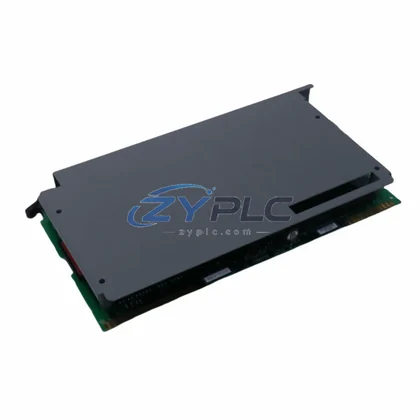
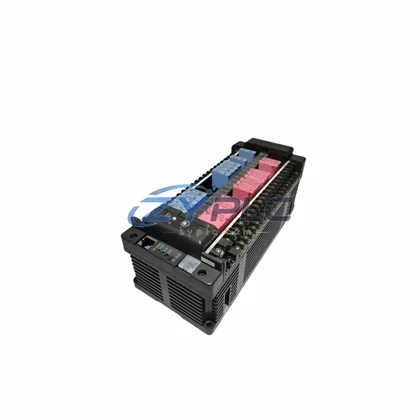
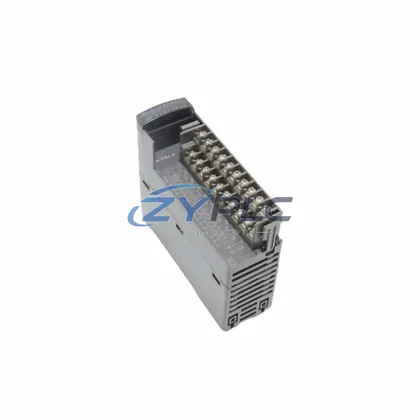
Yokogawa AAP135-S53 Industrial Network Interface for STARDOM Systems: Bridging Field Devices and Smart Factory Data Flows
In modern industrial automation, the ability to capture, convert, and transmit high-fidelity pulse signals across layered control architectures is not a peripheral concern — it is the foundation of operational transparency. The Yokogawa AAP135-S53 pulse input module is engineered to serve precisely this role within the STARDOM FCN/FCJ distributed control platform, acting as a critical data acquisition node that connects field-level instrumentation to supervisory control, SCADA, and enterprise-level systems with precision and reliability.
The AAP135-S53 is designed for high-speed pulse counting and frequency measurement applications, making it indispensable in flow metering, energy monitoring, rotational speed sensing, and batch counting processes. Its integration into the STARDOM architecture ensures that pulse data from turbine flow meters, electromagnetic flow meters, Coriolis meters, and encoder-based position sensors is captured with minimal latency and transmitted upstream through the FCN/FCJ controller’s communication backbone without signal degradation or data loss.
Compatibility & Integration Notes
| Attribute |
Specification |
| Product Model |
AAP135-S53 |
| Brand |
Yokogawa |
| Series |
STARDOM FCN/FCJ |
| Module Type |
Pulse Input Module |
| Protocol Support |
FOUNDATION Fieldbus, Modbus RTU/TCP, OPC-UA (via FCN gateway) |
| Interface Type |
Backplane I/O Bus (STARDOM FCN rack-mount) |
| Input Channels |
High-speed pulse counting, frequency measurement |
| Communication Compatibility |
STARDOM FCN/FCJ controller platform, Ethernet-based SCADA integration |
| System Application |
Flow metering, energy monitoring, batch control, rotational speed sensing |
| Installation Environment |
DIN rail / rack-mount, industrial cabinet, IP20 rated enclosure |
| Origin |
Japan |
| Warranty |
warranty terms confirmed during quotation |
Connected Automation Data Flow
The AAP135-S53 does not operate in isolation. Its true value emerges when viewed as a node within a fully connected automation data chain. In a typical STARDOM-based control architecture, field devices such as turbine flow meters and rotational encoders feed pulse signals directly into the AAP135-S53. The module processes these signals and passes structured data to the Yokogawa FCN-100 or FCN-500 autonomous controller, which serves as the primary logic execution engine for the control loop.
From the FCN controller, process data is transmitted over an industrial Ethernet backbone — often using Yokogawa’s STARDOM network switches or third-party managed switches supporting PROFINET or Modbus TCP — to the Yokogawa FAST/TOOLS SCADA platform or compatible HMI systems. Operators monitoring the process from a Yokogawa ProSafe-RS Safety Controller integration layer or a third-party HMI terminal receive real-time pulse counts, flow totals, and alarm states derived directly from the AAP135-S53’s measurements.
In multi-node installations, the AAP135-S53 works alongside other STARDOM I/O modules such as the AAI141-S03 analog input module and the AAI543-S50 analog output module, forming a cohesive I/O subsystem within the FCN rack. Communication gateways such as the Yokogawa ALE111 Ethernet communication module extend the data reach of the STARDOM platform to OPC-UA clients, enabling seamless integration with MES and ERP systems in smart factory environments.
For applications requiring remote I/O expansion, the AAP135-S53 can be deployed in distributed FCJ nodes connected back to a central FCN controller via fiber or copper Ethernet links, supporting geographically dispersed installations in water treatment plants, oil and gas pipelines, and power generation facilities. Variable frequency drives (VFDs) and servo drives monitoring motor speed via encoder feedback also benefit from the module’s high-speed pulse capture capability, closing the loop between drive output and process measurement in real time.
Solving Data Isolation in Industrial Sites
One of the most persistent challenges in industrial automation is the fragmentation of data across incompatible protocols, legacy field devices, and siloed control systems. The AAP135-S53, as part of the STARDOM ecosystem, directly addresses these challenges by providing a standardized, protocol-agnostic pulse acquisition interface that feeds into a unified control and communication framework.
In facilities where older pulse-output devices — such as mechanical flow meters or legacy encoders — coexist with modern Ethernet-based control infrastructure, the AAP135-S53 bridges the gap without requiring costly field device replacement. Its compatibility with the FCN/FCJ platform’s Modbus TCP and OPC-UA gateway capabilities means that pulse data can be surfaced to SCADA systems, cloud analytics platforms, and remote monitoring dashboards without protocol conversion middleware.
For production line transparency, the module enables real-time batch counting and throughput monitoring, giving production managers accurate, timestamped data on unit output, flow volumes, and cycle times. In energy management applications, integrating the AAP135-S53 with utility metering infrastructure allows facilities to track electricity, gas, and water consumption at the sub-process level, supporting ISO 50001 energy management compliance and carbon footprint reporting.
Remote diagnostics are equally well-served. Because the AAP135-S53 operates within the STARDOM FCN’s self-monitoring architecture, module health, channel status, and communication integrity are continuously reported to the SCADA layer. Maintenance engineers can identify signal anomalies, wiring faults, or pulse count discrepancies from a central control room or via remote VPN access, reducing unplanned downtime and eliminating the need for on-site troubleshooting in hazardous or hard-to-reach locations.
System scalability is another key advantage. As production capacity grows or process complexity increases, additional AAP135-S53 modules can be added to the FCN rack without architectural redesign. The STARDOM platform’s modular I/O philosophy ensures that expanding pulse input capacity is a straightforward engineering task, preserving existing wiring, configuration, and SCADA integration while adding new measurement points to the data flow.
All units supplied by ZYPLC undergo pre-shipment functional testing to verify pulse counting accuracy, channel integrity, and communication handshake with the FCN controller. Each AAP135-S53 is covered by a warranty terms confirmed during quotation, with availability confirmed by RFQ availability ensuring rapid dispatch to support urgent maintenance, system commissioning, and spare parts replenishment programs.
Industrial Connectivity FAQ
Q1: Does the AAP135-S53 support Modbus TCP communication for SCADA integration?
The AAP135-S53 itself is a backplane-mounted I/O module within the STARDOM FCN/FCJ rack. Modbus TCP and OPC-UA communication to SCADA systems is handled by the FCN controller and its associated Ethernet communication modules, such as the ALE111. The AAP135-S53 feeds pulse data to the FCN controller, which then exposes this data to SCADA clients via the configured communication protocol.
Q2: Can the AAP135-S53 be used in safety-critical applications alongside the ProSafe-RS system?
The AAP135-S53 is a standard (non-SIL-rated) pulse input module designed for process control applications within the STARDOM FCN/FCJ platform. For safety instrumented system (SIS) applications requiring SIL 2 or SIL 3 compliance, Yokogawa’s ProSafe-RS safety controller and its dedicated I/O modules should be used. The AAP135-S53 can coexist in the same facility as ProSafe-RS but operates in the basic process control system (BPCS) layer.
Q3: What is the lead time and warranty coverage for the AAP135-S53 supplied by ZYPLC?
ZYPLC maintains RFQ-confirmed sourcing of the AAP135-S53 to support rapid deployment and emergency spare parts requirements. Standard orders are dispatched within 1–3 business days following order confirmation. Every unit is covered by a warranty terms confirmed during quotation from the date of shipment, covering manufacturing defects and functional failures under normal operating conditions. Pre-shipment testing is performed on all units to verify pulse input accuracy and communication integrity.
Q4: How does the AAP135-S53 handle network stability in high-noise industrial environments?
The STARDOM FCN platform, including the AAP135-S53, is designed to operate in electrically noisy industrial environments. The module’s backplane communication interface is isolated from field-side wiring, and the FCN controller’s Ethernet ports support redundant network configurations to ensure continuous data transmission even in the event of a single network path failure. Proper cabinet grounding, shielded cabling, and adherence to Yokogawa’s installation guidelines further enhance signal integrity in high-EMI environments such as motor control centers and variable frequency drive cabinets.