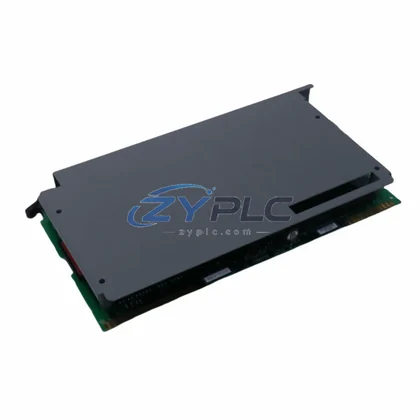
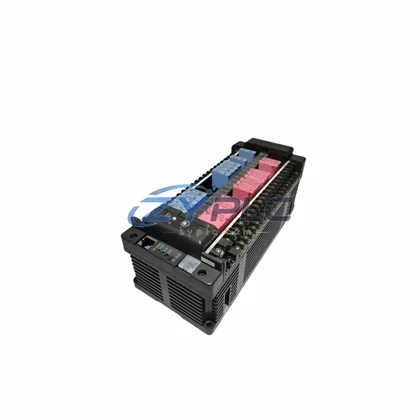
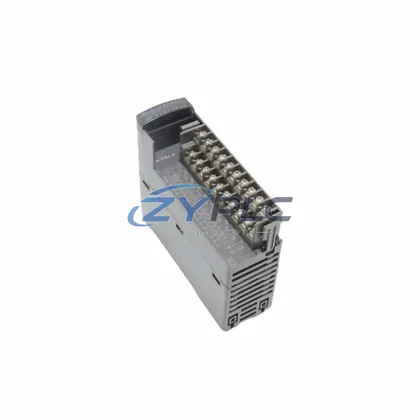
The Yokogawa AAR145-S03/S1 is a high-precision RTD (Resistance Temperature Detector) and POT (Potentiometer) Input Module engineered for the CENTUM VP Distributed Control System (DCS). Designed to serve as a critical node in the industrial data chain, this module bridges field-level temperature and position sensors directly into the CENTUM VP control network, enabling real-time signal acquisition, protocol-compliant data transmission, and seamless integration with upper-level SCADA and HMI platforms. In smart factory environments where data integrity and network stability are non-negotiable, the AAR145-S03/S1 delivers the precision and reliability that process engineers demand.
At the heart of modern industrial connectivity lies the ability to convert raw physical signals into actionable digital data without latency or signal degradation. The AAR145-S03/S1 accepts multi-channel RTD inputs — including Pt100, Pt1000, JPt100, and resistance-type sensors — and converts them into engineering-unit values that flow directly into the CENTUM VP field control station (FCS). From there, data propagates across the Vnet/IP control network, Yokogawa’s proprietary high-speed, fault-tolerant Ethernet-based communication backbone, reaching the HIS (Human Interface Station) operator consoles and the CAMS for HIS alarm management system in real time. This unbroken data pipeline is what transforms isolated field measurements into plant-wide intelligence.
In a typical CENTUM VP architecture, the AAR145-S03/S1 is installed within an I/O nest alongside complementary modules such as the AAI141 analog input module for 4–20 mA current signals, the AAI543 analog output module for control valve positioning, and the ADV151 digital input module for discrete device status monitoring. Together, these modules form a unified I/O subsystem that feeds the FCS processor — for example, the AFV10D or AFV30D field control unit — with a continuous, synchronized stream of process variables. The FCS executes control logic at scan rates as fast as 100 ms, ensuring that temperature deviations detected by the AAR145-S03/S1 trigger corrective outputs within the same control cycle.
Beyond the local control loop, the CENTUM VP system leverages OPC-UA and Modbus TCP/IP gateways to expose process data to third-party SCADA platforms, MES systems, and cloud-based analytics engines. The Yokogawa Exaquantum plant information management system (PIMS) can subscribe to historian tags sourced directly from AAR145-S03/S1 channel data, enabling long-term trend analysis, energy benchmarking, and predictive maintenance workflows. For facilities integrating with Yokogawa’s ProSafe-RS safety instrumented system, the RTD data from this module can be cross-validated against SIS logic to enforce safety integrity level (SIL) compliance across critical temperature loops.
Remote diagnostics and asset health monitoring are equally supported. Through the CENTUM VP’s built-in Field Wireless infrastructure or wired HART pass-through capability, maintenance engineers can interrogate connected RTD sensors for drift, open-circuit faults, and calibration status without interrupting the process. The Yokogawa FieldMate device management tool communicates with field instruments via the I/O module’s HART multiplexer function, delivering device descriptor (DD) data to the asset management layer. This capability dramatically reduces unplanned downtime by enabling condition-based maintenance scheduling rather than fixed-interval calibration routines.
For system integrators expanding an existing CENTUM VP installation, the AAR145-S03/S1 is fully compatible with the CENTUM VP R6 platform and supports hot-swap replacement without process interruption when redundancy is configured. The module’s compact form factor fits standard Yokogawa I/O nests, and its firmware is managed centrally through the Engineering Environment (ENG) workstation, eliminating the need for on-site module-level configuration. Expansion projects can add additional I/O nests connected via the ESB bus or remote I/O nodes over Vnet/IP, scaling the system from a single process unit to a plant-wide network spanning multiple field control stations.
ZYPLC maintains RFQ-confirmed availability of the Yokogawa AAR145-S03/S1, sourced through verified industrial supply channels and subject to full incoming inspection. Every unit undergoes pre-shipment functional testing to confirm channel accuracy, communication integrity, and firmware version compliance before dispatch. A warranty and support terms confirmed before quote is provided on all modules, covering manufacturing defects and communication failures under normal operating conditions. Global logistics support ensures delivery to process plants, system integrators, and OEM panel builders across Asia, Europe, the Middle East, and the Americas.
Compatibility & Integration Notes
| Parameter |
Specification |
| Module Type |
RTD / POT Analog Input Module |
| Compatible System |
Yokogawa CENTUM VP DCS (R3 and above) |
| Control Network Protocol |
Vnet/IP (Yokogawa proprietary, Ethernet-based, IEC 61784) |
| Upper-Level Integration |
OPC-UA, Modbus TCP/IP, HART (pass-through) |
| Input Signal Types |
Pt100, Pt1000, JPt100, Ni100, Cu10, Resistance (POT) |
| Number of Channels |
8 channels (differential) |
| Scan Cycle |
100 ms (minimum, FCS-dependent) |
| Communication Interface |
ESB Bus (I/O nest), Vnet/IP (remote I/O node) |
| SCADA / HMI Compatibility |
CENTUM VP HIS, Exaquantum PIMS, third-party OPC-UA clients |
| Safety System Integration |
ProSafe-RS SIS cross-validation support |
| Diagnostic Support |
HART pass-through, FieldMate device management |
| Mounting |
Yokogawa standard I/O nest (hot-swap capable) |
| Origin |
Japan |
| Warranty |
12 Months (manufacturing defects & communication failures) |
Connected Automation Data Flow
The AAR145-S03/S1 sits at the origin of the CENTUM VP data chain. RTD sensors installed on reactors, heat exchangers, pipelines, and rotating equipment transmit resistance values to the module’s input terminals. The module digitizes these signals and places engineering-unit process variables onto the ESB bus, where the AFV10D Field Control Unit reads them at each scan cycle. The FCS executes PID control algorithms, cascade loops, and interlock logic using this live temperature data, then issues output commands to the AAI543 analog output module driving control valves or to the ADV551 digital output module triggering motor starters and solenoids.
Simultaneously, the Vnet/IP network carries all process variable data from the FCS to the HIS operator station, where operators monitor trends, acknowledge alarms via the CAMS for HIS alarm management console, and execute manual overrides. The Exaquantum historian subscribes to temperature tags from the AAR145-S03/S1 channels, archiving data at configurable resolutions for regulatory compliance and process optimization analysis. For facilities running third-party SCADA platforms such as Wonderware, Ignition, or Siemens WinCC, the CENTUM VP OPC-UA server exposes these tags as standard information model nodes, enabling seamless cross-platform data consumption without custom protocol adapters.
At the field device layer, the Yokogawa EJA110E differential pressure transmitter and EJX910A multivariable transmitter may share the same I/O nest infrastructure, with their 4–20 mA outputs processed by the AAI141 analog input module in parallel with the RTD channels of the AAR145-S03/S1. This co-located I/O architecture minimizes wiring runs and consolidates field signal termination within a single marshalling cabinet, reducing installation cost and improving signal integrity. Remote I/O nodes connected over Vnet/IP extend this same architecture to satellite process areas, with the CENTUM VP Remote I/O Unit (RIO) housing additional AAR145-S03/S1 modules for distributed temperature monitoring across large plant footprints.
Solving Data Isolation in Industrial Sites
Many process plants operate with legacy instrumentation systems where RTD signals are wired directly to standalone indicators or paperless recorders, creating data silos that prevent plant-wide visibility. The AAR145-S03/S1, integrated into the CENTUM VP DCS, eliminates this isolation by centralizing all temperature measurements into a single, networked control system. Operators gain a unified process view across all units, and engineers can correlate temperature trends with flow, pressure, and level data from other I/O modules to diagnose process inefficiencies that would be invisible in a siloed architecture.
Protocol fragmentation is another common challenge in brownfield sites where older Modbus RTU devices, HART field instruments, and newer OPC-UA-capable analyzers coexist. The CENTUM VP platform addresses this through its multi-protocol gateway capabilities, with the AAR145-S03/S1 contributing HART pass-through data that the system’s asset management layer translates into a unified device health dashboard. This means a single engineering workstation can monitor RTD sensor drift, valve positioner feedback, and flow meter diagnostics simultaneously, without requiring separate protocol converters or dedicated maintenance laptops for each device type.
For production transparency and MES integration, the temperature data flowing through the AAR145-S03/S1 can be tagged with batch identifiers and product codes within the CENTUM VP batch management module, enabling full traceability from raw material processing to finished product quality records. Remote monitoring via the CENTUM VP’s secure remote access infrastructure allows process engineers to diagnose temperature excursions, review alarm histories, and adjust setpoints from off-site locations, reducing the need for on-call site visits and accelerating response to abnormal process conditions.
Industrial Connectivity FAQ
Q1: What communication protocols does the CENTUM VP system support when using the AAR145-S03/S1?
The CENTUM VP DCS communicates internally via Vnet/IP, Yokogawa’s high-speed Ethernet-based control network. For integration with external systems, it supports OPC-UA, Modbus TCP/IP, and HART pass-through via modules like the AAR145-S03/S1, enabling connectivity to SCADA platforms, MES systems, and asset management tools without additional protocol converters.
Q2: How does the AAR145-S03/S1 ensure network stability and data integrity in continuous process environments?
The module is designed for 24/7 continuous operation within the CENTUM VP I/O nest, with hardware diagnostics that detect open-circuit RTD faults, out-of-range signals, and communication errors in real time. The CENTUM VP FCS supports redundant I/O configurations where a backup module takes over automatically upon primary module failure, ensuring uninterrupted data flow to the control system.
Q3: Can the AAR145-S03/S1 be added to an existing CENTUM VP installation without system shutdown?
Yes. When the CENTUM VP system is configured with redundant I/O nests and hot-swap capability, the AAR145-S03/S1 can be inserted or replaced without interrupting the process. New I/O nests and remote I/O nodes can also be added to the Vnet/IP network and commissioned through the Engineering Environment workstation without requiring a full system restart, supporting phased expansion projects.
Q4: What does the warranty and support terms confirmed before quote cover, and what pre-shipment testing is performed?
Every AAR145-S03/S1 unit shipped by ZYPLC undergoes pre-shipment functional testing covering channel accuracy verification, ESB bus communication integrity, and firmware version confirmation. The warranty and support terms confirmed before quote covers manufacturing defects and communication failures under normal operating conditions from the date of shipment. Warranty claims are supported by ZYPLC’s technical team, with replacement units dispatched from RFQ-confirmed availability to minimize system downtime.