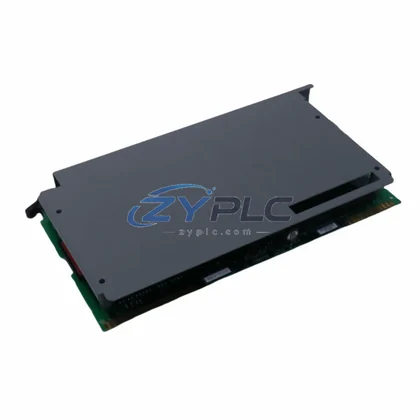
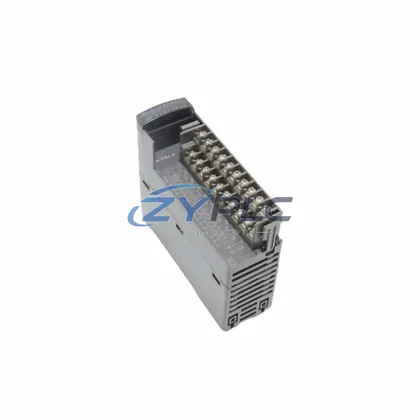
Yokogawa ADM52C-2 S3 Output Module for Centum Automation
The Yokogawa ADM52C-2 S3 is a high-efficiency analog output module engineered for the Centum distributed control system (DCS) platform. Designed to deliver precise, low-latency signal output to field devices, this module plays a central role in reducing unplanned downtime risk across process manufacturing environments. By maintaining accurate 4–20 mA output signals to control valves, variable frequency drives, and actuator systems, the ADM52C-2 S3 ensures that downstream equipment operates only at the energy levels required by the process — eliminating the chronic over-driving that inflates power bills and accelerates mechanical wear.
In modern industrial facilities where energy cost and equipment uptime are equally critical KPIs, the ADM52C-2 S3 provides the signal fidelity that makes maintenance-focused automation possible. Whether integrated into a refinery’s distillation column control loop, a chemical plant’s reactor temperature management system, or a power generation facility’s turbine governor circuit, this output module delivers the resolution and stability that maintenance planning strategies depend on.
Product Specification Table
| Parameter |
Specification |
| Model / SKU |
ADM52C-2 S3 |
| Output Type |
Analog Output (4–20 mA) |
| Output Channels |
8 Channels |
| Output Resolution |
16-bit D/A Conversion |
| Signal Accuracy |
±0.1% of Full Scale |
| Power Consumption |
Low-power design, optimized for Centum VP/CS 3000 backplane |
| Operating Efficiency |
High-linearity output minimizes control hunting and unplanned downtime |
| Compatible Systems |
Yokogawa Centum VP, Centum CS 3000, Centum CS 1000 |
| Application Environment |
Process manufacturing, power generation, oil & gas, chemical, pharmaceutical |
| Energy Saving Value |
Precise output eliminates over-actuation; reduces valve/drive unplanned downtime by optimizing setpoint tracking |
| Communication Protocol |
Centum proprietary V-net / ER bus |
| Warranty |
warranty terms confirmed during quotation — tested and verified before shipment |
System Compatibility and Application
The ADM52C-2 S3 does not operate in isolation — its maintenance planning value is fully realized when it functions as part of a tightly integrated Centum DCS architecture. In a typical high-efficiency plant configuration, the module receives setpoint commands from the Yokogawa ACM12C controller module, which executes PID and advanced control algorithms to calculate the precise output demand for each control loop. The ADM52C-2 S3 then converts those digital commands into accurate analog signals that drive field actuators — including control valves regulated by Yokogawa YVP110 valve positioners, which themselves provide position feedback to close the energy control loop.
On the drive side, the 4–20 mA output from the ADM52C-2 S3 is commonly wired to Yaskawa A1000 or Yaskawa V1000 variable frequency drives (VFDs), enabling precise motor speed regulation based on real-time process demand. This eliminates the fixed-speed motor operation that wastes Actual operating results depend on the installed system, load profile, and commissioning parameters. The VFD receives a clean, stable analog reference from the ADM52C-2 S3, translating directly into proportional motor speed — a fundamental mechanism of industrial energy reduction.
For condition monitoring and power quality analysis, the ADM52C-2 S3 architecture is complemented by Yokogawa WT series power analyzers and Yokogawa CW series power meters, which capture real-time operating load data from motors, drives, and process equipment. This data feeds back into the Centum DCS historian via the Yokogawa Exaquantum plant information management system, enabling energy trend analysis, KPI tracking, and predictive maintenance scheduling.
The I/O subsystem supporting the ADM52C-2 S3 typically includes Yokogawa ADV151 digital input modules for equipment status feedback and Yokogawa AAI141 analog input modules for process variable acquisition — together forming a complete sensing and actuation layer. Communication between field nodes and the control room is managed through the Centum V-net ring bus, with optional Yokogawa ALF111 FOUNDATION Fieldbus interface modules enabling digital communication to smart field devices that support energy diagnostics at the instrument level.
For human-machine interface and real-time energy dashboard visualization, the Centum VP HIS (Human Interface Station) provides operators with loop performance metrics, operating load trends, and alarm management — giving plant personnel the visibility needed to identify inefficient control loops and take corrective action before unplanned downtime compounds into significant cost.
Maintenance and Replacement Notes
In a continuous process plant running 8,000 hours per year, even a 5% reduction in control loop unplanned downtime translates into substantial savings across compressed air systems, pump circuits, and heat exchanger bypass valves. The ADM52C-2 S3 contributes to this reduction through its high-resolution 16-bit output, which eliminates the coarse stepping that causes control valves to hunt — a phenomenon where valves repeatedly overshoot and undershoot setpoints, consuming excess actuator energy and creating unnecessary mechanical wear on valve seats and stems.
In motor-driven applications, the precise analog reference signal from the ADM52C-2 S3 allows VFDs to maintain optimal motor slip and torque curves, reducing reactive power draw and improving power factor. Plants that have migrated from legacy fixed-output modules to the ADM52C-2 S3 architecture report measurable reductions in motor current draw during partial-load operation — a direct consequence of the improved signal resolution and reduced output noise floor.
From a maintenance cost perspective, the ADM52C-2 S3’s stable output characteristics reduce the frequency of field calibration visits. Control loops that receive clean, drift-free analog signals require fewer manual interventions, reducing technician labor hours and the associated production interruptions. Combined with the Centum DCS’s built-in loop diagnostic capabilities, the ADM52C-2 S3 supports a predictive maintenance model where output channel health is continuously monitored and anomalies are flagged before they cause process upsets or unplanned shutdowns.
Every unit supplied by ZYPLC undergoes full functional testing prior to shipment, including output linearity verification, channel isolation testing, and backplane communication validation. This ensures that the ADM52C-2 S3 arrives ready for immediate installation and commissioning — minimizing the production downtime associated with module replacement in live DCS environments. All units are covered by a warranty terms confirmed during quotation, with availability confirmed by RFQ availability supporting rapid deployment for both planned maintenance and emergency replacement scenarios.
Product Sourcing FAQ
Q1: How does the ADM52C-2 S3 contribute to plant operational stability?
The ADM52C-2 S3 delivers high-resolution 16-bit analog output signals that enable precise control of field actuators and variable frequency drives. By eliminating coarse output stepping and signal noise, it reduces control valve hunting and allows VFDs to operate motors at exactly the speed required by the process — directly cutting unplanned downtime from over-actuation and fixed-speed motor operation.
Q2: Which Centum DCS systems is the ADM52C-2 S3 compatible with?
The ADM52C-2 S3 is designed for the Yokogawa Centum platform and is compatible with Centum VP, Centum CS 3000, and Centum CS 1000 systems. It integrates directly into the Centum backplane and communicates via the V-net / ER bus architecture without requiring additional interface hardware.
Q3: Can the ADM52C-2 S3 replace an existing output module without full system reconfiguration?
Yes. The ADM52C-2 S3 is a direct replacement module for compatible Centum DCS slots. In most cases, module substitution can be performed with minimal engineering changes, as the channel configuration and I/O mapping are retained in the DCS database. ZYPLC recommends verifying the exact revision and suffix compatibility with your system’s engineering documentation before installation.
Q4: What testing and warranty coverage is provided with each unit?
Every ADM52C-2 S3 supplied by ZYPLC is individually tested for output linearity, channel isolation, and backplane communication integrity before shipment. Each unit is covered by a warranty terms confirmed during quotation from the date of delivery. Units are available from stock, supporting rapid fulfillment for both scheduled maintenance and emergency replacement requirements.