Yokogawa ADV151-P00 Industrial Network Interface for CENTUM VP Systems: Bridging Field Signals and Distributed Control Data Flow
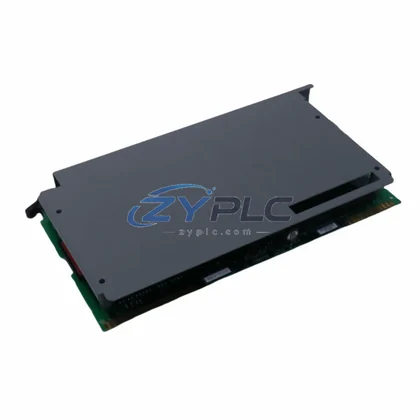
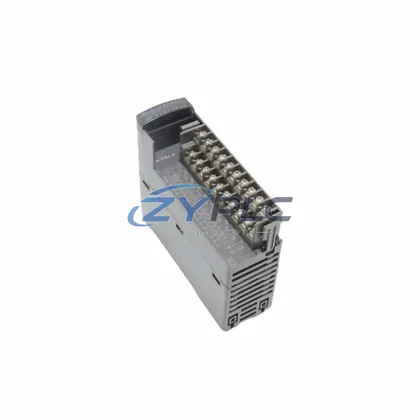
In modern distributed control architectures, the integrity of digital signal acquisition at the I/O layer is the foundation upon which every upstream decision depends. The Yokogawa ADV151-P00 is a 32-channel Digital Input Module engineered for the CENTUM VP Distributed Control System platform — one of Yokogawa’s most widely deployed process automation frameworks across refining, petrochemical, power generation, and water treatment industries. Rather than functioning as a standalone component, the ADV151-P00 operates as a critical node in a layered automation network, receiving discrete field signals and transmitting structured digital data upward through the control hierarchy with deterministic reliability.
The ADV151-P00 accepts 24VDC digital inputs across 32 independent channels, making it suitable for high-density signal environments such as valve position feedback, motor run/stop status, limit switch monitoring, and interlock logic inputs. Its compliance with IEC 61131 signal standards ensures broad compatibility with field instrumentation from multiple manufacturers, reducing integration friction in brownfield upgrades and greenfield installations alike. The module slots directly into CENTUM VP field control station (FCS) node units, maintaining the tight hardware-software integration that defines the CENTUM VP architecture.
Compatibility & Integration Notes
| Parameter |
Specification |
| SKU / Model |
ADV151-P00 |
| Brand |
YOKOGAWA |
| Series |
CENTUM VP |
| Module Type |
Digital Input (DI) Module |
| Number of Channels |
32 Channels |
| Input Voltage |
24VDC |
| Signal Standard |
IEC 61131 Compatible |
| Protocol Support |
CENTUM VP Internal Bus / Vnet/IP |
| Communication Interface |
FCS Node Unit Backplane Integration |
| Network Compatibility |
CENTUM VP FCS, ESB Bus, ER Bus |
| System Application |
DCS I/O Layer, Process Interlocks, Field Signal Acquisition |
| Installation Environment |
Control Room / Marshalling Cabinet / Field Junction Box |
| Origin |
Japan |
| Warranty |
Warranty and support terms confirmed before quote |
Connected Automation Data Flow
The ADV151-P00 does not operate in isolation — its value is realized through its position within a fully integrated CENTUM VP control network. At the field level, discrete signals from devices such as proximity sensors, pressure switches, solenoid valve feedback contacts, and motor control center (MCC) auxiliary contacts are wired directly into the ADV151-P00’s 32 input channels. These signals are then conditioned and transmitted via the FCS node unit’s internal ESB Bus to the CENTUM VP Field Control Station (FCS), where control logic executes in real time.
Within the same FCS node, the ADV151-P00 works in coordination with analog input modules such as the AAI141-S00 (4–20mA analog input) and analog output modules like the AAO141-S00, which together handle continuous process variable measurement and final control element actuation. For digital output operations — such as energizing relay coils, activating solenoids, or issuing motor start commands — the ADV151-P00 pairs with digital output modules including the ADV551-P00, forming a complete discrete I/O subsystem within the same node chassis.
Communication between the FCS and the operator station layer travels over Vnet/IP, Yokogawa’s proprietary high-speed control network built on standard Ethernet infrastructure. This network connects the FCS to CENTUM VP Human Interface Stations (HIS), where operators monitor real-time process status, acknowledge alarms, and issue manual control commands. The digital input states captured by the ADV151-P00 — valve open/closed, pump running/stopped, interlock active/inactive — appear as live process values on HIS operator graphics, enabling immediate situational awareness.
For facilities integrating CENTUM VP with enterprise-level systems, the Yokogawa Exaopc OPC Server provides a standardized OPC DA/UA data bridge, allowing SCADA platforms, MES systems, and historian databases to consume real-time DI status data from the ADV151-P00 without custom protocol development. In multi-system environments, Yokogawa ProSafe-RS Safety Controllers may also interface with the CENTUM VP network, where digital input states from the ADV151-P00 can serve as process condition inputs to safety logic evaluation — though safety-critical inputs must always be routed through certified SIL-rated I/O modules.
Power distribution to the FCS node housing the ADV151-P00 is typically managed through Yokogawa PW481 or equivalent redundant power supply modules, ensuring that I/O module operation is not interrupted by single-point power failures. In large-scale installations, ESB Bus Coupler modules extend the I/O node capacity, allowing additional ADV151-P00 modules to be added as the number of monitored field devices grows — a key advantage in phased plant expansions.
Solving Data Isolation in Industrial Sites
One of the most persistent challenges in industrial automation is the fragmentation of field data — where signals exist at the device level but cannot be effectively consumed by control, monitoring, or business systems. The ADV151-P00 addresses this directly by providing a structured, high-density digital input pathway that feeds clean, validated signal states into the CENTUM VP control network.
In facilities where legacy hardwired I/O panels have historically created data silos, replacing or supplementing those panels with ADV151-P00 modules within a CENTUM VP FCS node immediately makes those signals available across the Vnet/IP network — accessible to HIS operator stations, OPC-connected SCADA systems, and data historians simultaneously. This eliminates the need for parallel wiring runs to separate monitoring systems and reduces the risk of signal discrepancies between control and monitoring layers.
For remote monitoring applications, the CENTUM VP architecture supports integration with Yokogawa FAST/TOOLS SCADA, which can aggregate digital input states from multiple ADV151-P00 modules across geographically distributed FCS nodes into a unified operational picture. Plant managers and remote engineers can monitor valve positions, equipment status, and interlock conditions from centralized control rooms or remote access terminals without requiring physical presence at the field location.
Protocol unification is another area where the ADV151-P00 contributes to system coherence. By standardizing all 32 digital input channels under the CENTUM VP internal bus protocol, the module eliminates the need for field-level protocol converters or signal conditioners that would otherwise introduce latency, failure points, and maintenance complexity. All signal processing, filtering, and status reporting is handled within the CENTUM VP software environment, where engineers can configure input filtering times, alarm thresholds, and status display formats through the CENTUM VP Engineering Environment (ENG) without hardware modifications.
For production line transparency initiatives — a core requirement of Industry 4.0 and smart factory programs — the ADV151-P00 provides the foundational data layer. Every machine state, every interlock condition, and every equipment status signal captured by the module becomes a timestamped, traceable data point within the CENTUM VP historian, supporting OEE calculations, predictive maintenance models, and regulatory compliance reporting.
Industrial Connectivity FAQ
Q1: Is the ADV151-P00 compatible with both new CENTUM VP installations and existing CENTUM CS 3000 systems?
The ADV151-P00 is designed specifically for the CENTUM VP platform and is not directly interchangeable with CENTUM CS 3000 I/O modules, which use a different node architecture and backplane interface. For CS 3000 systems, the equivalent digital input module series is the ADV series under the CS 3000 hardware catalog. If you are migrating from CS 3000 to CENTUM VP, ZYPLC can advise on compatible replacement modules and migration pathways. Contact us at plc.sales@zyplc.com for a compatibility assessment.
Q2: What is the maximum cable length and wiring configuration supported for field devices connected to the ADV151-P00?
The ADV151-P00 accepts standard 24VDC dry contact or wet contact digital inputs. Maximum field wiring length depends on cable resistance and the input circuit specifications defined in the Yokogawa hardware manual, but typical industrial installations support cable runs of up to several hundred meters with appropriate cable sizing. All 32 channels are individually isolated to prevent ground loop interference between field devices. Terminal block wiring follows standard CENTUM VP marshalling conventions, and ZYPLC can provide wiring diagram support for system integration projects.
Q3: Does ZYPLC’s Warranty and support terms confirmed before quote cover the ADV151-P00 under continuous industrial operating conditions?
Yes. All ADV151-P00 modules supplied by ZYPLC carry a Warranty and support terms confirmed before quote covering manufacturing defects and functional failures under normal industrial operating conditions. Prior to shipment, each module undergoes functional verification testing to confirm channel integrity, communication bus response, and power consumption within specification. The warranty period begins from the date of shipment. For installations in high-vibration, high-temperature, or chemically aggressive environments, ZYPLC recommends reviewing the Yokogawa environmental specification sheet to confirm suitability before deployment.
Q4: Can additional ADV151-P00 modules be added to an existing CENTUM VP FCS node without system downtime?
CENTUM VP supports hot-standby and redundant FCS configurations that allow certain maintenance operations without full system shutdown, but adding new I/O modules to an FCS node typically requires a controlled engineering change process, including configuration updates in the CENTUM VP Engineering Environment and, in some cases, a node restart. ZYPLC recommends coordinating module additions with your CENTUM VP system integrator or Yokogawa service team to plan the change window appropriately. ZYPLC maintains RFQ-based sourcing support of ADV151-P00 modules to support planned maintenance and expansion schedules with minimal lead time.