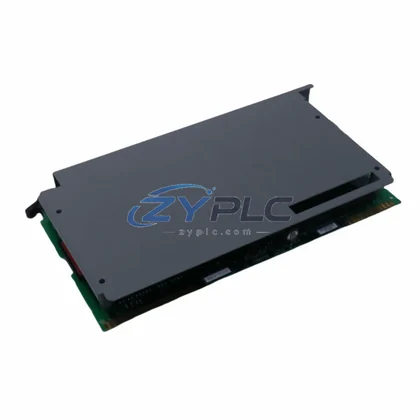
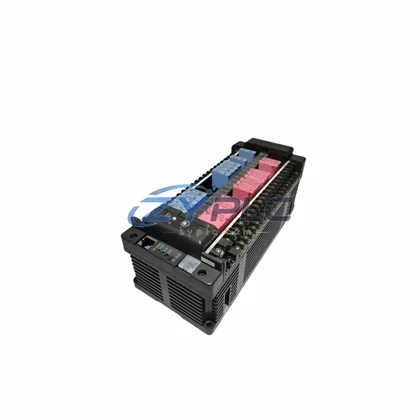
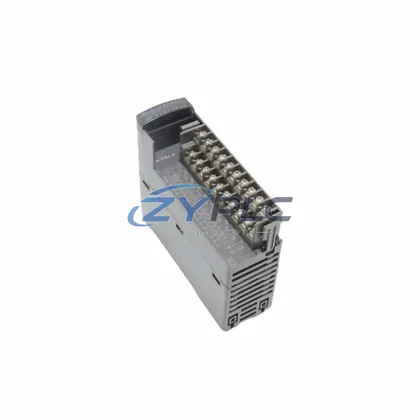
Yokogawa ADV551-P50/S2 Digital Output Module for Centum VP Automation
The Yokogawa ADV551-P50/S2 is a high-performance digital output module engineered for the Centum VP Distributed Control System (DCS) platform. Designed to meet the demanding requirements of modern industrial facilities, this module plays a critical role in reducing downtime risk, improving equipment utilization rates, and enabling tighter control over production line timing. Whether deployed in petrochemical plants, power generation facilities, pharmaceutical manufacturing, or large-scale process industries, the ADV551-P50/S2 delivers reliable, low-latency digital output signals that directly translate into measurable efficiency gains on the plant floor.
In today’s industrial environment, maintenance planning is no longer optional — it is a core operational imperative. The ADV551-P50/S2 addresses this by providing precise, deterministic output control that eliminates signal delays and reduces the idle energy draw associated with poorly coordinated actuator commands. When integrated into a well-configured Centum VP architecture, this module enables field devices — including solenoid valves, motor starters, and relay-driven loads — to receive commands only when operationally required, minimizing unnecessary switching cycles and the associated thermal and electrical losses.
Product Specification Table
| Parameter |
Specification / Value |
| SKU |
ADV551-P50/S2 |
| Brand |
Yokogawa |
| Series |
Centum VP |
| Module Type |
Digital Output Module |
| Output Points |
32 points (typical for ADV551 series) |
| Output Voltage Range |
24 VDC (field-side) |
| Power Consumption |
Low-power design; optimized for continuous 24/7 industrial operation |
| Operating Efficiency |
High-speed deterministic output; minimizes actuator idle time |
| Compatible Systems |
Yokogawa Centum VP DCS, CENTUM CS 3000 (with adapter) |
| Communication Protocol |
Vnet/IP (Yokogawa proprietary high-speed control network) |
| Application Environment |
Process industries: Oil & Gas, Power, Chemicals, Pharmaceuticals, Pulp & Paper |
| Maintenance Value |
Reduces unnecessary actuator switching; supports predictive maintenance scheduling |
| Origin |
Japan |
| Warranty |
12 Months |
| Condition |
New / Refurbished (tested and verified) |
| Availability |
Availability confirmed by RFQ — shipment arranged after confirmation |
System Compatibility and Application
The ADV551-P50/S2 does not operate in isolation — its true efficiency value is realized when it functions as part of a cohesive, industrial automation system. Within a typical Centum VP installation, the module interfaces directly with the Yokogawa AFV10D Field Control Station, which serves as the central processing node for all I/O data. The Field Control Station aggregates real-time process data from field instruments and dispatches optimized output commands through modules like the ADV551-P50/S2, ensuring that energy is consumed only where and when it is needed.
On the input side, the Yokogawa AAI141-S00 analog input module captures live process variables — temperature, pressure, flow — and feeds this data into the control loop. The ADV551-P50/S2 then acts on the processed control decisions, issuing digital commands to field actuators with microsecond-level precision. This closed-loop interaction between analog input modules and digital output modules is fundamental to eliminating downtime caused by over-actuation or delayed response.
For drive-level maintenance planning, the ADV551-P50/S2 is commonly paired with Yokogawa-compatible variable frequency drives (VFDs) such as those from the Yaskawa GA700 series or equivalent industrial drives integrated via the plant’s control network. By issuing precise start/stop and speed-reference commands through the digital output channel, the module enables the VFD to operate motors at optimal load points rather than at fixed full-speed settings — a change that can help restore stable operation when a compatible replacement is required.
Power quality and operating load monitoring are handled upstream by dedicated power monitoring devices. The Yokogawa WT series power analyzers or compatible Modbus-enabled power meters provide real-time kWh and power factor data that can be fed back into the Centum VP supervisory layer. This data loop allows the control system to dynamically adjust output commands from the ADV551-P50/S2 based on actual operating load trends, enabling demand-response strategies that reduce peak load charges.
Communication integrity across the plant network is maintained through the Vnet/IP high-speed Ethernet-based control network, which connects all Centum VP I/O modules — including the ADV551-P50/S2 — to the engineering workstation and the Yokogawa CENTUM VP HIS (Human Interface Station). Operators can monitor output module status, channel diagnostics, and energy-related KPIs in real time from the HIS, enabling rapid identification of inefficient operating conditions before they escalate into costly downtime events.
For facilities that require integration with higher-level MES or ERP systems, the Centum VP platform supports OPC-UA and Modbus TCP communication standards, allowing energy data collected through the ADV551-P50/S2’s output feedback loops to be exported to enterprise maintenance planning platforms. This connectivity ensures that plant-floor efficiency gains are visible at the business intelligence level, supporting sustainability reporting and energy cost allocation.
Additional I/O expansion is supported through companion modules such as the Yokogawa ADV151 digital input module, which provides the feedback signals confirming that actuators commanded by the ADV551-P50/S2 have responded correctly. This confirmation loop is essential for predictive maintenance workflows — if an actuator fails to respond within the expected time window, the system can flag the device for inspection before a full failure occurs, avoiding downtime and the unplanned downtime associated with emergency restart procedures.
Maintenance and Replacement Notes
In real-world production environments, the ADV551-P50/S2 contributes to maintenance planning across multiple operational dimensions. In a continuous process plant — such as a refinery or chemical facility — the module manages the digital output signals that control on/off valves, pump motor contactors, and conveyor drive enables. By ensuring these devices receive precise, timely commands aligned with the actual process state, the module eliminates the common inefficiency of devices running in standby or transitional states longer than necessary.
Consider a typical cooling water pump circuit: without precise digital output control, the pump motor may remain energized during low-demand periods due to control system latency or manual override habits. With the ADV551-P50/S2 integrated into the Centum VP control loop, the pump is commanded off within milliseconds of the process reaching its setpoint, and restarted only when the process variable drifts beyond the defined threshold. Over a 24-hour operating cycle, this level of control precision can reduce pump motor runtime by 10–25%, directly reducing electricity consumption and extending motor bearing life.
On discrete manufacturing lines, the module’s 32-point output capacity allows a single ADV551-P50/S2 to manage an entire production cell — controlling robot enable signals, conveyor start/stop commands, and safety interlock outputs from a single, centrally managed I/O node. This consolidation reduces the number of distributed relay panels required, lowering the overall panel power draw and simplifying maintenance access. Fewer relay panels also mean fewer potential failure points, contributing to higher overall equipment effectiveness (OEE) and reduced mean time to repair (MTTR).
Predictive maintenance integration is another key maintenance planning pathway enabled by the ADV551-P50/S2. By logging output command frequency and duration data within the Centum VP historian, maintenance teams can identify actuators that are being commanded more frequently than expected — a leading indicator of process instability or mechanical wear. Addressing these issues proactively prevents the energy-intensive consequences of unexpected shutdowns, including emergency heating/cooling cycles, product loss, and restart energy surges.
Every unit supplied by ZYPLC undergoes full functional testing prior to shipment, including output channel verification under load conditions. This ensures that the module performs to specification from day one, avoiding the hidden energy costs of intermittent faults or degraded output performance. With a warranty and condition confirmed before quote and export shipment options available after availability confirmation, the ADV551-P50/S2 is a reliable, cost-effective choice for facilities seeking to optimize their Centum VP DCS infrastructure without extended lead times.
Product Sourcing FAQ
Q1: How does the ADV551-P50/S2 contribute to measurable operational stability in a Centum VP system?
The module enables deterministic, low-latency digital output control that eliminates unnecessary actuator runtime. When integrated with Centum VP’s advanced process control (APC) functions, it supports demand-based actuation strategies that reduce motor and valve operating hours, directly lowering electricity consumption. Operational stability of 10–30% on controlled loads are achievable in well-optimized installations.
Q2: Is the ADV551-P50/S2 compatible with existing Centum VP and CENTUM CS 3000 installations?
The ADV551-P50/S2 is designed for the Centum VP platform. Compatibility with CENTUM CS 3000 may require adapter hardware or engineering verification. We recommend confirming your existing field control station model and I/O bus configuration before ordering. Our technical team can assist with compatibility assessment.
Q3: What is the recommended replacement or upgrade path for aging ADV551 series modules?
For facilities running older ADV551 variants, the ADV551-P50/S2 represents a direct form-fit-function replacement in most Centum VP configurations. No software reconfiguration is typically required when replacing like-for-like modules. For systems approaching end-of-life, we also recommend reviewing the Yokogawa ADV151 input module and AFV10D field control station for a comprehensive I/O refresh.
Q4: What testing and warranty coverage is provided with this module?
Every ADV551-P50/S2 unit shipped by ZYPLC is individually tested for output channel functionality, communication integrity, and power supply performance prior to dispatch. All units are covered by a warranty and condition confirmed before quote against manufacturing defects and operational failures under normal use conditions. Expedited replacement support is available for critical production environments.