Product identification and sourcing context
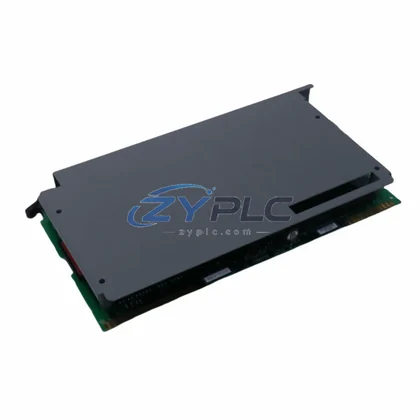
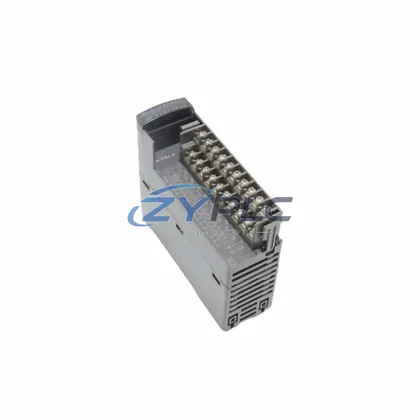
Yokogawa ADV551-P60/S2 Digital Output Module for CENTUM CS 3000 is handled as a quote-based CENTUM DCS spare part for DCS maintenance, process automation, and legacy-system replacement projects. ZYPLC checks the exact model suffix, installed Yokogawa platform, required condition, quantity, and destination country before quotation.
| Brand |
Yokogawa |
| Model / SKU |
ADV551-P60/S2 |
| Series context |
Installed Yokogawa platform to be confirmed |
| Part type |
Sensors & I/O |
| RFQ basis |
Availability, condition, lead time, and export shipment options are confirmed before quote. |
Where this part is typically used
This item is requested for CENTUM VP / CS3000 process-control maintenance, field-control station support, and installed-base replacement sourcing. Yokogawa CENTUM VP, CENTUM CS3000, ProSafe, field-control unit, ESB bus node, and DCS I/O installations often require exact suffix and cabinet-context checks before a replacement can be sourced.
RFQ information for maintenance teams
- Exact part number, suffix, and Yokogawa platform or cabinet context.
- Installed system such as CENTUM VP, CENTUM CS3000, ProSafe, Vnet/IP, or ESB bus where applicable.
- Quantity, urgency, required condition, and destination country.
- Photos of module labels, terminal bases, bus-node nameplates, or existing spare packaging.
Browse related Yokogawa spare parts, review the Installed Yokogawa platform to be confirmed series, or compare similar Sensors & I/O records. If the exact suffix is not shown, send the model and photos so the RFQ can be checked manually.
Request quote for this model
Yokogawa ADV551-P60/S2 Digital Output Module: Industrial Data Link for CENTUM CS 3000 Smart Factory Connectivity
The Yokogawa ADV551-P60/S2 is a high-reliability Digital Output Module engineered for the CENTUM CS 3000 Distributed Control System (DCS). Designed to serve as a critical node in industrial automation networks, this module bridges the gap between field-level actuators and upper-level control systems — enabling seamless signal transmission, real-time process control, and transparent data flow across the entire plant network. Whether deployed in petrochemical refineries, power generation facilities, pharmaceutical manufacturing lines, or advanced smart factory environments, the ADV551-P60/S2 delivers the deterministic output performance that modern industrial connectivity demands.
In today’s industrial landscape, the integrity of the data chain — from field device to SCADA dashboard — depends entirely on the reliability of each output module in the loop. The ADV551-P60/S2 occupies a pivotal position in this chain: it receives digital commands from the CENTUM CS 3000 controller nodes and translates them into precise electrical signals that drive solenoid valves, motor starters, relay outputs, and other final control elements on the plant floor. This direct coupling between the control layer and the physical process layer is what makes the ADV551-P60/S2 indispensable in high-availability DCS architectures.
Compatibility & Integration Notes
| Parameter |
Specification |
| SKU |
ADV551-P60/S2 |
| Brand |
Yokogawa |
| Series |
CENTUM CS 3000 DCS |
| Module Type |
Digital Output Module |
| Communication Protocol |
Vnet/IP (Yokogawa proprietary), compatible with CENTUM CS 3000 control bus |
| Interface Type |
Backplane bus interface, field terminal connection |
| Output Channels |
32-point digital output (P60 configuration) |
| Signal Type |
24 VDC digital output, transistor/relay selectable |
| Network Compatibility |
CENTUM CS 3000, CENTUM VP (with compatibility mode), Vnet/IP architecture |
| System Application |
DCS field output, PLC integration, SCADA gateway node, HMI command execution |
| Transmission Capability |
Real-time deterministic output, cyclic scan synchronization |
| Redundancy Support |
Dual-redundant configuration supported within CS 3000 architecture |
| Origin |
Japan |
| Warranty |
12 Months |
| Availability |
Verified availability confirmed by RFQ, shipment arranged after confirmation |
Connected Automation Data Flow
Understanding the ADV551-P60/S2 requires viewing it within the full context of the CENTUM CS 3000 automation architecture. In a typical smart factory deployment, the data flow originates at the sensor and field instrument layer — where devices such as pressure transmitters, flow meters, and temperature sensors feed analog and digital signals into input modules like the Yokogawa AAI141 (Analog Input Module) or ADV151 (Digital Input Module). These signals are processed by the CENTUM CS 3000 Field Control Station (FCS), which executes the control logic and issues output commands.
The ADV551-P60/S2 receives these commands via the Vnet/IP control bus and converts them into 24 VDC digital output signals that actuate field devices — including motor control centers, solenoid valve banks, and alarm annunciators. Simultaneously, the output status is fed back through the system bus to the Yokogawa HIS (Human Interface Station), where operators monitor process states in real time via the CENTUM CS 3000 HMI environment. For plants running parallel SCADA platforms, the Yokogawa Exaopc OPC Server bridges the CENTUM CS 3000 data to third-party SCADA systems such as Wonderware or iFIX, ensuring that every output command and status change is visible at the supervisory level.
In multi-node plant networks, the ADV551-P60/S2 works in concert with communication modules such as the Yokogawa ALR111 (Remote I/O communication module) and ACM12 (Communication Module) to extend the DCS reach to remote field junction boxes and satellite control panels. For facilities integrating legacy Modbus RTU or PROFIBUS DP devices, the Yokogawa ALE111 (Ethernet communication module) or dedicated protocol gateways handle the translation layer, ensuring that the digital output commands from the ADV551-P60/S2 can be coordinated with third-party PLCs, variable frequency drives (VFDs), and remote terminal units (RTUs) without data loss or latency spikes.
In advanced Industry 4.0 deployments, edge computing nodes — such as the Yokogawa OpreX Field Device Advisor or compatible third-party edge gateways — collect output status data from the CENTUM CS 3000 system and push it to cloud-based analytics platforms for predictive maintenance and production optimization. The ADV551-P60/S2, as the terminal output node in this chain, ensures that every control decision made at the cloud or SCADA level is faithfully executed at the field device level with millisecond-level determinism.
Solving Data Isolation in Industrial Sites
One of the most persistent challenges in industrial automation is the fragmentation of control data across incompatible systems — a problem commonly known as the data island effect. Plants that have evolved over decades often run a patchwork of legacy PLCs, standalone DCS nodes, proprietary HMI systems, and disconnected SCADA servers, each operating in isolation with no unified data backbone. The result is delayed alarm response, blind spots in production monitoring, and an inability to perform meaningful cross-system analytics.
The Yokogawa ADV551-P60/S2, deployed within the CENTUM CS 3000 architecture, directly addresses this challenge. By standardizing digital output operations on the Vnet/IP protocol backbone, the module ensures that all output commands and status feedback are captured within a single, unified control network. This eliminates the need for manual data reconciliation between disparate systems and provides a single source of truth for process state across the entire plant.
For facilities seeking to extend remote monitoring capabilities, the CENTUM CS 3000 system — with the ADV551-P60/S2 as a key output node — supports remote diagnostics via the Yokogawa Plant Resource Manager (PRM) and compatible asset management tools. Maintenance engineers can remotely verify output channel health, diagnose wiring faults, and confirm actuator response without dispatching field technicians, dramatically reducing mean time to repair (MTTR) and improving overall equipment effectiveness (OEE).
Production line transparency is further enhanced through the integration of the CENTUM CS 3000 with MES and ERP platforms. Output module status data from the ADV551-P60/S2 can be aggregated at the SCADA or OPC layer and forwarded to production dashboards, giving plant managers real-time visibility into equipment utilization, cycle counts, and alarm histories. This level of transparency is foundational to lean manufacturing initiatives and continuous improvement programs.
System scalability is another key advantage of the ADV551-P60/S2 platform. As production capacity expands, additional output modules can be added to the CENTUM CS 3000 I/O nest without reconfiguring the control network, thanks to the modular backplane architecture. This plug-and-play expandability ensures that the digital output infrastructure can grow in step with the plant automation requirements, protecting the initial capital investment and minimizing future integration costs.
Industrial Connectivity FAQ
Q1: What communication protocol does the Yokogawa ADV551-P60/S2 use, and is it compatible with third-party systems?
The ADV551-P60/S2 communicates via the Yokogawa Vnet/IP proprietary control bus within the CENTUM CS 3000 architecture. For integration with third-party PLCs, SCADA systems, or Modbus/PROFIBUS devices, protocol gateway modules such as the Yokogawa ALE111 or external OPC servers (e.g., Yokogawa Exaopc) are used to bridge the communication gap. This ensures full interoperability without compromising the deterministic performance of the DCS output layer.
Q2: How does the ADV551-P60/S2 ensure network stability and minimize output latency in high-demand environments?
The module is designed for cyclic scan synchronization within the CENTUM CS 3000 Field Control Station, ensuring that output commands are executed within the defined scan cycle — typically 100ms to 1000ms depending on configuration. The Vnet/IP backbone provides a dedicated, collision-free communication path that eliminates the latency variability associated with standard Ethernet networks, making the ADV551-P60/S2 suitable for time-critical process control applications.
Q3: Can the ADV551-P60/S2 be used in a redundant DCS configuration, and what testing is performed before shipment?
Yes, the ADV551-P60/S2 supports dual-redundant deployment within the CENTUM CS 3000 architecture, where paired output modules provide automatic failover in the event of a module fault. Every unit supplied by ZYPLC undergoes pre-shipment functional verification, including output channel continuity testing, communication bus handshake confirmation, and visual inspection for physical integrity. A warranty and support terms confirmed before quote is provided on all units, covering manufacturing defects and premature component failure.
Q4: What is the warranty coverage, and how quickly can the ADV551-P60/S2 be shipped?
All Yokogawa ADV551-P60/S2 modules supplied by ZYPLC carry a warranty and support terms confirmed before quote from the date of shipment. Verified Availability is confirmed by RFQ for same-day or next-business-day dispatch, with global shipping options including express air freight for urgent plant maintenance requirements. For bulk orders or long-term supply agreements, please contact our technical sales team directly.