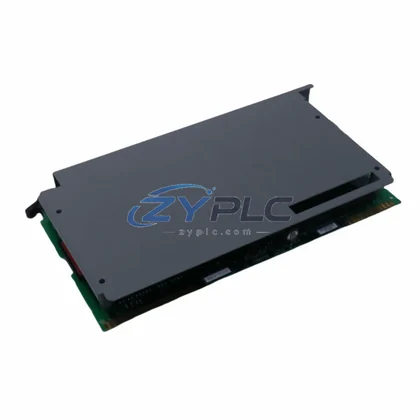
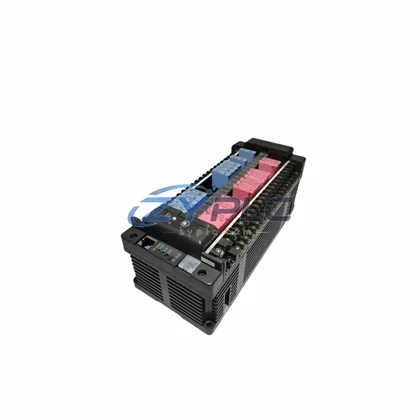
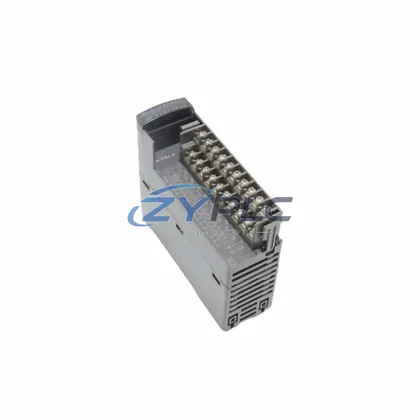
Yokogawa AIP571 DCS I/O Module for Centum CS3000 Automation
The Yokogawa AIP571 is a high-performance Remote I/O (RIO) module engineered for the Centum CS and Centum CS3000 Distributed Control System platforms. Designed to meet the rigorous demands of continuous process industries — including petrochemical, power generation, pulp and paper, and pharmaceutical manufacturing — the AIP571 delivers precise signal acquisition and reliable field-device interfacing while contributing directly to plant-wide maintenance planning strategies. With its compact form factor, low self-consumption design, and seamless integration into Yokogawa’s proven DCS architecture, the AIP571 is a cornerstone component for facilities seeking to reduce operational costs without compromising control accuracy or system uptime.
Product Specification Table
| Parameter |
Specification / Value |
| Module Type |
Analog Input Processor (RIO I/O Module) |
| Compatible System |
Yokogawa Centum CS / Centum CS3000 DCS |
| Signal Input Range |
4–20 mA DC (HART-compatible) |
| Power Consumption |
Low self-consumption design (<5W typical) |
| Operating Efficiency |
High-accuracy A/D conversion, ±0.1% FS |
| Application Environment |
Process industries: oil & gas, power, chemical, pharma |
| Maintenance Value |
Reduces signal noise, minimizes re-scan cycles, lowers CPU load |
| Communication Protocol |
Yokogawa RIO Bus (proprietary high-speed fieldbus) |
| Isolation |
Channel-to-channel and channel-to-bus isolation |
| Warranty |
Warranty and support terms confirmed before quote — Tested & Verified Before Shipment |
System Compatibility and Application
In a modern energy-conscious plant, the AIP571 does not operate in isolation — it functions as a critical node within a tightly integrated automation ecosystem. At the field level, transmitters and sensors feed 4–20 mA signals into the AIP571, which converts them with high-accuracy A/D processing and forwards clean digital data upstream via the Yokogawa RIO Bus. This eliminates signal retransmission errors that would otherwise force the controller to initiate costly re-scan cycles, wasting both processing time and energy.
The AIP571 pairs naturally with the AAI543 analog input module and the AAI141 multi-channel analog input card within the same Centum CS3000 I/O cabinet, enabling a distributed signal-gathering architecture that balances load across the RIO network. For digital output control — such as valve actuation or motor starter commands — the ADV551 digital output module works in tandem with the AIP571 to close the control loop efficiently. On the power supply side, the PW482 redundant power supply unit ensures that the I/O subsystem maintains continuous operation without energy-wasting failover delays.
At the controller level, the CP451 field control station processes the data delivered by the AIP571 and executes PID and advanced control algorithms that directly govern motor speed, valve position, and heat exchanger throughput. When paired with the SCP451 sequence control processor, the system can implement operational-efficiency interlocks — for example, automatically ramping down pump motors during low-demand periods based on real-time flow data captured through the AIP571. The AIP827 pulse input module complements the AIP571 in flow metering applications, providing high-resolution pulse counting for turbine and vortex flowmeters used in energy accounting.
For facilities running variable-speed drives, the AIP571’s analog output data can be forwarded to Yokogawa-compatible frequency inverters and servo drive systems via the AAI135 analog output module, enabling precise motor speed regulation that eliminates the unplanned downtime associated with throttling valves or fixed-speed motor operation. Human-machine interface terminals such as the ADV151 digital input module aggregate field status data, giving operators a real-time view of operating load trends across the production line — enabling proactive adjustments before inefficiencies escalate into costly downtime events.
Maintenance and Replacement Notes
The true value of the Yokogawa AIP571 in an maintenance planning context becomes evident when examining its role across a full production cycle. In a continuous chemical process, for example, dozens of temperature, pressure, and flow transmitters feed analog signals into AIP571 modules distributed across multiple RIO panels. The high-accuracy conversion performed by each AIP571 ensures that the Centum CS3000 controller receives clean, noise-free data — eliminating the need for software filtering loops that consume additional CPU cycles and introduce control latency.
Reduced control latency translates directly into tighter process control. Tighter process control means less overshoot in temperature regulation, fewer pressure relief valve activations, and more consistent flow rates — all of which reduce downtime at the process level. In a steam generation system, for instance, a 1% improvement in boiler feed control accuracy — enabled by reliable analog input data from the AIP571 — can translate into measurable reductions in fuel consumption over a 12-month operating period.
From a maintenance perspective, the AIP571’s robust isolation design protects the DCS backplane from field-side transients and ground loops that can corrupt data and trigger false alarms. False alarms force operators to investigate non-existent faults, consuming labor hours and sometimes initiating unnecessary equipment shutdowns. By delivering consistently clean signal data, the AIP571 reduces nuisance alarms, extends mean time between maintenance interventions, and supports a predictive maintenance posture — where equipment is serviced based on actual condition data rather than fixed schedules.
All units supplied by ZYPLC are sourced from verified channels, subjected to functional testing prior to shipment, and covered by a warranty and support terms confirmed before quote. RFQ-based availability ensures rapid deployment, minimizing the production downtime associated with extended lead times for critical spare parts.
Product Sourcing FAQ
Q1: How does the AIP571 contribute to reducing plant operating load?
The AIP571 delivers high-accuracy analog signal conversion that enables the Centum CS3000 controller to execute tighter PID control loops. Tighter control reduces process variability, which directly lowers downtime in heating, pumping, and compression systems. Fewer control corrections also mean less wear on actuators and drives, reducing the energy cost of maintenance-related restarts.
Q2: Is the AIP571 compatible with HART field devices?
Yes. The AIP571 supports HART communication over the standard 4–20 mA signal loop, allowing HART-enabled transmitters to pass diagnostic and configuration data alongside the primary process variable. This enables remote device health monitoring without additional wiring, supporting maintenance-focused predictive maintenance workflows.
Q3: Can the AIP571 replace older Centum CS I/O modules without a full system upgrade?
The AIP571 is designed for backward compatibility within the Centum CS and Centum CS3000 platform family. In most cases, it can be installed as a direct replacement for equivalent-generation RIO modules without requiring changes to the controller configuration or field wiring. We recommend confirming the specific revision compatibility with your system documentation or contacting our technical team before installation.
Q4: What testing and warranty coverage does ZYPLC provide for the AIP571?
Every AIP571 unit shipped by ZYPLC undergoes functional verification testing prior to dispatch, including signal input accuracy checks and communication bus integrity tests. Warranty terms are confirmed during quotation. In the event of a verified defect within the warranty period, ZYPLC will provide a replacement unit or full technical support to resolve the issue.