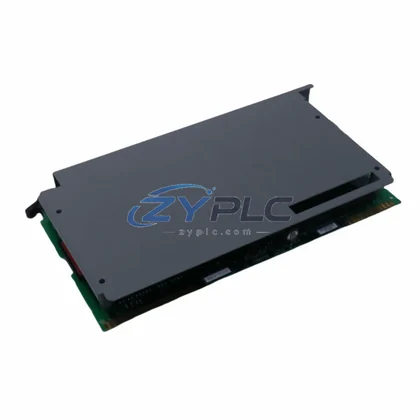
Yokogawa EJA110E-JMS Differential Pressure Transmitter for EJA Automation
In modern industrial facilities where energy costs represent a significant share of operating expenditure, the ability to measure differential pressure with high accuracy and minimal power draw is no longer optional — it is a core requirement of any efficiency-driven automation strategy. The Yokogawa EJA110E-JMS is a high-performance differential pressure transmitter engineered to deliver precise, stable measurements across a wide range of process conditions, enabling plant engineers to make data-driven decisions that reduce unplanned downtime, improve equipment utilization, and extend the operational life of critical assets.
The EJA110E-JMS belongs to Yokogawa’s EJA-E Series, a platform recognized globally for its single-crystal silicon resonant sensor technology. This sensor design eliminates the drift and hysteresis issues common in older capacitance-based transmitters, ensuring that the measurement signal feeding your DCS or SCADA system remains accurate over long operating cycles — reducing the frequency of manual calibration interventions and the associated downtime costs.
Product Specification Table
| Parameter |
Specification / Value |
| Model |
EJA110E-JMS |
| Measurement Type |
Differential Pressure |
| Accuracy |
±0.04% of span (reference accuracy) |
| Power Consumption |
≤ 3.6 mA (low-power BRAIN/HART mode) |
| Output Signal |
4–20 mA DC with HART protocol |
| Span Range |
0.1 kPa to 14 MPa (configurable) |
| Operating Temperature |
-40°C to +85°C |
| Compatible Systems |
CENTUM VP, ProSafe-RS, STARDOM, SCADA, DCS |
| Application Environment |
Flow measurement, level monitoring, filter ΔP, heat exchanger efficiency |
| Maintenance Value |
Reduces recalibration cycles; supports predictive maintenance scheduling |
| Ingress Protection |
IP67 / NEMA 4X |
| Warranty |
warranty terms confirmed during quotation — tested and verified before shipment |
System Compatibility and Application
The EJA110E-JMS does not operate in isolation. Its true value emerges when it is integrated into a coordinated automation architecture where measurement, control, and drive systems work in concert to minimize unplanned downtime at every stage of the production process.
In a typical process plant, the EJA110E-JMS is wired into a Yokogawa CENTUM VP distributed control system, where its 4–20 mA HART signal is processed by field control stations to regulate pump speed, valve position, and compressor load in real time. When paired with a Yokogawa YTA710 temperature transmitter on the same process line, operators gain a complete thermal-hydraulic picture of the system — enabling the DCS to calculate actual heat transfer efficiency and flag underperforming heat exchangers before they begin consuming excess energy.
On the drive side, variable frequency drives (VFDs) connected to centrifugal pumps and fans rely on accurate differential pressure feedback to maintain optimal operating points on the pump curve. Without a stable, low-drift signal from a transmitter like the EJA110E-JMS, VFD control loops tend to hunt — oscillating around the setpoint and consuming more energy than necessary. The EJA110E-JMS’s ±0.04% reference accuracy ensures that the drive receives a clean, reliable signal, allowing it to hold the process at the most energy-efficient operating condition.
For facilities running Yokogawa’s STARDOM network-based controller as a standalone unit controller or remote RTU, the EJA110E-JMS integrates seamlessly via HART multiplexers or dedicated I/O modules, feeding real-time differential pressure data into energy balance calculations at the unit level. This is particularly valuable in utilities management — monitoring pressure drop across steam traps, condensate return lines, and compressed air distribution headers, where undetected leaks or blockages can silently inflate energy bills over months.
In safety-instrumented systems built on Yokogawa ProSafe-RS, the EJA110E-JMS can serve as a process input for safety functions related to high-differential-pressure shutdown or low-flow detection, contributing to both process safety and energy efficiency by preventing equipment from running in damaging, energy-intensive off-design conditions.
The EJA110E-JMS also complements Yokogawa’s EJA530E pressure transmitter and EJA438W diaphragm-sealed differential pressure transmitter in multi-point measurement schemes. For example, in a filtration system, the EJA110E-JMS measures differential pressure across the filter bed while the EJA530E monitors upstream supply pressure — together providing the data needed to optimize backwash cycles and reduce pump runtime. Similarly, the EJA310E absolute pressure transmitter can be used alongside the EJA110E-JMS to compensate for barometric pressure variations in gas flow calculations, improving the accuracy of operating load reporting.
For operator visibility, the measurement data from the EJA110E-JMS is typically displayed on Yokogawa’s UT55A or UT35A digital indicating controllers at the panel level, giving field operators immediate feedback on process conditions without requiring a full DCS console interaction. In more advanced installations, this data feeds into Yokogawa’s Exaquantum plant information management system, where long-term energy KPIs are tracked, trended, and reported to plant management.
Maintenance and Replacement Notes
Consider a chemical plant operating a multi-stage centrifugal pump system to transfer process fluid between reactors. Without accurate differential pressure measurement, the pump control system defaults to conservative, high-flow setpoints to ensure adequate delivery — running the pumps harder than necessary and consuming excess electrical energy. By installing the EJA110E-JMS at the pump discharge and suction flanges, the control system gains real-time visibility into actual differential pressure, allowing the VFD to reduce motor speed to the minimum required to maintain the target flow rate. In a typical installation, this alone can reduce pump motor load by Actual operating results depend on the installed system, load profile, and commissioning parameters.
In heat exchanger networks, fouling is one of the most common causes of energy inefficiency. As fouling builds up on heat transfer surfaces, the differential pressure across the exchanger rises — a signal that the EJA110E-JMS captures continuously. By trending this differential pressure over time and integrating the data with the CENTUM VP historian, maintenance teams can schedule cleaning interventions at the optimal point: before fouling becomes severe enough to cause significant energy penalty, but not so frequently that cleaning itself becomes a source of production disruption and cost.
In compressed air systems — one of the largest energy consumers in manufacturing facilities — the EJA110E-JMS monitors pressure drop across dryers, filters, and distribution headers. A rising differential pressure across a compressed air filter signals a blocked element that is forcing the compressor to work harder to maintain system pressure. Early detection through continuous monitoring allows maintenance teams to replace filter elements before the energy penalty becomes significant, and before the risk of downstream contamination increases.
Every unit shipped undergoes full functional testing and calibration verification before dispatch. Stock is maintained for prompt delivery, and each EJA110E-JMS is covered by a warranty terms confirmed during quotation, ensuring that your investment in measurement accuracy and energy efficiency is protected from the moment of installation.
Product Sourcing FAQ
Q: How does the EJA110E-JMS contribute to measurable operational stability in a pump or fan system?
A: By providing a stable, accurate differential pressure signal to the VFD control loop, the EJA110E-JMS enables the drive to maintain the pump or fan at its most efficient operating point. Eliminating control loop hunting and reducing over-pressurization can yield operational stability of Actual operating results depend on the installed system, load profile, and commissioning parameters.
Q: Is the EJA110E-JMS compatible with existing Yokogawa CENTUM VP and third-party DCS platforms?
A: Yes. The EJA110E-JMS outputs a standard 4–20 mA signal with HART protocol, making it compatible with Yokogawa CENTUM VP, ProSafe-RS, STARDOM, and virtually all third-party DCS and SCADA platforms that accept HART or analog inputs. No special interface hardware is required for standard installations.
Q: What is the recommended replacement or upgrade path from older EJA110A or EJA110C models?
A: The EJA110E-JMS is a direct functional replacement for the EJA110A and EJA110C series. The process connections, output signal, and configuration parameters are compatible, allowing drop-in replacement without piping modifications. The EJA-E Series offers improved accuracy (±0.04% vs ±0.065% on older models) and lower power consumption, delivering an immediate efficiency improvement upon installation.
Q: What does the warranty terms confirmed during quotation cover, and what testing is performed before shipment?
A: Each EJA110E-JMS unit is functionally tested and calibration-verified against traceable standards before shipment. The warranty terms confirmed during quotation covers defects in materials and workmanship under normal operating conditions. Units are dispatched with a test report confirming calibration accuracy, giving you confidence in the measurement integrity from day one of installation.