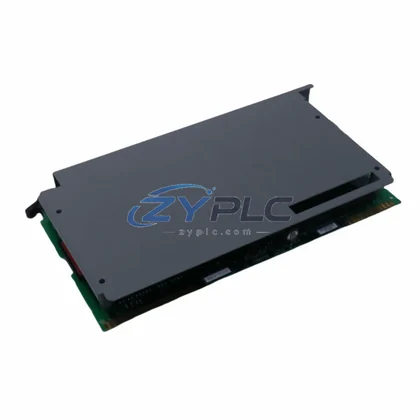
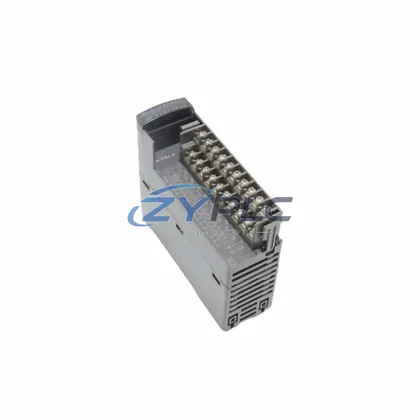
The Yokogawa ER5*B RTD Input Module is a precision field-level signal acquisition component engineered for the Centum VP Distributed Control System (DCS). Designed to capture resistance temperature detector (RTD) signals from thermocouples, Pt100, Pt1000, and other RTD-type sensors deployed across industrial process lines, the ER5*B serves as the critical first node in the plant-wide data chain — converting analog temperature signals into reliable digital values that feed directly into the Centum VP controller network.
In modern smart factory environments, accurate and continuous temperature data is not optional — it is the backbone of process stability, energy efficiency, and regulatory compliance. The ER5*B addresses this need by providing multi-channel RTD input capability with high-resolution analog-to-digital conversion, low drift performance, and robust noise immunity suited for harsh industrial environments including chemical plants, oil refineries, power generation facilities, and pharmaceutical manufacturing lines.
From the moment a temperature sensor detects a deviation at the field level, the ER5*B captures the signal, digitizes it, and transmits it upstream through the Centum VP I/O bus to the Yokogawa PFCS (Process Field Control Station) or SFCS (Sequence Field Control Station). These controller nodes process the data in real time, executing PID loops, alarm logic, and interlock sequences before forwarding aggregated process values to the Centum VP HIS (Human Interface Station) — the operator workstation where SCADA-level visualization, trend monitoring, and alarm management take place.
Compatibility & Integration Notes
| Parameter |
Specification |
| Module Type |
RTD Input Module |
| SKU |
ER5*B |
| Compatible Series |
Yokogawa Centum VP DCS |
| Input Signal Type |
RTD (Pt100, Pt1000, JPt100, Cu10, Ni100, etc.) |
| Communication Protocol |
Centum VP I/O Bus (Vnet/IP compatible architecture) |
| Network Interface |
Internal DCS I/O backplane bus |
| Transmission Capability |
Real-time analog signal digitization and upstream data transfer |
| Network Compatibility |
Centum VP, Centum CS 3000 (with adapter), Exaopc OPC interface |
| System Application |
Process temperature monitoring, PID control, SCADA integration, alarm management |
| Mounting |
DCS I/O nest / field control station rack |
| Origin |
Japan |
| Warranty |
Warranty and support terms confirmed before quote |
Connected Automation Data Flow
The ER5*B sits at the foundation of a layered industrial automation architecture. At the field level, RTD sensors — such as those embedded in reactor vessels, heat exchangers, distillation columns, and pipeline segments — continuously measure process temperatures and transmit resistance values to the ER5*B input channels. The module digitizes these signals and passes structured data through the Centum VP I/O nest to the field control station.
Within the Yokogawa PFCS, the temperature data is processed against configured setpoints and control logic. When a deviation is detected — for example, a reactor temperature exceeding its upper alarm limit — the PFCS triggers an alarm event that propagates through the Vnet/IP communication network to the HIS operator station. Operators viewing the Centum VP SCADA display receive real-time trend data, alarm banners, and process graphics that reflect the live plant state.
For facilities integrating third-party systems, the Yokogawa Exaopc OPC DA/UA server bridges the Centum VP network with external SCADA platforms, MES systems, and historian databases. This allows temperature data captured by the ER5*B to flow seamlessly into enterprise-level analytics, energy management systems, and predictive maintenance platforms.
In multi-loop control architectures, the ER5*B works alongside Yokogawa ER5*C Thermocouple Input Modules and ER5*D Analog Input Modules within the same I/O nest, enabling mixed-signal acquisition from diverse field instruments. Remote I/O extensions using Yokogawa RIO (Remote I/O) nodes allow the ER5*B signal chain to extend across large plant footprints without signal degradation, maintaining data integrity from field to control room.
For drive and motor control integration, temperature data from the ER5*B can be used to monitor motor winding temperatures via Yokogawa variable frequency drives (VFDs) integrated into the Centum VP network, enabling thermal protection interlocks and predictive maintenance alerts. Edge computing nodes — such as Yokogawa OpreX Field Device Advisor — can further process ER5*B data streams locally, reducing latency for time-critical control decisions and enabling offline diagnostics during network interruptions.
Solving Data Isolation in Industrial Sites
One of the most persistent challenges in legacy industrial facilities is data isolation — where field instruments, PLCs, DCS nodes, and SCADA systems operate in silos, unable to share process data efficiently. The Yokogawa ER5*B, as part of the Centum VP ecosystem, directly addresses this problem by providing a standardized, high-integrity RTD input path that integrates natively with the Centum VP communication architecture.
Plants running mixed-protocol environments — where older 4–20 mA analog loops coexist with HART-enabled smart instruments and digital fieldbus devices — benefit from the ER5*B’s ability to digitize legacy RTD signals and inject them into the modern Centum VP data fabric. This eliminates the need for standalone signal converters or protocol gateways at the field level, reducing wiring complexity and potential failure points.
For remote monitoring and diagnostics, the ER5*B’s data is accessible through the Centum VP’s built-in remote engineering tools, allowing maintenance engineers to review channel health, calibration status, and signal quality from the control room or via secure remote access — without requiring physical access to the field cabinet. This capability is essential for facilities operating in hazardous areas or geographically distributed plant sites.
Production line transparency is further enhanced by feeding ER5*B temperature data into Yokogawa Plant Resource Manager (PRM), which provides asset management, calibration scheduling, and device health monitoring across the entire instrument network. As plant expansion demands grow, additional ER5*B modules can be added to existing I/O nests or new RIO stations without architectural redesign, ensuring scalable system growth aligned with production capacity increases.
Industrial Connectivity FAQ
Q1: What communication protocol does the Yokogawa ER5*B use within the Centum VP system?
The ER5*B communicates via the Centum VP internal I/O bus, which operates within the broader Vnet/IP Ethernet-based control network. This architecture supports deterministic, real-time data transfer between field I/O modules and field control stations, with typical scan cycle times in the millisecond range — ensuring low-latency temperature data delivery for time-critical process control loops.
Q2: Is the ER5*B compatible with systems other than Centum VP?
The ER5*B is natively designed for the Yokogawa Centum VP platform. Compatibility with Centum CS 3000 may be possible with appropriate adapter hardware and firmware verification. For integration with third-party SCADA or MES systems, the Yokogawa Exaopc OPC DA/UA server provides a standardized data bridge. We recommend consulting with our technical team to confirm compatibility for your specific system configuration.
Q3: How is network stability and signal integrity maintained for the ER5*B in harsh industrial environments?
The ER5*B is engineered with industrial-grade noise immunity, including shielded signal paths and hardware filtering to reject electromagnetic interference common in motor-heavy or high-voltage industrial environments. The Centum VP I/O bus architecture includes redundancy options at the controller and network levels, ensuring continuous data flow even in the event of a single-point hardware failure. All modules undergo factory acceptance testing (FAT) prior to shipment.
Q4: What does the warranty and support terms confirmed before quote cover, and what is the shipping lead time?
Every Yokogawa ER5*B unit supplied by ZYPLC is Warranty terms are confirmed during quotation. We maintain RFQ-based sourcing support of Centum VP I/O modules to support urgent project timelines, with Export shipping options available after RFQ confirmation. Pre-shipment functional testing is performed on all units. For stock availability, lead time confirmation, or technical support, contact our team directly.