Yokogawa F3YD64-1A Industrial Network Interface for STARDOM Systems: Bridging Field Devices and Smart Factory Data Links
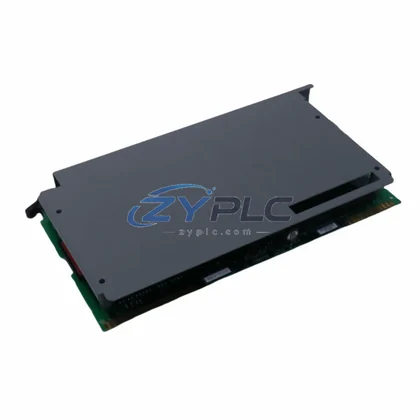
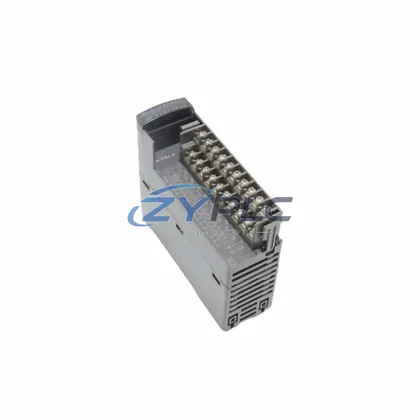
In modern industrial environments, the ability to move real-time data seamlessly from field-level devices to supervisory control systems is no longer optional — it is the foundation of operational efficiency. The Yokogawa F3YD64-1A Transistor Output Module, designed for the STARDOM network-based control system platform, delivers exactly this capability. With 64-point NPN transistor output capacity, this module serves as a critical node in the industrial data chain, enabling reliable signal transmission from PLC controllers to actuators, drives, and distributed I/O systems across the plant floor.
The F3YD64-1A is engineered to operate within Yokogawa’s STARDOM architecture — a platform purpose-built for distributed control, remote monitoring, and seamless SCADA integration. Whether deployed in oil and gas processing, water treatment, chemical manufacturing, or discrete factory automation, this module ensures that output commands are executed with precision and minimal latency, supporting the real-time demands of modern smart factory operations.
Compatibility & Integration Notes
| Specification |
Detail |
| SKU / Part Number |
F3YD64-1A |
| Brand / Series |
Yokogawa STARDOM |
| Module Type |
Transistor Output Module (NPN, Sink Type) |
| Output Points |
64 Points |
| Communication Protocol |
STARDOM Network Bus, Modbus TCP/IP compatible integration |
| Interface Type |
Backplane Bus Interface (STARDOM F3 Series Rack) |
| Network Compatibility |
Ethernet-based SCADA, DCS, HMI, and remote I/O networks |
| System Application |
PLC Output Control, Remote I/O Expansion, SCADA Gateway Node |
| Output Voltage Range |
12–24 VDC |
| Origin |
Japan |
| Warranty |
12 Months |
| Availability |
RFQ Available — Global Shipping |
Connected Automation Data Flow
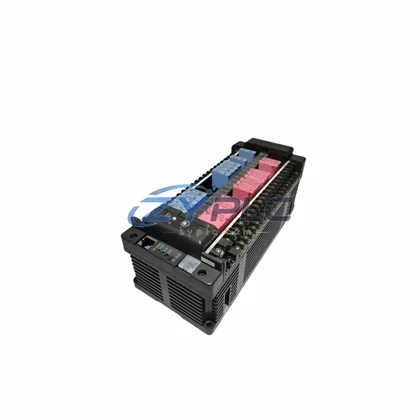
The F3YD64-1A does not operate in isolation. Its true value emerges when viewed as part of a broader industrial data flow architecture. In a typical STARDOM-based control system, the F3SP71-4S sequence CPU module acts as the central processing unit, executing ladder logic and issuing output commands that are routed through the F3YD64-1A to downstream actuators and relay-driven loads. Alongside it, the F3XD64-3N transistor input module captures digital signals from proximity sensors, limit switches, and safety interlocks, feeding real-time status data back to the CPU for closed-loop control.
For analog process variables — such as temperature, pressure, and flow — the F3AD08-0N analog input module collects 4–20 mA signals from field transmitters and converts them into engineering units for the SCADA layer. When the control system needs to communicate upstream with a Yokogawa CENTUM VP DCS or a third-party SCADA platform, the F3NC11-0N Ethernet communication module provides the TCP/IP gateway function, bridging the STARDOM backplane bus to the plant-wide Ethernet network.
At the HMI layer, Yokogawa’s F3RP71-4S Linux-based CPU module supports web-based monitoring and can serve as an embedded data concentrator, aggregating I/O status from multiple F3YD64-1A output modules and transmitting consolidated data packets to upstream SCADA servers. For remote sites or unmanned substations, the F3PU20-0S power supply unit ensures stable 24 VDC rail voltage, maintaining uninterrupted operation of the entire F3 series rack assembly even under fluctuating grid conditions.
In drive control applications, the F3YD64-1A output points interface directly with Yokogawa’s VariFlex series variable frequency drives, issuing run/stop commands and speed reference signals via discrete output channels. For edge computing and IIoT connectivity, the F3BU13-0N base unit provides the physical rack infrastructure that houses the F3YD64-1A alongside communication and CPU modules, enabling a compact yet scalable control node deployable at remote field locations. Sensor data from AAI143-S00 analog input modules and status feedback from ADV151-P00 digital input modules complete the data acquisition layer, ensuring that every process variable is captured, processed, and acted upon within the STARDOM network’s deterministic scan cycle.
Solving Data Isolation in Industrial Sites
One of the most persistent challenges in industrial automation is data isolation — the condition where field devices, PLCs, remote I/O stations, and enterprise systems operate in silos, unable to share process data in real time. The Yokogawa F3YD64-1A, as part of the STARDOM platform, directly addresses this problem through its native integration with Yokogawa’s network-based control architecture.
Protocol fragmentation is a common root cause of data isolation. Legacy systems may rely on RS-485 Modbus RTU, while newer infrastructure demands Modbus TCP/IP or OPC-UA. The STARDOM platform’s communication modules bridge these protocol gaps, allowing the F3YD64-1A’s output states to be monitored and commanded from any SCADA or HMI system regardless of the underlying communication standard. This eliminates the need for costly protocol converters and reduces network complexity.
Remote monitoring and diagnostics are equally critical. In geographically distributed installations — pipeline monitoring stations, water pumping substations, or offshore platforms — the ability to remotely verify output module status, diagnose fault conditions, and issue corrective commands without dispatching field technicians translates directly into reduced downtime and lower maintenance costs. The STARDOM system’s built-in remote access capabilities, combined with the F3YD64-1A’s module-level diagnostics, provide operators with full visibility into output channel health from any connected workstation.
Production line transparency is another key benefit. By integrating the F3YD64-1A into a SCADA-connected STARDOM network, plant managers gain real-time dashboards showing output activation rates, cycle counts, and fault histories — data that feeds continuous improvement initiatives and supports predictive maintenance strategies. System expansion is equally straightforward: additional F3YD64-1A modules can be added to existing STARDOM racks without reconfiguring the network, supporting phased capacity growth aligned with production demands.
Every F3YD64-1A unit supplied by ZYPLC undergoes pre-shipment functional testing to verify output channel integrity, communication bus response, and power rail stability. All units are backed by a warranty terms confirmed during quotation and supported by RFQ-confirmed sourcing for rapid global deployment.
Industrial Connectivity FAQ
Q1: What communication protocols does the Yokogawa F3YD64-1A support for SCADA integration?
The F3YD64-1A operates on the STARDOM backplane bus and integrates with Yokogawa’s Ethernet communication modules (such as the F3NC11-0N) to support Modbus TCP/IP and OPC-based SCADA connectivity. This allows seamless data exchange with third-party HMI and SCADA platforms without additional protocol converters.
Q2: How does the F3YD64-1A perform in high-speed output switching applications?
The module’s NPN transistor outputs are designed for fast switching cycles, making it suitable for high-frequency discrete control tasks such as solenoid valve actuation, conveyor drive commands, and indicator light control. Output response time is within the STARDOM CPU scan cycle, ensuring deterministic control performance.
Q3: Can the F3YD64-1A be expanded or integrated into larger STARDOM network architectures?
Yes. The F3YD64-1A is fully compatible with the STARDOM F3 series rack system, allowing multiple output modules to be installed alongside CPU, communication, and analog I/O modules in a single rack. The STARDOM platform supports multi-rack and multi-node network configurations, enabling system expansion without architectural redesign.
Q4: What quality assurance and warranty coverage does ZYPLC provide for the F3YD64-1A?
All F3YD64-1A units supplied by ZYPLC are sourced from verified supply channels and undergo pre-shipment functional testing covering output channel verification, bus communication integrity, and power supply stability. Each unit is covered by a warranty terms confirmed during quotation from the date of shipment, with technical support available throughout the warranty period.