Yokogawa F3YD64-1P Industrial Network Interface for STARDOM Systems: Bridging Field Devices and Industrial Data Links
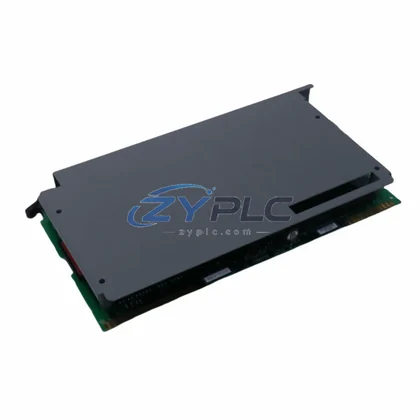
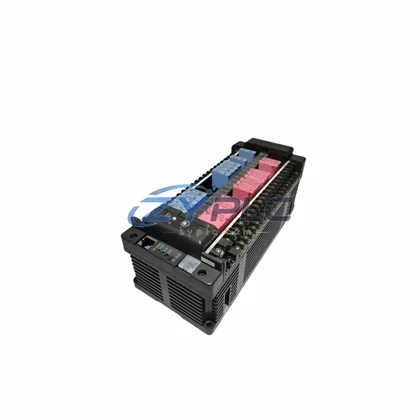
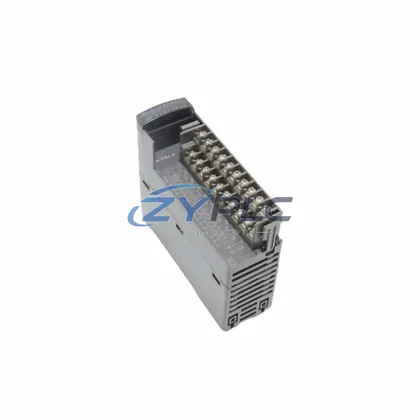
The Yokogawa F3YD64-1P is a 64-channel transistor digital output module engineered for deployment within the STARDOM FCN and FCJ autonomous controller platforms. Designed to serve as a critical node in the industrial data chain, the F3YD64-1P translates controller-level logic commands into precise field-level switching signals, enabling seamless communication between PLC control layers, remote I/O subsystems, and downstream actuators across complex smart factory environments. With its high-density channel architecture and robust signal integrity, this module supports the real-time data flow demands of modern industrial automation networks — from signal acquisition at the sensor level all the way through to SCADA visualization and remote diagnostic platforms.
In today’s connected manufacturing landscape, the ability to maintain uninterrupted data flow between field instrumentation, control hardware, and supervisory systems is non-negotiable. The F3YD64-1P addresses this need by providing a reliable, high-speed digital output interface that integrates natively within the STARDOM FCN/FCJ ecosystem, supporting deterministic I/O response times critical for process control, safety interlocking, and production line automation.
Compatibility & Integration Notes
| Specification |
Detail |
| SKU / Part Number |
F3YD64-1P |
| Brand |
Yokogawa |
| Series |
STARDOM FCN / FCJ |
| Module Type |
64-Channel Transistor Digital Output Module |
| Output Channels |
64 channels (NPN transistor output) |
| Communication Protocol |
STARDOM internal bus; compatible with Modbus TCP, OPC-UA via FCN/FCJ controller |
| Network Compatibility |
Ethernet-based STARDOM network; integrates with SCADA, DCS, and HMI systems |
| Interface Type |
Backplane I/O bus (STARDOM FCN/FCJ base unit) |
| Transmission Capability |
High-speed deterministic digital output; real-time process control |
| System Application |
PLC control, remote I/O, SCADA integration, HMI feedback, safety interlock systems |
| Origin |
Japan |
| Warranty |
warranty terms confirmed during quotation |
| Availability |
RFQ Available — Global Shipping Available |
Connected Automation Data Flow
The F3YD64-1P operates at the heart of a layered industrial communication architecture. At the field level, sensors and transmitters — such as Yokogawa EJA-series pressure transmitters and YTA-series temperature transmitters — feed analog and digital signals upward through the I/O layer. The F3YD64-1P, mounted within an FCN autonomous controller base unit (e.g., the NFBU100-S00 base unit), receives output commands from the FCN processor module such as the F3SP71-4S or F3SP76-7S, translating those commands into discrete switching actions that drive solenoid valves, motor starters, indicator lamps, and relay-controlled actuators on the plant floor.
Within the STARDOM FCN/FCJ rack, the F3YD64-1P works in close coordination with complementary I/O modules. Digital input counterparts such as the F3XD64-3N provide the upstream signal acquisition layer, capturing discrete status signals from limit switches, proximity sensors, and pushbutton stations. Analog output modules like the F3YA04-1N handle continuous control signals for variable-speed drives and control valves, while analog input modules such as the F3XA04-1N or AAI543-H00 gather process variable data from field transmitters. Together, these modules form a tightly integrated I/O subsystem that feeds real-time process data into the FCN controller’s execution engine.
At the network communication layer, the FCN controller aggregates all I/O data and exposes it via Modbus TCP and OPC-UA protocols to upstream SCADA platforms, historian servers, and HMI terminals. Yokogawa’s FAST/TOOLS SCADA software and Exaopc OPC server interface directly with the FCN/FCJ platform, enabling plant-wide data visibility, alarm management, and trend analysis. Remote operator stations running HMI applications can monitor the real-time status of all 64 output channels managed by the F3YD64-1P, with millisecond-level update rates ensuring that control room displays accurately reflect field conditions.
For distributed plant architectures, the FCJ compact controller (paired with modules like the F3YD32-1P for smaller output channel counts) can be deployed at remote field panels and connected back to the central FCN controller or DCS gateway via Ethernet. This architecture supports remote I/O expansion across geographically dispersed production units, substations, and utility systems — all managed from a centralized SCADA or DCS environment. Edge gateway devices can further extend connectivity to cloud-based analytics platforms, enabling predictive maintenance and maintenance planning applications that leverage the real-time output status data generated by the F3YD64-1P.
Solving Data Isolation in Industrial Sites
One of the most persistent challenges in industrial automation is the fragmentation of control systems across different generations of hardware, communication protocols, and vendor ecosystems. Legacy PLCs, standalone RTUs, and proprietary fieldbus networks often create data silos that prevent plant operators from achieving a unified view of production status, equipment health, and process efficiency.
The Yokogawa F3YD64-1P, deployed within the STARDOM FCN/FCJ platform, directly addresses these integration challenges. The FCN controller’s multi-protocol communication capability — supporting Modbus TCP, OPC-UA, and DNP3 — allows the F3YD64-1P’s output channel data to be shared across heterogeneous control environments without requiring protocol-specific gateways or middleware. This eliminates the communication barriers that typically isolate field device data from supervisory systems, enabling true plant-wide transparency.
For sites where legacy equipment communicates over serial protocols such as RS-485 Modbus RTU, the FCN platform’s serial communication modules (e.g., F3NC11-0N) can bridge these older devices into the Ethernet-based STARDOM network, ensuring that even aging field instruments contribute their data to the unified process picture. The F3YD64-1P’s output channels can then be used to drive actuators and control elements based on consolidated data from both legacy and modern field devices — closing the loop between data acquisition and physical process control.
Remote monitoring and diagnostics are further enhanced by the FCN platform’s built-in web server functionality, which allows authorized personnel to access real-time I/O status, module health diagnostics, and alarm logs from any networked device — without requiring dedicated engineering workstations or VPN tunnels. This capability is particularly valuable for unmanned remote stations, offshore platforms, and geographically distributed utility networks where on-site maintenance visits are costly and infrequent.
Production line transparency is achieved through the integration of the F3YD64-1P’s output data with MES (Manufacturing Execution Systems) and ERP platforms via OPC-UA. By exposing discrete output states — valve positions, motor run/stop status, conveyor drive commands — as structured data objects, the FCN/FCJ platform enables production managers to correlate equipment control actions with production throughput, quality metrics, and operating load in real time. This data-driven approach supports continuous improvement initiatives, reduces unplanned downtime, and accelerates root-cause analysis when process deviations occur.
Industrial Connectivity FAQ
Q1: What communication protocols does the Yokogawa F3YD64-1P support for SCADA and HMI integration?
The F3YD64-1P is a digital output module that interfaces with the STARDOM FCN/FCJ controller backplane. The FCN/FCJ controller exposes I/O data — including the output channel states managed by the F3YD64-1P — via Modbus TCP, OPC-UA, and DNP3 protocols. This allows direct integration with leading SCADA platforms, HMI software, and historian servers without requiring additional protocol converters.
Q2: How does the F3YD64-1P ensure network stability and deterministic output response in high-demand industrial environments?
The F3YD64-1P communicates with the FCN processor module via the STARDOM internal I/O bus, which provides deterministic, scan-cycle-synchronized data exchange. This architecture isolates the output module from Ethernet network variability, ensuring that output switching commands are executed with consistent timing regardless of network load conditions on the plant Ethernet segment.
Q3: Can the F3YD64-1P be used in system expansion projects where additional I/O capacity is required?
Yes. The STARDOM FCN platform supports multi-rack expansion, allowing additional base units populated with F3YD64-1P modules and other I/O types to be added as production capacity grows. The FCN controller’s I/O configuration is managed through the STARDOM Engineering Tool, enabling seamless addition of new modules without disrupting existing control logic or network communication.
Q4: What pre-shipment testing and warranty coverage is provided for the F3YD64-1P?
Every F3YD64-1P unit is subject to functional verification testing prior to shipment, confirming channel integrity, output switching performance, and backplane communication. All units are covered by a warranty terms confirmed during quotation against manufacturing defects. Availability is confirmed via RFQ for shipment arranged after confirmation with global shipping support, minimizing lead times for urgent maintenance and project requirements.