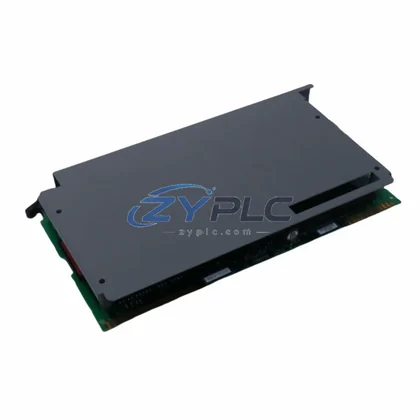
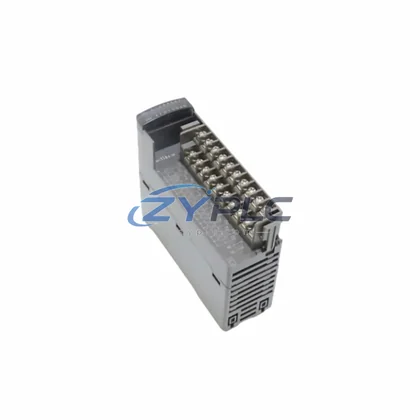
Yokogawa MR6-16-2*A/BU RTD Module for MR6000
The Yokogawa MR6-16-2*A/BU is a precision RTD (Resistance Temperature Detector) input module engineered for seamless integration within the MR6000 Modular Signal Recorder platform. In modern industrial control architectures, data acquisition is not a standalone function — it is the sensory backbone that connects field instrumentation to supervisory control, process optimization, and long-term asset management. This module is designed to fulfill that role with exceptional accuracy, system-level compatibility, and the reliability demanded by continuous-process industries.
Within a layered automation system, the MR6-16-2*A/BU occupies a critical position at the I/O and measurement layer, receiving analog temperature signals from RTD sensors distributed across the process field and converting them into calibrated digital values that feed the MR6000 recorder’s internal processing engine. Its 16-channel capacity allows engineers to consolidate a high density of temperature measurement points into a single module slot, reducing rack space requirements and simplifying wiring infrastructure without sacrificing signal fidelity.
Product Specification Table
| Parameter |
Specification |
| System Role |
RTD Input Module — I/O Layer, MR6000 Modular Recorder Platform |
| SKU / Model |
MR6-16-2*A/BU (Yokogawa MR6 Series) |
| Input Channels |
16 Channels, RTD (Resistance Temperature Detector) |
| Supported RTD Types |
Pt100, Pt1000, JPt100, Cu10, Ni100 (IEC/JIS standard) |
| Measurement Range |
-200°C to +850°C (type-dependent) |
| Accuracy |
±0.1°C (typical, at reference conditions) |
| Electrical Interface |
3-wire / 4-wire RTD connection |
| Communication |
Internal backplane bus — MR6000 system architecture |
| Power Supply |
Supplied via MR6000 mainframe backplane (no external PSU required) |
| Installation Environment |
Panel-mount, DIN rail compatible via MR6000 chassis; IP20 enclosure class |
| Operating Temperature |
0°C to +50°C ambient |
| Compliance |
CE, UL, RoHS; Yokogawa MR6000 platform certified |
| Country of Origin |
Japan |
| Warranty |
warranty terms confirmed during quotation — covers manufacturing defects and functional failure under normal operating conditions |
System Compatibility Notes
The MR6-16-2*A/BU achieves its full potential when deployed as part of a coordinated, multi-layer control architecture. In a typical MR6000-based system, the module is installed into the MR6000 mainframe chassis alongside complementary input modules such as the MR6-16-1 universal analog input module and the MR6-16-3 thermocouple input module, allowing engineers to build a mixed-signal acquisition front-end that handles temperature, voltage, current, and resistance measurements from a unified platform.
At the control layer, the MR6000 recorder communicates with upstream SCADA systems or DCS platforms — such as Yokogawa CENTUM VP or FAST/TOOLS — via Ethernet (Modbus TCP or OPC-UA), ensuring that RTD data captured by the MR6-16-2*A/BU is available in real time to process controllers and historian databases. For installations requiring redundant data paths, the MR6000 platform supports dual-port Ethernet configurations, and the MR6-16-2*A/BU’s channel data can be mirrored across redundant recorder units to eliminate single points of failure in critical measurement loops.
At the power layer, the MR6000 mainframe is typically paired with a dedicated 24 VDC DIN rail power supply unit, and for high-availability installations, dual redundant PSUs with automatic switchover are recommended. The MR6-16-2*A/BU draws its operating power entirely from the backplane, simplifying power budgeting and eliminating the need for individual module-level power wiring.
For human-machine interface integration, RTD data from the MR6-16-2*A/BU can be displayed on Yokogawa’s dedicated recorder display panels or exported to third-party HMI platforms via standard industrial protocols. In distributed architectures, the module’s data streams are often aggregated with outputs from Yokogawa DX2000 paperless recorders or GX20 data loggers to provide plant-wide temperature trending and alarm management.
At the field instrumentation level, the MR6-16-2*A/BU interfaces directly with Pt100 RTD sensors installed on heat exchangers, reactors, pipelines, and storage vessels. Its 3-wire and 4-wire connection support eliminates lead resistance errors, ensuring measurement accuracy even over long cable runs — a critical requirement in large-scale process plants where sensor-to-recorder distances may exceed 100 meters.
For system expansion, additional MR6-16-2*A/BU modules can be added to the MR6000 chassis as measurement point requirements grow, and the platform’s modular architecture ensures that new modules are recognized and configured automatically without requiring system downtime. This plug-and-measure capability significantly reduces commissioning time and supports phased project rollouts.
Industrial Application Notes
The MR6-16-2*A/BU is deployed across a wide range of industrial sectors where precise, multi-point temperature monitoring is essential to process safety, product quality, and regulatory compliance.
In petrochemical and refinery applications, the module monitors temperature profiles across distillation columns, heat exchangers, and reactor vessels, providing the continuous data streams required for advanced process control (APC) and safety instrumented system (SIS) integration. Its high channel density allows a single MR6000 chassis to cover an entire process unit, reducing the number of field junction boxes and simplifying cable management.
In power generation and electrical substation environments, the MR6-16-2*A/BU monitors transformer winding temperatures, generator bearing temperatures, and cooling system performance. Its compatibility with Yokogawa’s CENTUM VP DCS platform allows temperature data to be integrated directly into plant-wide maintenance planning and predictive maintenance workflows.
In pharmaceutical and food processing facilities, where temperature validation is a regulatory requirement (FDA 21 CFR Part 11, GMP), the MR6000 platform’s audit trail and electronic signature capabilities — fed by RTD data from the MR6-16-2*A/BU — provide the documentation infrastructure required for compliance reporting and batch record management.
In water treatment and municipal infrastructure, the module supports temperature monitoring across aeration basins, chemical dosing systems, and pump stations, where long-term data trending is used to optimize energy consumption and predict equipment maintenance intervals.
In metallurgical and mining operations, the MR6-16-2*A/BU is used to monitor furnace temperature profiles, cooling circuit performance, and conveyor drive motor temperatures, supporting both process optimization and predictive maintenance programs in harsh industrial environments.
Product Compatibility FAQ
Q1: Is the MR6-16-2*A/BU compatible with all MR6000 mainframe chassis configurations, and can it be mixed with other MR6 input module types in the same chassis?
Yes. The MR6-16-2*A/BU is fully compatible with all MR6000 mainframe chassis variants and can be freely mixed with other MR6 series input modules — including the MR6-16-1 universal analog module and MR6-16-3 thermocouple module — within the same chassis. The MR6000 platform automatically identifies each installed module type via the backplane communication bus and configures channel assignments accordingly. This mixed-module capability allows engineers to build a single-chassis acquisition system that handles multiple signal types without requiring separate recorders for each input category.
Q2: What communication protocols does the MR6000 system support for integrating RTD data from the MR6-16-2*A/BU into a DCS or SCADA architecture, and is OPC-UA supported for modern IIoT integration?
The MR6000 platform supports Modbus TCP/IP, Ethernet/IP, and OPC-DA as standard communication options, with OPC-UA available as an optional firmware upgrade on compatible MR6000 mainframe units. For legacy DCS integration, serial Modbus RTU is also supported via optional communication cards. In IIoT-oriented architectures, the MR6000’s Ethernet interface can be connected to industrial data gateways or edge computing platforms that aggregate RTD data from the MR6-16-2*A/BU alongside data from other field devices, enabling cloud-based analytics and remote monitoring without modifying the core recorder configuration.
Q3: What does the warranty terms confirmed during quotation cover for the MR6-16-2*A/BU, and what is the recommended maintenance and calibration schedule for long-term deployment?
The warranty terms confirmed during quotation covers all manufacturing defects, component failures, and functional deviations from published specifications under normal operating conditions. It includes free repair or replacement of the module and covers return shipping for warranty claims processed through ZYPLC’s technical support team. For long-term deployment, Yokogawa recommends annual calibration verification of RTD input channels using a certified resistance decade box or RTD calibrator, with full recalibration performed every two to three years depending on process criticality. ZYPLC supports RFQ sourcing for MR6-16-2*A/BU modules and compatible MR6000 spare parts to support rapid replacement during scheduled maintenance windows, minimizing process downtime.