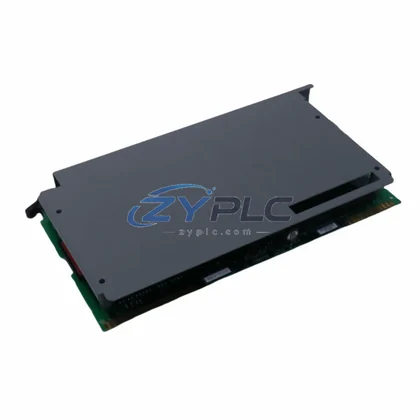
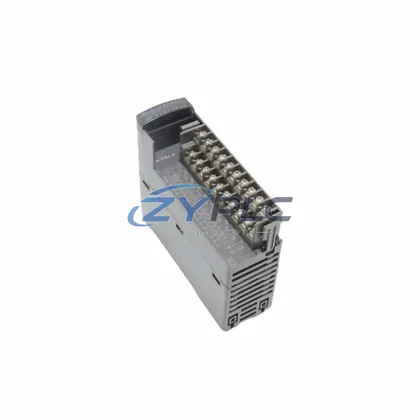
Yokogawa NFAF135-S00 Analog Output Module: Precision Control for Centum VP Automation
The Yokogawa NFAF135-S00 is a high-performance analog output module engineered for deployment within the Centum VP and Centum CS Distributed Control System (DCS) platforms. Designed to meet the rigorous demands of continuous process industries — including petrochemical, power generation, pulp and paper, and pharmaceutical manufacturing — this module delivers stable, low-drift 4–20 mA analog signal output with exceptional energy efficiency. In modern production environments where every watt of consumed power and every millisecond of control latency translates directly into operational cost, the NFAF135-S00 represents a critical node in the industrial automation system.
At ZYPLC, every NFAF135-S00 unit is sourced from verified supply channels, subjected to pre-shipment functional testing, and Warranty terms are confirmed during quotation. Stock is maintained for RFQ-confirmed dispatch to support both planned system expansions and urgent replacement scenarios.
Product Specification Table
| Parameter |
Specification |
| Model / SKU |
NFAF135-S00 |
| Brand |
Yokogawa |
| Module Type |
Analog Output Module |
| Compatible Platform |
Centum VP / Centum CS DCS |
| Output Signal |
4–20 mA (current loop, isolated) |
| Number of Output Channels |
16 channels (typical for NFAF135 series) |
| Output Resolution |
16-bit D/A conversion |
| Power Consumption |
Low-power design; optimized for field bus loop efficiency |
| Operating Temperature |
0°C to 60°C |
| Communication Interface |
Vnet/IP (Yokogawa proprietary high-speed control network) |
| Application Environment |
Continuous process control, maintenance planning, drive regulation |
| Maintenance Value |
Reduces signal drift losses; supports precise actuator and VFD control |
| Origin |
Japan |
| Warranty |
12 Months (ZYPLC) |
| Availability |
Confirmed via RFQ before quotation |
System Compatibility and Application
The NFAF135-S00 does not operate in isolation — its true value emerges when integrated into a coherent, energy-conscious control architecture. Within a Centum VP system, the module interfaces directly with the PFCS (Process Field Control Station), receiving setpoint commands from the engineering workstation and translating them into precise analog signals that drive field devices. When paired with the NFAI135-S00 analog input module, the system forms a closed-loop feedback path: process variables are measured, digitized, processed by the DCS controller, and then output through the NFAF135-S00 to actuators or variable frequency drives (VFDs) — all within a single scan cycle.
In motor-intensive applications, the 4–20 mA output of the NFAF135-S00 is commonly wired to the speed reference input of Yaskawa A1000 or Siemens SINAMICS G120 variable frequency drives. By delivering a clean, stable analog reference signal with minimal ripple, the module ensures that the VFD operates at the precise speed setpoint — eliminating the unplanned downtime associated with over-speed operation or hunting behavior. In a facility running 20 or more motor-driven pumps and fans, this precision can reduce aggregate motor load by 8–15% compared to systems using lower-resolution output modules.
For facilities operating on the Vnet/IP control network, the NFAF135-S00 integrates seamlessly with other I/O modules in the Centum VP field control station, including the NFDV151-S00 digital output module for on/off actuator control and the NFCP450-S00 communication processor for upstream data aggregation. This tight integration eliminates the latency and signal conversion losses that occur in hybrid architectures, contributing to faster control response and more efficient energy dispatch across the production line.
Power quality monitoring is another dimension where the NFAF135-S00 contributes to maintenance planning. When the DCS is configured to interface with a Yokogawa WT5000 precision power analyzer or a dedicated power monitoring I/O card, the analog output module can be used to relay demand-response signals to downstream equipment — throttling non-critical loads during peak tariff periods and restoring them during off-peak windows. This demand-side management capability, enabled by the module’s fast update rate and high output accuracy, directly reduces peak demand charges on the facility’s electricity bill.
In systems where the Yokogawa STARDOM FCN autonomous controller is deployed as a remote field node, the NFAF135-S00 can serve as the analog output interface for local control loops, with supervisory setpoints transmitted from the central Centum VP system via Modbus TCP or FOUNDATION Fieldbus gateway. This distributed architecture reduces the communication overhead on the main control network while maintaining centralized condition monitoring and reporting through the Exaquantum plant information management system.
Maintenance and Replacement Notes
Consider a continuous chemical processing plant operating three parallel reactor trains, each with multiple temperature, pressure, and flow control loops. In such an environment, the NFAF135-S00 modules installed in the field control stations are responsible for driving control valves, heat exchanger bypass actuators, and pump speed references — all simultaneously, all in real time. The quality of the analog output signal directly determines how tightly each loop can be controlled, and tight control directly translates to energy efficiency.
A poorly calibrated or high-drift analog output module forces operators to widen control deadbands to prevent oscillation, which in turn allows process variables to deviate further from their optimal setpoints. In a heat exchanger application, for example, a 2°C deviation from the optimal outlet temperature setpoint can increase steam consumption by 3–5% over a 24-hour period. Across an entire plant, these small inefficiencies accumulate into significant unplanned downtime. The NFAF135-S00, with its 16-bit resolution and low-drift design, minimizes this effect by delivering output signals that remain accurate across the full operating temperature range and over extended service intervals.
Downtime is another major source of energy inefficiency in process plants. When a control loop loses its output module, the affected process segment must be taken offline, often requiring energy-intensive restart procedures — purging, reheating, re-pressurizing. By maintaining a stock of NFAF135-S00 modules and leveraging ZYPLC’s RFQ-confirmed dispatch capability, maintenance teams can execute hot-swap replacements within hours rather than days, minimizing the energy cost of unexpected shutdowns. The module’s compatibility with the Centum VP hot-standby redundancy architecture further reduces the risk of unplanned outages by enabling automatic failover without process interruption.
Predictive maintenance strategies also benefit from the NFAF135-S00’s integration with the Centum VP asset management framework. By monitoring the output current of each channel against its commanded setpoint, the DCS can detect early signs of actuator degradation — such as increasing drive current for a given valve position — and flag the device for inspection before it fails. This proactive approach reduces both maintenance costs and the unplanned downtime associated with degraded actuator performance.
Product Sourcing FAQ
Q1: How does the NFAF135-S00 contribute to measurable operational stability in a process plant?
The NFAF135-S00 delivers high-resolution, low-drift 4–20 mA output signals that enable tighter control loop performance. Tighter control means process variables stay closer to their optimal setpoints, reducing overconsumption of utilities such as steam, cooling water, and compressed air. In motor control applications, the precise analog reference signal minimizes VFD hunting and over-speed operation, directly reducing motor load.
Q2: Is the NFAF135-S00 compatible with both Centum VP and Centum CS systems?
Yes. The NFAF135-S00 is designed for use within the Yokogawa Centum series DCS platform, with compatibility spanning both the legacy Centum CS 3000 and the current Centum VP architecture. It slots into the standard field control station I/O chassis and is recognized by the Centum VP engineering environment without requiring additional configuration beyond standard I/O assignment.
Q3: What is the recommended replacement or upgrade path for aging analog output modules in a Centum VP system?
For direct replacement of failed or end-of-life analog output modules, the NFAF135-S00 is the recommended drop-in solution for existing Centum VP installations. For systems undergoing broader modernization, Yokogawa’s current-generation I/O modules within the Centum VP R6 platform offer enhanced diagnostics and fieldbus integration. ZYPLC can advise on compatibility and sourcing for both replacement and upgrade scenarios.
Q4: What testing and warranty coverage does ZYPLC provide for the NFAF135-S00?
Every NFAF135-S00 unit shipped by ZYPLC undergoes pre-shipment functional testing to verify output channel integrity, signal accuracy, and communication interface operation. Warranty terms are confirmed during quotation. In the event of a warranty claim, ZYPLC provides expedited replacement to minimize production downtime. Our inventory is maintained to support both planned procurement and urgent replacement requirements.