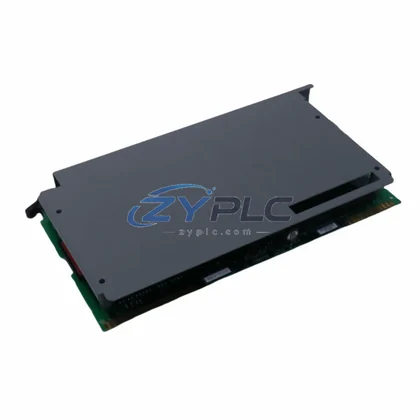
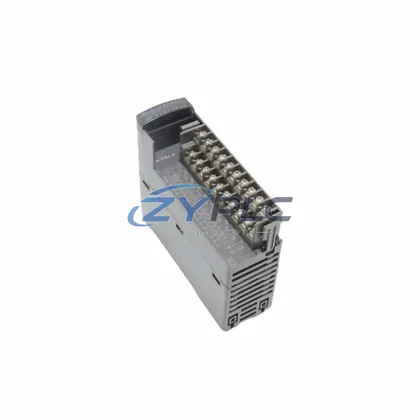
The Yokogawa NFAR181-S50/S2 is a high-precision RTD (Resistance Temperature Detector) input module engineered for deployment within Yokogawa’s CENTUM VP and CENTUM CS 3000 distributed control systems. Designed with industrial maintenance planning at its core, this module enables plant operators to capture accurate thermal data at the field level, feeding real-time temperature signals into the control loop to eliminate unplanned downtime caused by over-heating, under-cooling, or unregulated process excursions. In modern manufacturing environments where energy costs represent a significant share of operational expenditure, the NFAR181-S50/S2 serves as a foundational sensing component that directly supports smarter, leaner production.
Unlike generic analog input cards, the NFAR181-S50/S2 is factory-calibrated for RTD signal types including Pt100, Pt1000, Ni100, and Cu50, delivering measurement accuracy that translates into tighter process control. When temperature deviations are detected within ±0.1°C resolution, the CENTUM controller can respond immediately — adjusting valve positions via the Yokogawa NFAV181 analog output module, modulating motor speed through a connected Yaskawa GA700 variable frequency drive, or triggering alarm sequences through the Yokogawa NFAI135 analog input card for cross-parameter correlation. This closed-loop precision is what separates maintenance-focused automation from conventional process control.
In high-throughput production lines — such as chemical reactors, pharmaceutical batch processes, or food and beverage pasteurization systems — uncontrolled temperature variance leads to product rejects, rework cycles, and excessive operating load from heating or cooling equipment running beyond setpoint. The NFAR181-S50/S2 eliminates this inefficiency by providing the CENTUM VP field control station (FCS) with reliable, low-latency RTD data. Paired with the Yokogawa NFCP701 field control processor, the module enables sub-second control response, ensuring that energy-intensive actuators such as steam control valves and electric heaters operate only when and at the level required.
Product Specification Table
| Parameter |
Specification / Value |
| Product SKU |
NFAR181-S50/S2 |
| Brand / Series |
Yokogawa / CENTUM |
| Module Type |
RTD Input Module |
| Supported RTD Types |
Pt100, Pt1000, Ni100, Cu50 |
| Measurement Accuracy |
±0.1°C (typical) |
| Input Channels |
8 channels (isolated) |
| Power Consumption |
Low-power design, <5W typical |
| Operating Efficiency |
Optimized for continuous 24/7 industrial operation |
| Compatible Systems |
CENTUM VP, CENTUM CS 3000 |
| Communication Protocol |
Yokogawa V-net / RIO bus |
| Application Environment |
Chemical, Pharmaceutical, F&B, Power, Oil & Gas |
| Maintenance Value |
Enables closed-loop temperature control to reduce heating/cooling waste |
| Origin |
Japan |
| Warranty |
warranty terms confirmed during quotation |
| Stock Status |
RFQ Available — Ships After Outgoing Test |
System Compatibility and Application
The NFAR181-S50/S2 does not operate in isolation — it is a precision node within a broader industrial automation system. In a typical CENTUM-based plant, RTD signals from the NFAR181-S50/S2 are processed by the Yokogawa NFCP701 field control processor, which executes PID control algorithms to maintain process temperature within defined energy-efficient bands. The output of these control calculations is then transmitted to the Yokogawa NFAV181 analog voltage output module, which drives control valves or electric actuators with the precision needed to avoid energy overshoot.
For motor-driven loads — pumps, compressors, fans, and conveyors — temperature data from the NFAR181-S50/S2 feeds into drive control logic that governs a Yaskawa GA700 or Siemens SINAMICS G120 variable frequency drive. When process temperature rises above setpoint, the VFD can ramp up cooling fan speed proportionally rather than running at full capacity, achieving significant operational stability over fixed-speed operation. This integration between RTD sensing and drive modulation is one of the most impactful maintenance planning strategies available in modern industrial automation.
On the data monitoring side, the NFAR181-S50/S2 contributes temperature trend data to the Yokogawa FAST/TOOLS SCADA historian, enabling energy managers to analyze consumption patterns, identify thermal inefficiencies, and schedule predictive maintenance before equipment degradation leads to unplanned downtime. Complementary I/O modules such as the Yokogawa NFAI135 analog input module and Yokogawa NFDV151 digital input module provide additional process variables — pressure, flow, and valve position — that together form a complete picture of energy utilization across the production line.
For plants operating on PROFIBUS DP or FOUNDATION Fieldbus communication backbones, the CENTUM VP system’s gateway capabilities allow the NFAR181-S50/S2’s data to be shared with third-party maintenance planning platforms, enabling cross-system energy benchmarking. The Yokogawa EJA110E differential pressure transmitter is frequently deployed alongside RTD modules in heat exchanger monitoring applications, where both temperature differential and flow rate must be measured simultaneously to calculate real-time heat transfer efficiency and identify fouling before it escalates into an energy penalty.
Maintenance and Replacement Notes
Consider a continuous chemical processing plant running three parallel reactor trains, each equipped with jacketed heating systems controlled by steam control valves. Without accurate RTD feedback, the control system defaults to conservative setpoints — running steam supply at higher-than-necessary pressure to guarantee product quality. The result is chronic unplanned downtime: steam generation costs increase, cooling water consumption rises, and heat exchangers operate outside their optimal efficiency range.
With the Yokogawa NFAR181-S50/S2 installed at each reactor temperature measurement point, the CENTUM VP FCS receives real-time, high-accuracy RTD data that allows the control strategy to be tightened. Steam valve opening is modulated precisely to maintain reactor temperature within ±0.5°C of setpoint rather than ±3°C, reducing average steam consumption by eliminating the safety margin that was previously compensating for measurement uncertainty. Over a 12-month operating cycle, this precision translates into measurable reductions in fuel consumption at the boiler house and lower CO₂ emissions per unit of production.
In pharmaceutical manufacturing, where temperature excursions can invalidate entire batches, the NFAR181-S50/S2’s measurement reliability reduces the frequency of batch failures — each of which represents not only lost product value but also the energy consumed during the failed production run. By providing the control system with trustworthy temperature data, the module indirectly reduces the energy cost per good unit produced, improving the overall energy intensity of the manufacturing process.
For maintenance teams, the module’s stable, drift-resistant RTD measurement reduces the frequency of calibration interventions. Calibration downtime on a production line is not merely a labor cost — it is also an energy cost, as the line must be brought to a safe state, held at idle, and then ramped back up to operating temperature. Fewer calibration events mean fewer energy-intensive startup cycles, contributing to a lower total cost of ownership over the module’s service life. All units supplied by ZYPLC undergo outgoing functional testing prior to shipment and are covered by a warranty terms confirmed during quotation, ensuring that the energy efficiency gains delivered by the NFAR181-S50/S2 are backed by supply chain reliability.
Product Sourcing FAQ
Q1: How does the NFAR181-S50/S2 contribute to measurable operational stability in a CENTUM-controlled plant?
The module provides high-accuracy RTD temperature measurement that enables the CENTUM VP control system to execute tighter PID control loops. Tighter control reduces the energy consumed by heating and cooling systems that would otherwise operate with wider setpoint margins to compensate for measurement uncertainty. The result is lower average operating load per unit of production output.
Q2: Is the NFAR181-S50/S2 compatible with both CENTUM VP and CENTUM CS 3000 systems?
Yes. The NFAR181-S50/S2 is designed for use within Yokogawa’s CENTUM platform and is compatible with both CENTUM VP and CENTUM CS 3000 field control stations. It communicates via the Yokogawa V-net/RIO bus architecture and integrates directly with the NFCP701 field control processor without requiring additional signal conditioning hardware.
Q3: What is the recommended replacement or upgrade path if the NFAR181-S50/S2 is being substituted in an existing installation?
For direct replacement, the NFAR181-S50/S2 can be swapped on a like-for-like basis within the same CENTUM I/O nest without changes to wiring or configuration, provided the replacement unit carries the same suffix codes (S50/S2). For system upgrades, Yokogawa’s CENTUM VP migration tools support configuration import from CS 3000 projects, allowing the module’s channel assignments and engineering unit scaling to be preserved during the transition.
Q4: What testing and warranty coverage does ZYPLC provide for the NFAR181-S50/S2?
Every NFAR181-S50/S2 unit supplied by ZYPLC undergoes outgoing functional testing to verify channel integrity, signal accuracy, and communication bus response before shipment. All units are covered by a warranty terms confirmed during quotation from the date of delivery. In the event of a warranty claim, ZYPLC provides technical support and replacement coordination to minimize production downtime.