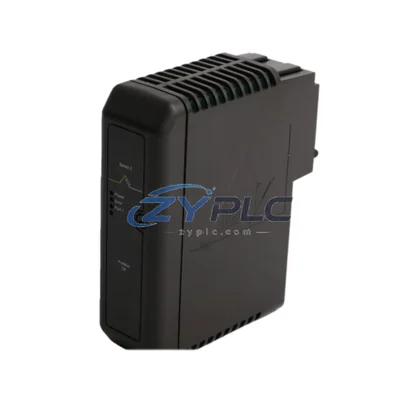
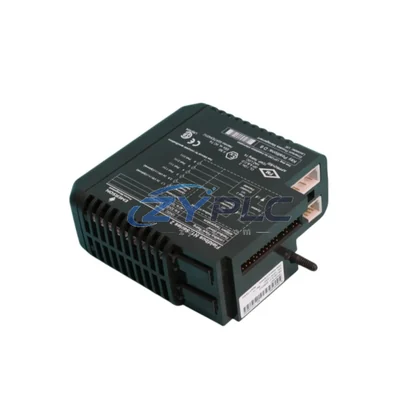
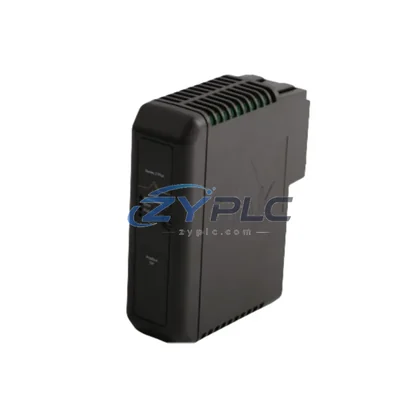
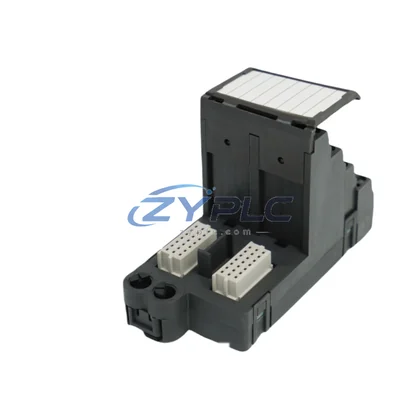
The Yokogawa NFBU200-S16 is a high-efficiency base module engineered for the Centum VP and CS 3000 Distributed Control System (DCS) platform. Designed to serve as the structural and electrical backbone of field control station (FCS) assemblies, the NFBU200-S16 directly influences how power is distributed, how I/O signals are managed, and how efficiently the entire control loop operates. In modern manufacturing environments where energy costs and equipment uptime are critical KPIs, selecting the right base module is not a peripheral decision — it is a foundational one.
Industrial facilities running continuous processes — from petrochemical refining to pharmaceutical batch production — depend on the NFBU200-S16 to maintain stable, low-latency communication between field instruments and the control layer. By minimizing signal propagation delays and ensuring clean power delivery to connected I/O modules, this base module reduces the risk of spurious trips, unnecessary motor restarts, and the associated energy spikes that accompany unplanned shutdowns.
Product Specification Table
| Parameter |
Specification / Value |
| SKU |
NFBU200-S16 |
| Brand |
Yokogawa |
| Series |
Centum VP / CS 3000 |
| Product Type |
Base Module (FCS I/O Nest) |
| Compatible Systems |
Centum VP, CS 3000 DCS |
| I/O Slot Capacity |
16 Slots |
| Power Distribution |
Integrated backplane bus, low-impedance rail |
| Operating Environment |
Industrial control panels, DCS cabinets |
| Maintenance Value |
Stable power delivery reduces motor restart surges; minimizes I/O scan cycle waste |
| Origin |
Japan |
| Warranty |
warranty terms confirmed during quotation |
| Condition |
Tested, inspected, shipment arranged after confirmation |
System Compatibility and Application
The NFBU200-S16 does not operate in isolation. Its true maintenance planning value emerges when it is integrated within a well-designed Centum VP automation architecture. In a typical high-efficiency FCS cabinet, the NFBU200-S16 base module hosts a combination of analog input modules such as the AAI143-H00 for 4–20 mA current loop signals from flow transmitters and energy meters, and analog output modules like the AAI841-H00 that drive control valves and variable frequency drives (VFDs) with precision setpoint signals.
On the digital side, the ADV151-P00 digital input module captures motor run/stop feedback and breaker status signals, while the ADV551-P00 digital output module issues start/stop commands to motor control centers (MCCs). This closed-loop architecture — enabled by the NFBU200-S16’s reliable backplane communication — ensures that motor control decisions are executed with minimal latency, preventing the unplanned downtime associated with delayed switching or repeated command retries.
The field control station processor, typically a CP451-10 or equivalent Centum VP FCS CPU, relies on the NFBU200-S16 to maintain deterministic scan cycles. A stable scan cycle means the control algorithm — whether PID, cascade, or feedforward — executes at the correct interval, preventing integrator windup and the over-actuation of final control elements that drives unplanned downtime risk.
Power supply redundancy is managed through modules such as the PW482-10, which pairs with the NFBU200-S16 to deliver clean, regulated DC power to all hosted I/O cards. Voltage fluctuations at the backplane level can cause analog modules to drift, leading to incorrect valve positions or motor speed references — both of which translate directly into wasted energy. The NFBU200-S16’s low-impedance power rail design mitigates this risk.
For facilities implementing condition monitoring at the field level, the NFBU200-S16 can host communication interface modules such as the EC401-10 Ethernet communication module, enabling real-time data exchange between the FCS and maintenance planning systems (EMS) or SCADA platforms. This integration allows plant engineers to correlate I/O scan data with power consumption trends, identifying inefficient control loops or underperforming actuators before they escalate into costly failures.
In multi-nest configurations, the NFBU200-S00 companion base module extends the I/O capacity of the FCS while sharing the same backplane communication protocol, ensuring that condition monitoring signals from the AIP827 power monitor module are transmitted without data loss or latency penalties. The AMM12C multi-point monitor module further enhances the system’s ability to track per-channel power draw, giving maintenance teams granular visibility into which field devices are consuming above-baseline energy.
Maintenance and Replacement Notes
In a continuous process plant — such as a chemical reactor train or a water treatment facility — the NFBU200-S16 plays a direct role in reducing unplanned downtime through three primary mechanisms: stable control loop execution, reliable motor command delivery, and accurate analog signal transmission.
When a control loop governing a pump or compressor motor operates on a base module with poor backplane integrity, the resulting signal jitter causes the PID controller to over-correct, driving the VFD to oscillate around the setpoint rather than hold it steady. This oscillation increases motor current draw, accelerates bearing wear, and shortens drive IGBT lifespan. The NFBU200-S16’s robust backplane design eliminates this jitter, allowing the Centum VP FCS to maintain tight setpoint adherence and reduce motor load by keeping the drive operating in its highest-efficiency torque band.
Planned maintenance intervals are also extended when the base module operates reliably. Unplanned shutdowns triggered by I/O communication faults force emergency motor restarts — events that draw 6–8 times the rated motor current and place severe stress on both the motor and the upstream power distribution network. By ensuring continuous, fault-free I/O communication, the NFBU200-S16 reduces the frequency of these high-energy restart events, directly lowering peak demand charges on the facility’s electricity bill.
Production line throughput — or takt time — is optimized when the FCS scan cycle remains consistent. Inconsistent scan cycles caused by backplane instability introduce variability into batch timing, forcing operators to add buffer time to production schedules. This buffer time represents idle operating load: motors running at minimum speed, heaters maintaining temperature, and conveyors cycling unnecessarily. The NFBU200-S16 eliminates this variability, tightening production takt and reducing the energy cost per unit produced.
All units supplied by ZYPLC undergo full functional testing prior to shipment, including backplane continuity verification, power rail voltage measurement, and I/O slot communication checks. Stock is maintained for shipment arranged after confirmation, with a warranty terms confirmed during quotation covering all hardware defects. This warranty coverage, combined with pre-shipment testing, ensures that the NFBU200-S16 arrives ready to install — minimizing commissioning time and the associated energy costs of extended plant startup sequences.
Product Sourcing FAQ
Q1: How does the NFBU200-S16 contribute to reducing operating load in a Centum VP system?
The NFBU200-S16 provides a stable, low-impedance backplane that ensures deterministic I/O scan cycles and clean power delivery to all hosted modules. This stability prevents control loop oscillation, reduces unnecessary motor actuations, and eliminates the energy spikes associated with I/O communication faults — collectively reducing the facility’s baseline operating load.
Q2: Is the NFBU200-S16 compatible with both Centum VP and CS 3000 systems?
Yes. The NFBU200-S16 is designed for use within both the Centum VP and CS 3000 DCS platforms. It supports the standard Yokogawa FCS I/O nest architecture and is compatible with the full range of Yokogawa analog, digital, and communication I/O modules used in these systems.
Q3: Can the NFBU200-S16 be used as a direct replacement for a failed base module without system reconfiguration?
In most cases, yes. The NFBU200-S16 is a form-fit-function replacement for compatible Yokogawa base modules within the same FCS nest configuration. However, it is recommended to verify the specific FCS hardware revision and software compatibility with your Centum VP system documentation before installation. ZYPLC’s technical team can assist with compatibility verification prior to purchase.
Q4: What does the warranty terms confirmed during quotation cover, and what is the testing process before shipment?
The warranty terms confirmed during quotation covers all hardware defects identified under normal operating conditions. Prior to shipment, each NFBU200-S16 unit undergoes backplane continuity testing, power rail voltage verification, and I/O slot communication checks. Units that do not pass all test criteria are not shipped. This pre-shipment testing process ensures that every module arrives in verified working condition, reducing installation risk and commissioning time.