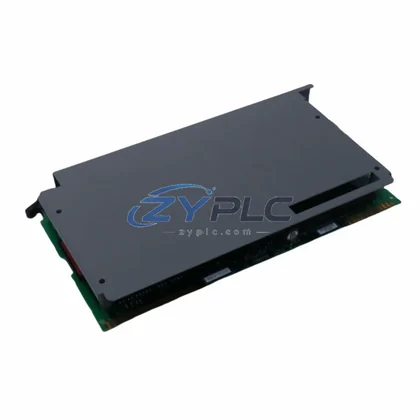
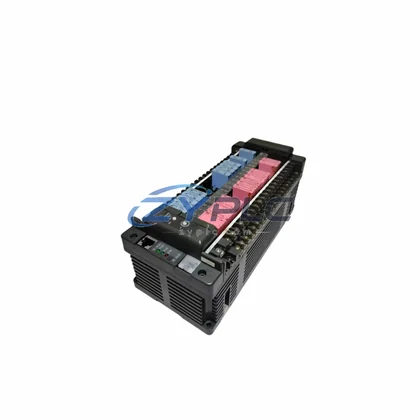
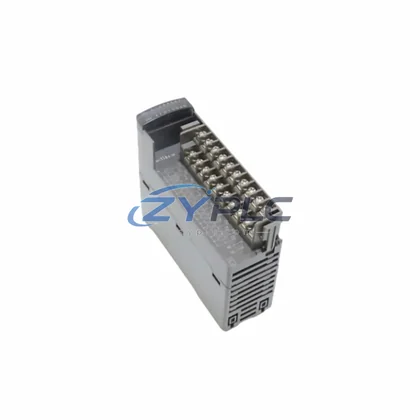
The Yokogawa PSCAIAAN is a high-precision analog input module purpose-built for integration within the Yokogawa CENTUM CS/CS3000 PSCA (Process Station CPU with Advanced functions) distributed control system architecture. Rather than functioning as a standalone component, the PSCAIAAN is designed to operate as a coordinated node within a multi-layer automation hierarchy — contributing to signal acquisition, data integrity, and real-time process feedback across the full control stack. Understanding its role within the broader system is essential for engineers responsible for system design, expansion, and long-term maintenance.
In a fully realized CENTUM CS or CS3000 architecture, the PSCAIAAN occupies the I/O layer, receiving 4–20 mA or voltage-based analog signals from field instruments such as pressure transmitters, flow meters, temperature sensors, and level gauges. These signals are conditioned, digitized, and passed upward through the I/O bus to the PSCA CPU module — typically a PSCA or PSCAS unit — which executes the control logic and communicates with the supervisory layer via the Vnet/IP or ESB (Engineering Station Bus) network. The PSCAIAAN’s role in this signal chain is foundational: without accurate, stable analog input, the CPU cannot execute reliable PID loops, cascade control, or feedforward strategies.
The module mounts directly onto the PSCA node unit backplane, sharing the same rack infrastructure as companion I/O modules such as the PSCAOAAN (analog output), PSCDIAN (digital input), and PSCDOAN (digital output). This co-location on a common backplane reduces wiring complexity, simplifies grounding schemes, and ensures that all I/O modules share a synchronized scan cycle with the CPU. Engineers integrating the PSCAIAAN into an existing node should verify backplane slot compatibility and confirm that the PSCA node unit — such as the ANB10D or ANB10S — has sufficient available slots and power budget to accommodate the additional module load.
From a system architecture perspective, the PSCAIAAN supports the layered automation model by providing clean, isolated analog signal paths that minimize cross-channel interference. Each channel is individually isolated, which is critical in environments where field instruments operate at different ground potentials — a common condition in petrochemical, power generation, and water treatment facilities. This isolation also protects the backplane bus and the CPU from transient voltage events originating in the field, improving overall system resilience.
In redundant control architectures, the PSCAIAAN can be deployed in paired configurations alongside redundant PSCA CPU modules and dual Vnet/IP network paths. When the primary CPU detects a fault and transfers control to the standby unit, the I/O modules — including the PSCAIAAN — continue to scan field signals without interruption, ensuring bumpless transfer and uninterrupted process visibility. This behavior is essential in continuous process industries such as oil refining, chemical manufacturing, and power plant operations, where even a brief loss of analog input data can trigger costly process upsets or safety system activations.
The PSCAIAAN also plays a role in system scalability. As production capacity expands or process complexity increases, additional PSCAIAAN modules can be added to existing node units or new node units can be commissioned and connected to the Vnet/IP network. This modular expansion approach allows engineers to grow the control system incrementally without redesigning the core architecture. The CENTUM CS3000 platform supports up to 64 field control stations per domain, each capable of hosting multiple node units, giving the PSCAIAAN a clear path for deployment in both small skid-mounted systems and large plant-wide DCS installations.
For maintenance engineers, the PSCAIAAN’s hot-swap capability — supported within the PSCA node architecture — means that a faulty module can be replaced without shutting down the node or interrupting adjacent I/O channels. This reduces planned maintenance windows and eliminates the need for full system shutdowns during module replacement. Combined with Yokogawa’s CENTUM CS3000 diagnostic tools, engineers can monitor channel health, identify signal drift, and schedule preventive maintenance based on actual module performance data rather than fixed time intervals.
All PSCAIAAN modules supplied by ZYPLC are tested, inspected, and covered by a warranty terms confirmed during quotation, ensuring that replacement units perform to original factory specifications from the moment they are installed. Our inventory is sourced from verified channels and maintained in controlled storage conditions to preserve module integrity. Fast global shipping and pre-shipment functional testing mean that your system downtime is minimized and your engineering team can proceed with confidence.
Product Specification Table
| Parameter |
Specification |
| System Role |
Analog Input Module — PSCA Node I/O Layer |
| Compatible Platform |
Yokogawa CENTUM CS / CS3000 PSCA Architecture |
| Input Signal Type |
4–20 mA DC / 1–5 V DC Analog |
| Number of Channels |
8 Channels (typical PSCA AI configuration) |
| Channel Isolation |
Individual channel isolation |
| Backplane Interface |
PSCA Node Unit (ANB10D / ANB10S compatible) |
| Communication |
Internal I/O Bus to PSCA CPU; Vnet/IP upstream |
| Redundancy Support |
Compatible with redundant PSCA CPU configurations |
| Installation Environment |
Control room / marshalling cabinet; DIN rail or rack mount |
| Operating Temperature |
0°C to 55°C (standard industrial range) |
| Origin |
Japan |
| Warranty |
warranty terms confirmed during quotation (ZYPLC) |
System Compatibility Notes
The PSCAIAAN does not operate in isolation — its value is realized through its coordination with every other layer of the CENTUM CS3000 control architecture. At the CPU layer, the PSCA or PSCAS processor module executes the control strategy, consuming the digitized analog values delivered by the PSCAIAAN and generating output commands for the PSCAOAAN analog output module. The PSCA CPU communicates with the engineering and operator stations via the Vnet/IP Ethernet-based control network, which provides deterministic, high-speed data exchange across the plant domain.
At the power layer, the PSCA node unit draws regulated DC power from the node power supply unit — typically a PW481 or equivalent — which must be sized to support the combined load of all installed I/O modules including the PSCAIAAN. In redundant power configurations, dual power supply modules feed the node backplane through an automatic switchover circuit, ensuring that a single power supply failure does not interrupt I/O scanning or CPU operation.
At the digital I/O layer, the PSCDIAN digital input module and PSCDOAN digital output module share the same backplane as the PSCAIAAN, providing the CPU with discrete signal visibility alongside the analog process variables. This combination of analog and digital I/O on a single node unit is typical in process control applications where both continuous measurements and discrete equipment states must be monitored and controlled simultaneously.
At the human-machine interface layer, Yokogawa CENTUM CS3000 operator stations display the real-time analog values acquired by the PSCAIAAN, presented as trend displays, faceplates, and process graphics. Alarm management systems use the PSCAIAAN’s channel data to trigger high/low process alarms, deviation alerts, and rate-of-change notifications, giving operators the situational awareness needed to respond to process disturbances before they escalate.
In applications requiring communication with third-party systems, the Vnet/IP gateway or an ALF111 Ethernet communication module can bridge the CENTUM CS3000 domain to external SCADA platforms, historian servers, or MES systems, extending the reach of the PSCAIAAN’s analog data beyond the DCS boundary.
Industrial Application Notes
The PSCAIAAN is deployed across a wide range of process industries where reliable analog signal acquisition is fundamental to safe and efficient operation. In petroleum refining, the module monitors critical process variables such as reactor temperatures, column pressures, and flow rates, feeding the PSCA CPU with the real-time data needed to maintain product quality and prevent runaway conditions. In power generation, the PSCAIAAN integrates with boiler control systems, turbine monitoring loops, and emissions measurement networks, where signal accuracy directly affects both efficiency and regulatory compliance.
In water and wastewater treatment facilities, the PSCAIAAN acquires analog signals from pH sensors, dissolved oxygen probes, turbidity meters, and flow transmitters distributed across treatment stages. The module’s channel isolation is particularly valuable in these environments, where electrochemical sensors can introduce ground loops that corrupt signal integrity in non-isolated systems. In mining and metallurgical operations, the PSCAIAAN supports ore processing control systems, monitoring variables such as slurry density, mill load, and flotation cell levels across geographically distributed process areas connected via Vnet/IP.
In chemical and petrochemical plants, the PSCAIAAN is commonly deployed in safety-instrumented system (SIS) adjacent architectures, where its analog inputs feed both the basic process control system and the safety logic solver through hardwired signal splitters, maintaining independent signal paths for control and safety functions. In packaging and discrete manufacturing lines, the module provides analog feedback from servo drives, tension controllers, and web tension sensors, integrating continuous process measurements into an otherwise discrete control environment.
Product Compatibility FAQ
Q1: Is the PSCAIAAN compatible with both CENTUM CS and CENTUM CS3000 node architectures?
The PSCAIAAN is designed for the PSCA node platform used across the CENTUM CS and CS3000 product families. Before installation, engineers should verify the specific node unit model (ANB10D, ANB10S, or equivalent) and confirm slot availability and firmware revision compatibility using Yokogawa’s system configuration documentation. ZYPLC’s technical team can assist with compatibility verification prior to shipment.
Q2: Can the PSCAIAAN be replaced online without shutting down the node unit?
The PSCA node architecture supports hot-swap replacement of I/O modules under specific conditions defined by Yokogawa’s engineering guidelines. In practice, the PSCAIAAN can typically be removed and replaced while the node remains powered and the CPU continues executing control logic, provided that the affected channels are placed in manual or hold mode at the operator station prior to module removal. Engineers should consult the CENTUM CS3000 hardware manual and follow site-specific change management procedures before performing online replacements.
Q3: What does the warranty terms confirmed during quotation cover, and what support does ZYPLC provide after purchase?
All PSCAIAAN modules supplied by ZYPLC are covered by a warranty terms confirmed during quotation against manufacturing defects and functional failures under normal operating conditions. If a module fails within the warranty period, ZYPLC will provide a replacement unit at no additional cost. Our team also provides pre-shipment functional testing documentation, installation guidance, and post-sale technical support to assist engineers during commissioning and system integration. Contact us at plc.sales@zyplc.com or +86 19859288691 for warranty claims or technical inquiries.