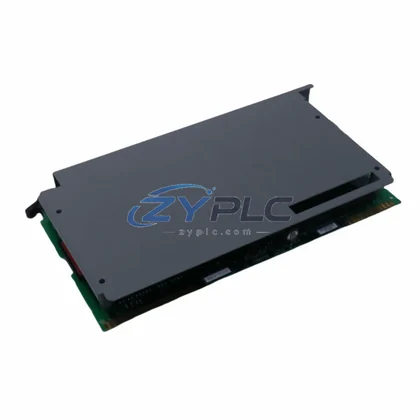
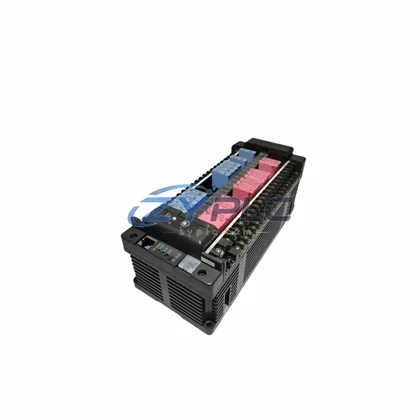
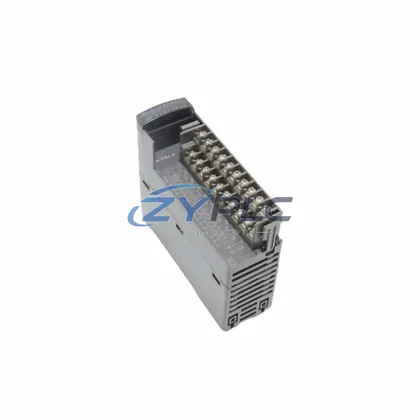
Yokogawa SAI143-H33/PRP: Industrial Data Link for CENTUM VP Smart Factory Connectivity
The Yokogawa SAI143-H33/PRP is a high-precision Analog Input Module engineered for the CENTUM VP Distributed Control System (DCS) platform — one of the most trusted process automation architectures deployed across oil & gas, chemical, power generation, and pharmaceutical industries worldwide. Designed to serve as a critical node in the industrial data chain, the SAI143-H33/PRP bridges field-level instrumentation with upper-layer control and monitoring systems, enabling seamless signal acquisition, real-time data transmission, and intelligent process visibility across the entire plant network.
In modern smart factory environments, the integrity of the data link between field devices and the control room is non-negotiable. The SAI143-H33/PRP fulfills this role by accepting analog input signals — including standard 4–20mA current loops and HART (Highway Addressable Remote Transducer) protocol — from transmitters, sensors, and field instruments, then converting and forwarding this data with high fidelity to the CENTUM VP controller bus. This makes it an indispensable component in any Yokogawa-based automation architecture where signal accuracy, protocol compatibility, and network stability are paramount.
Compatibility & Integration Notes
| Parameter |
Specification |
| Product SKU |
SAI143-H33/PRP |
| Brand |
Yokogawa Electric Corporation |
| Series / Platform |
CENTUM VP Distributed Control System |
| Module Type |
Analog Input Module |
| Communication Protocol |
4–20mA Analog, HART (Highway Addressable Remote Transducer) |
| Interface Type |
Field Terminal Bus (FIO) — CENTUM VP V Net / Vnet/IP |
| Input Channels |
16-channel analog input (multi-channel signal acquisition) |
| Signal Transmission |
High-speed, low-latency data forwarding to DCS controller |
| Network Compatibility |
CENTUM VP, CENTUM CS 3000 (with adaptation), Vnet/IP Ethernet backbone |
| System Application |
DCS, SCADA, HMI integration, PLC gateway, remote I/O expansion |
| Origin |
Japan |
| Warranty |
Warranty and support terms confirmed before quote — Tested before shipment, full functional verification |
| Shipping |
DHL / FedEx global express, export-compliant documentation |
Connected Automation Data Flow
The SAI143-H33/PRP sits at the heart of a layered industrial communication architecture. At the field level, process variables — temperature, pressure, flow, and level — are measured by instruments such as Yokogawa EJA110E differential pressure transmitters, YTA710 temperature transmitters, and ADMAG AXF magnetic flowmeters. These devices output 4–20mA signals or communicate via HART protocol, feeding directly into the SAI143-H33/PRP’s input channels.
Once acquired, the digitized process data is transmitted upstream through the CENTUM VP Field I/O (FIO) bus to the Yokogawa AFV10D or AFV30D Field Control Unit (FCU), where real-time control logic — PID loops, cascade control, and interlock sequences — is executed with deterministic timing. The FCU communicates over the Vnet/IP Ethernet-based control network, connecting to the Yokogawa HIS (Human Interface Station) running CENTUM VP’s integrated HMI software, where operators monitor live process trends, alarm states, and equipment status.
For plant-wide data integration, the CENTUM VP system interfaces with Yokogawa Exaquantum Plant Information Management System (PIMS) and third-party SCADA platforms via OPC-DA/OPC-UA gateways. In multi-vendor environments, protocol converters such as the Yokogawa MW100 data acquisition unit or dedicated Modbus/PROFIBUS gateway modules bridge the SAI143-H33/PRP’s data stream to Allen-Bradley PLCs, Siemens S7 controllers, or ABB AC800M systems operating on the same plant network.
Remote I/O expansion is supported through the CENTUM VP’s distributed FIO architecture, where additional SAI143-series modules — including the SAI143-H11 and SAI143-H22 variants — can be deployed in field junction boxes or remote marshalling cabinets, extending the data acquisition network without additional controller hardware. Variable frequency drives (VFDs) and motor control centers connected via PROFIBUS DP or DeviceNet also feed status and energy data back through gateway modules into the CENTUM VP network, giving the SAI143-H33/PRP’s data context within the broader energy management and predictive maintenance framework.
Edge computing nodes, such as the Yokogawa OpreX Field Device Advisor or third-party IIoT gateways, can tap into the Vnet/IP backbone to forward aggregated process data to cloud analytics platforms, enabling AI-driven anomaly detection and digital twin applications — all anchored by the reliable, high-integrity signal input provided by the SAI143-H33/PRP.
Solving Data Isolation in Industrial Sites
One of the most persistent challenges in legacy and hybrid industrial plants is data isolation — where field instruments, PLCs, DCS controllers, and SCADA systems operate in silos, unable to share process information efficiently. The Yokogawa SAI143-H33/PRP directly addresses this challenge within CENTUM VP environments by providing a standardized, high-channel-density analog input interface that consolidates multi-source field signals into a single, unified data stream on the DCS network.
In plants where older 4–20mA-only instruments coexist with newer HART-enabled smart transmitters, the SAI143-H33/PRP’s dual-protocol support eliminates the need for separate signal conditioning hardware, reducing wiring complexity and cabinet footprint. HART pass-through capability allows asset management software — such as Yokogawa PRM (Plant Resource Manager) — to communicate with field devices for remote diagnostics, calibration verification, and predictive maintenance scheduling, all without interrupting the primary process control loop.
For production line transparency, the SAI143-H33/PRP enables real-time KPI dashboards on the CENTUM VP HIS, giving plant managers and process engineers instant visibility into throughput, quality parameters, and equipment health. When integrated with Exaquantum PIMS, historical trend data from the SAI143-H33/PRP’s input channels supports root cause analysis, regulatory compliance reporting, and process optimization initiatives.
System scalability is a core design principle of the CENTUM VP FIO architecture. As production capacity expands, additional SAI143-H33/PRP modules can be hot-inserted into existing FIO node units without system shutdown, supporting phased plant expansion with minimal disruption. This modularity, combined with the module’s robust EMC shielding and wide operating temperature range, ensures reliable performance in harsh industrial environments — from offshore platforms to chemical processing facilities.
Industrial Connectivity FAQ
Q1: What communication protocols does the Yokogawa SAI143-H33/PRP support?
The SAI143-H33/PRP supports standard 4–20mA analog input signals and HART (Highway Addressable Remote Transducer) protocol. It interfaces with the CENTUM VP system via the proprietary Field I/O (FIO) bus, which connects to the Vnet/IP Ethernet control network for high-speed data transmission to the DCS controller and HMI stations.
Q2: Is the SAI143-H33/PRP compatible with third-party SCADA and PLC systems?
Yes. While the SAI143-H33/PRP is natively designed for the Yokogawa CENTUM VP platform, the CENTUM VP system supports OPC-DA and OPC-UA server functionality, enabling data exchange with third-party SCADA platforms (Wonderware, Ignition, iFIX) and PLC systems (Siemens, Rockwell, Mitsubishi) via standard industrial communication gateways. Direct integration requires appropriate gateway modules or OPC connectivity software.
Q3: How does the SAI143-H33/PRP ensure network stability and minimize communication latency?
The SAI143-H33/PRP operates on the CENTUM VP’s deterministic FIO bus, which provides guaranteed scan cycle timing and prioritized data transmission. The Vnet/IP backbone uses redundant Ethernet topology to eliminate single points of failure, ensuring continuous data flow even during network component failures. Typical control loop scan times are configurable from 0.1 to 2 seconds, supporting fast-response process control applications.
Q4: What warranty and pre-shipment testing does the SAI143-H33/PRP include?
Every SAI143-H33/PRP unit supplied by ZYPLC carries a warranty and support terms confirmed before quote covering functional defects under normal operating conditions. Prior to shipment, each module undergoes full functional verification testing — including channel-by-channel signal accuracy checks and communication bus integrity tests — to ensure out-of-box reliability. Global express shipping via DHL or FedEx is available with complete export documentation and customs compliance support.