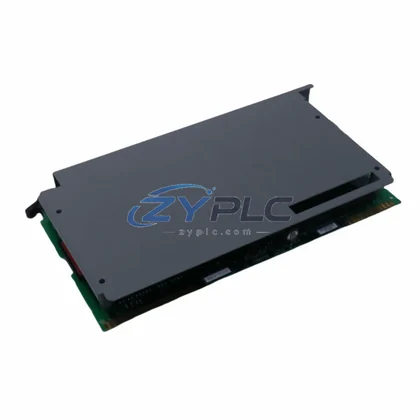
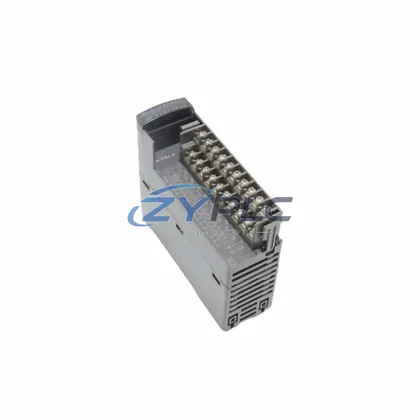
Yokogawa SAI533-H63/PRP S1 Analog Output Module for Centum VP Automation
The Yokogawa SAI533-H63/PRP S1 is a high-precision analog output module engineered for the Centum VP and CS 3000 Distributed Control System (DCS) platform. Designed to deliver stable, low-drift 4–20 mA signal output across demanding industrial environments, this module plays a central role in reducing unplanned downtime, improving drive efficiency, and tightening production line cycle times. Whether deployed in petrochemical refining, power generation, pharmaceutical batch processing, or continuous manufacturing, the SAI533-H63/PRP S1 provides the signal integrity and response speed that modern maintenance-focused automation demands.
In industrial facilities where energy costs represent a significant share of operating expenditure, the quality of analog output directly determines how accurately variable-speed drives, control valves, and actuators respond to setpoint commands. A poorly calibrated or high-latency output module forces drives to hunt for setpoints, increasing motor current draw and accelerating mechanical wear. The SAI533-H63/PRP S1 eliminates this inefficiency through its tightly controlled output resolution and fast scan cycle integration within the Centum VP field control station (FCS).
Product Specification Table
| Parameter |
Specification / Value |
| SKU / Part Number |
SAI533-H63/PRP S1 |
| Module Type |
Analog Output Module |
| Signal Range |
4–20 mA DC (standard industrial loop) |
| Output Channels |
8 channels isolated |
| Output Resolution |
16-bit D/A conversion |
| Compatible Platform |
Yokogawa Centum VP, Centum CS 3000 |
| Operating Temperature |
0°C to 55°C |
| Power Consumption |
Low-power design, optimized for FCS bus efficiency |
| Application Environment |
Process industries: oil & gas, power, pharma, chemicals |
| Maintenance Value |
Precise setpoint delivery reduces drive hunting and excess motor current |
| Redundancy Support |
Yes (PRP S1 suffix — dual-port redundancy) |
| Warranty |
Warranty and support terms confirmed before quote — tested and verified before shipment |
| Availability |
Confirmed via RFQ before quotation |
System Compatibility and Application
The SAI533-H63/PRP S1 operates as a precision signal source within the Centum VP field control station, translating digital control commands from the FCS into accurate analog current signals that drive field devices. In a typical energy-optimized plant architecture, this module works in close coordination with the Yokogawa Centum VP FCS — such as the AFV10D or AFV30D field control unit — which executes PID and advanced control algorithms at high scan rates. The output signals from the SAI533-H63/PRP S1 are consumed by variable-frequency drives (VFDs) controlling pump and fan motors, where even a 1% improvement in setpoint accuracy can translate to measurable reductions in kWh consumption over a production shift.
On the input side, the SAI533-H63/PRP S1 pairs naturally with Yokogawa’s analog input modules such as the AAI141-S or AAI543-H, which collect process measurements from flow transmitters, pressure sensors, and temperature elements. Together, these I/O modules form the sensing and actuation backbone of a closed-loop energy control strategy. The Centum VP system’s HART communication pass-through capability — supported through modules like the AHV561 HART multiplexer — further enables real-time diagnostics of field instruments without interrupting the control loop, reducing the need for manual inspection rounds and the associated labor and downtime costs.
For facilities running Yokogawa’s Exaquantum plant information management system or integrating with the FAST/TOOLS SCADA platform, the analog output data generated through the SAI533-H63/PRP S1 feeds into energy dashboards that track motor load profiles, valve positions, and drive utilization rates. This data layer is essential for identifying unplanned downtime patterns — such as control valves running near fully open or closed positions, which signals oversized equipment or incorrect setpoint tuning. The Yokogawa ProSafe-RS safety instrumented system can also interface with the Centum VP platform, ensuring that maintenance planning actions do not compromise process safety integrity levels.
In multi-loop control configurations, the SAI533-H63/PRP S1 supports cascade and feedforward control schemes that are fundamental to minimizing energy-intensive process upsets. For example, in a boiler combustion control application, the module’s output drives the fuel control valve while receiving setpoint corrections from an oxygen analyzer loop — a configuration that directly reduces fuel consumption and stack emissions. Similar architectures apply in compressed air systems, chilled water plants, and steam distribution networks, where tight analog output control reduces the frequency of pressure relief events and the associated energy losses.
Maintenance and Replacement Notes
In continuous process plants, downtime is one of the largest sources of energy inefficiency. When a production line stops unexpectedly, the energy consumed during restart — bringing motors, heaters, and reactors back to operating conditions — often exceeds the savings from any single efficiency initiative. The SAI533-H63/PRP S1, with its PRP (Parallel Redundancy Protocol) S1 redundancy configuration, eliminates single points of failure at the analog output level. If the primary module path experiences a fault, the redundant path takes over without interrupting the output signal, keeping drives and valves at their commanded positions and avoiding the energy-intensive restart sequence.
Predictive maintenance integration further amplifies the energy benefits of the SAI533-H63/PRP S1. By monitoring output loop integrity — detecting open circuits, short circuits, or drift in field device impedance — the Centum VP system can flag developing faults in control valves or actuators before they cause process deviations. Early intervention means maintenance teams can schedule corrective action during planned shutdowns rather than responding to emergency failures, reducing both maintenance costs and the energy penalty of unplanned stops.
For production lines where cycle time optimization is a priority — such as batch chemical reactors or food and beverage filling lines — the SAI533-H63/PRP S1’s fast update rate ensures that setpoint changes propagate to field devices with minimal latency. This responsiveness allows the control system to tighten batch transition times, reducing the duration of energy-intensive heating, cooling, or mixing phases between product runs. Over a full production year, these incremental time savings compound into significant reductions in utility consumption.
All units supplied by ZYPLC are sourced from verified supply channels, subjected to functional output testing across all channels prior to shipment, and covered by a warranty and support terms confirmed before quote. Stock availability is maintained to support urgent replacement requirements, minimizing the risk of extended downtime due to module procurement delays.
Product Sourcing FAQ
Q1: How does the SAI533-H63/PRP S1 contribute to reducing plant operating load?
The module delivers high-resolution, stable 4–20 mA output signals that allow variable-frequency drives, control valves, and other actuators to track setpoints accurately. Precise setpoint tracking eliminates drive hunting — the condition where a drive repeatedly overshoots and undershoots its target speed — which is a significant source of excess motor load. In pump and fan applications governed by affinity laws, even small reductions in average operating speed translate to cubic reductions in power draw.
Q2: Is the SAI533-H63/PRP S1 compatible with both Centum VP and Centum CS 3000 systems?
Yes. The SAI533-H63 series is designed for use within the Yokogawa Centum VP and Centum CS 3000 DCS platforms. The /PRP S1 suffix designates the parallel redundancy protocol configuration, which is supported in both system generations. Before installation, verify the FCS firmware version and I/O bus compatibility with your system integrator or Yokogawa documentation to confirm slot and node assignments.
Q3: What is the recommended replacement procedure when substituting a failed analog output module?
In a Centum VP system with hot-swap capable I/O nodes, the SAI533-H63/PRP S1 can typically be replaced without shutting down the control loop, provided the redundant path is active and healthy. The replacement procedure involves confirming the redundant module is in service, removing the faulted module, inserting the replacement, and verifying output loop integrity through the Centum VP HIS (Human Interface Station) engineering console. ZYPLC recommends performing a channel-by-channel output verification test after installation.
Q4: What testing is performed before shipment, and what does the warranty and support terms confirmed before quote cover?
Every SAI533-H63/PRP S1 unit dispatched by ZYPLC undergoes functional output testing across all eight channels, verifying signal accuracy, loop integrity, and communication with the Centum VP bus interface. The warranty and support terms confirmed before quote covers hardware defects and functional failures under normal operating conditions. Units that fail within the warranty period are replaced or repaired at no additional cost, subject to standard return merchandise authorization (RMA) procedures.