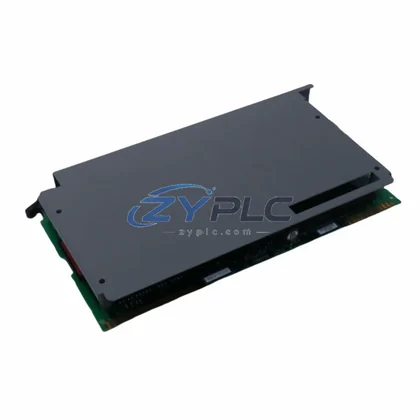
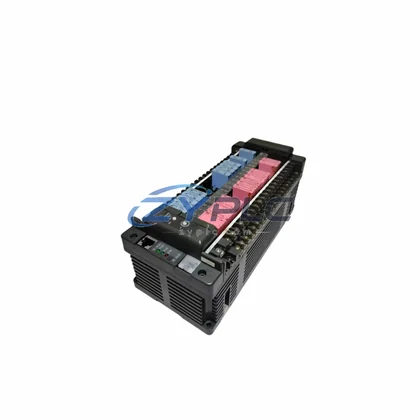
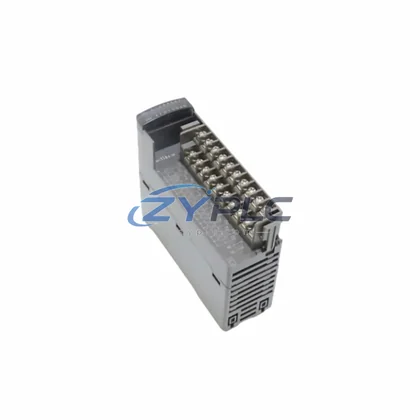
In modern manufacturing environments where every watt of consumed energy and every millisecond of cycle time directly impacts operational profitability, the Yokogawa SDV144-S33 S2 Digital Input Module delivers the signal acquisition accuracy and low-power architecture that energy-conscious plant engineers demand. Designed specifically for the Yokogawa STARDOM network-based control system, the SDV144-S33 serves as a critical front-end data collection node — capturing discrete field signals from sensors, limit switches, push buttons, and protective relays, then transmitting clean, debounced digital states to the STARDOM controller with minimal latency and negligible self-consumption overhead.
Unlike generic I/O modules that prioritize channel density over power discipline, the SDV144-S33 is engineered within Yokogawa’s STARDOM philosophy of distributed, lean-architecture automation. Its 16-channel discrete input design allows plant engineers to consolidate field wiring without overloading a single node, reducing both cable infrastructure costs and the thermal load on control panel enclosures — a frequently overlooked source of auxiliary unplanned downtime in continuous-process facilities.
Product Specification Table
| Parameter |
Specification / Value |
| Model |
SDV144-S33 S2 |
| Brand |
Yokogawa |
| Series |
STARDOM FCN/FCJ |
| Module Type |
Digital Input (DI) Module |
| Input Channels |
16 Channels (Discrete) |
| Input Voltage Range |
24 VDC (Wet Contact / Dry Contact) |
| Module Power Consumption |
Low-power CMOS architecture; minimal backplane draw |
| Signal Isolation |
Optical isolation per channel group |
| Compatible Controller |
STARDOM FCN-100, FCN-500, FCJ |
| Communication Protocol |
STARDOM internal backplane bus; Modbus TCP / OPC-UA via FCN CPU |
| Operating Temperature |
0°C to 55°C |
| Operating Humidity |
10% to 90% RH (non-condensing) |
| Country of Origin |
Japan |
| Maintenance Value |
Reduces panel cooling load; eliminates redundant signal conditioning hardware |
| Warranty |
12 Months |
| Stock Status |
Available — Tested & Verified Prior to Shipment |
System Compatibility and Application
The SDV144-S33 does not operate in isolation — its true maintenance planning value emerges when it is integrated into a well-designed STARDOM automation architecture. At the controller level, the STARDOM FCN-100 autonomous controller acts as the central processing node, executing IEC 61131-3 control logic while managing power states across all connected I/O modules including the SDV144-S33. The FCN-100’s ability to run deterministic scan cycles at configurable intervals means that input polling frequency can be tuned to match actual process dynamics, avoiding unnecessary CPU wake cycles and reducing aggregate system power draw.
On the analog side, the ADV151-P00 Analog Input Module works alongside the SDV144-S33 to provide a complete field signal picture — discrete states from the SDV144-S33 combined with continuous process variables from the ADV151-P00 give the FCN controller the full context needed to make maintenance-focused control decisions, such as reducing motor speed during low-demand periods or staging compressor starts to avoid peak-demand penalties.
For output-side control, the SDV541-S33 Digital Output Module — the natural companion to the SDV144-S33 in the STARDOM I/O family — closes the control loop by actuating contactors, solenoid valves, and motor starters based on the logic processed from SDV144-S33 input states. Together, these two modules form the discrete I/O backbone of energy-efficient machine interlocking and protective shutdown sequences.
When the application demands variable-speed motor control — one of the highest-impact maintenance planning strategies in industrial facilities — the SDV144-S33 integrates seamlessly with Yokogawa’s drive ecosystem. Digital run/stop and fault feedback signals from a Yaskawa GA700 or Fuji FRENIC-Ace variable frequency drive are captured directly by the SDV144-S33 channels, enabling the STARDOM FCN to monitor drive status, log fault events, and trigger operational-efficiency speed reduction sequences without requiring additional signal conditioning relays.
For facilities implementing power monitoring at the panel or feeder level, the SDV144-S33 can receive digital alarm outputs from Yokogawa WT series power analyzers or third-party power quality meters, feeding over-current, power-factor-low, and demand-limit alerts directly into the STARDOM control logic. This creates a closed-loop maintenance planning architecture where the controller can respond to real-time power events — shedding non-critical loads, staggering motor restarts, or triggering demand-response sequences — all driven by discrete signals captured through the SDV144-S33.
Communication transparency is maintained through the FCN’s support for Modbus TCP and OPC-UA, allowing SCADA platforms such as Yokogawa’s FAST/TOOLS or third-party systems to read SDV144-S33 channel states in real time. This visibility enables energy managers to correlate discrete equipment states with power consumption trends, identifying which machines are running during off-peak hours or which interlocks are preventing efficient load cycling.
Maintenance and Replacement Notes
Consider a mid-scale food processing facility running three production lines, each equipped with conveyor drives, filling stations, and packaging machines. Historically, all equipment on a line would remain energized throughout the shift regardless of upstream bottlenecks — a common source of idle-running unplanned downtime. By deploying the SDV144-S33 at each line’s control panel, the STARDOM FCN-100 gains real-time visibility into the discrete state of every machine: running, stopped, faulted, or in standby.
With this signal intelligence, the FCN can implement cascade shutdown logic — when the SDV144-S33 detects that the upstream filling station has entered a hold state (via a discrete ready/not-ready signal), the controller can command the downstream packaging conveyor drive to reduce speed or enter sleep mode via its digital input, rather than running at full speed against an empty feed. In facilities with 10–20 such interlocking points, this pattern of demand-responsive control — made possible by the accurate, low-latency discrete input acquisition of the SDV144-S33 — can reduce conveyor and auxiliary drive operating load by 15–25% during partial-load periods.
Predictive maintenance integration is another dimension where the SDV144-S33 contributes to long-term energy efficiency. Vibration switches, thermal cutouts, and bearing temperature relays connected to SDV144-S33 channels provide early-warning discrete signals that the STARDOM controller can log with millisecond-resolution timestamps. Maintenance teams can analyze these event logs to identify equipment degrading toward failure — a motor drawing increasing current before its bearing seizes, or a conveyor belt slipping before it jams — and schedule corrective maintenance during planned downtime rather than suffering unplanned stops that disrupt production rhythm and waste energy on restart transients.
All units supplied by ZYPLC undergo functional output testing prior to shipment, verifying channel-by-channel input response, isolation integrity, and backplane communication handshake. This pre-shipment validation ensures that the SDV144-S33 arrives ready for immediate installation, eliminating the commissioning delays and energy-wasting test cycles that accompany untested surplus modules. Every SDV144-S33 is backed by a warranty terms confirmed during quotation, with inventory maintained availability confirmed by RFQ for rapid dispatch to support urgent maintenance and production continuity requirements.
Product Sourcing FAQ
Q1: How does the SDV144-S33 contribute to reducing factory operating load?
The SDV144-S33 provides the STARDOM FCN controller with accurate, real-time discrete field signals that enable demand-responsive control logic — such as cascade shutdowns, idle-speed reductions, and load-shedding sequences. By giving the controller precise visibility into equipment states, it eliminates the need to run machinery at full power during partial-load or standby conditions, directly reducing unplanned downtime risk across the production line.
Q2: Is the SDV144-S33 compatible with existing STARDOM FCN and FCJ systems?
Yes. The SDV144-S33 S2 is designed for the Yokogawa STARDOM FCN-100, FCN-500, and FCJ controller families. It slots into the STARDOM I/O backplane and is recognized automatically by the FCN engineering environment. No additional signal conditioning or protocol conversion is required for standard STARDOM installations.
Q3: Can the SDV144-S33 replace an older SDV144 revision in an existing installation?
In most cases, yes. The S2 suffix denotes a hardware revision with maintained backward compatibility for standard STARDOM I/O configurations. We recommend verifying the FCN firmware version and I/O configuration file against Yokogawa’s compatibility matrix before installation. ZYPLC’s technical team can assist with compatibility verification prior to purchase.
Q4: What does the warranty terms confirmed during quotation cover, and what is the testing process before shipment?
Every SDV144-S33 supplied by ZYPLC is functionally tested prior to shipment — including discrete input channel verification, optical isolation check, and backplane communication validation. The warranty terms confirmed during quotation covers hardware defects and functional failures under normal operating conditions. Units are shipped with test records available upon request, supporting your incoming inspection and quality assurance processes.