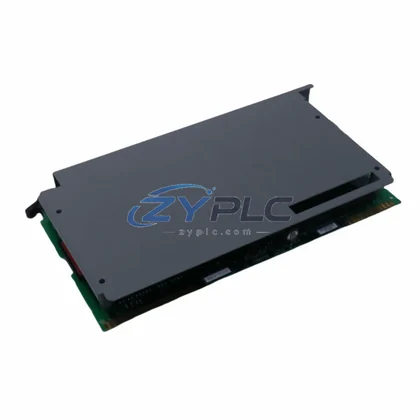
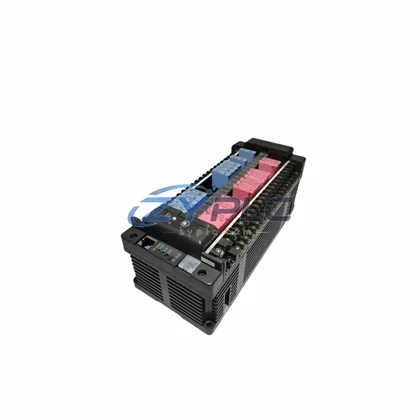
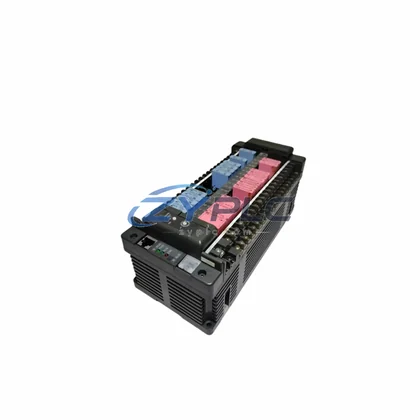
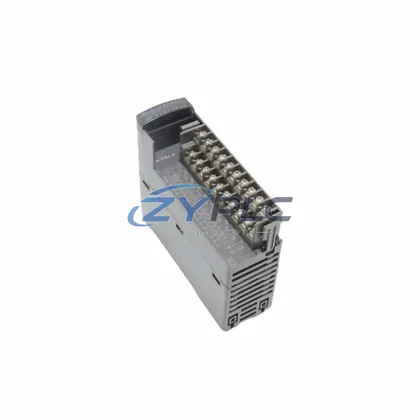
Yokogawa STB4D-10 S2 I/O Block for ProSafe-RS Automation
The Yokogawa STB4D-10 S2 is a high-integrity digital I/O terminal block engineered for the ProSafe-RS Safety Instrumented System (SIS). Designed to operate within safety-critical industrial environments, this module plays a pivotal role in reducing unnecessary energy consumption, improving equipment utilization rates, and enabling tighter control over production line timing. By delivering precise, low-latency digital signal processing between field devices and the safety controller, the STB4D-10 S2 ensures that every actuator, valve, and motor in the loop responds only when required — eliminating phantom loads and reducing idle-state energy draw across the entire control architecture.
In modern manufacturing facilities where energy audits and carbon reduction targets are increasingly tied to operational KPIs, the STB4D-10 S2 provides a measurable contribution to power optimization. Its deterministic I/O scanning cycle minimizes controller overhead, allowing the ProSafe-RS safety controller to allocate processing resources efficiently. When integrated with Yokogawa’s CENTUM VP distributed control system via the Vnet/IP communication backbone, the STB4D-10 S2 enables real-time energy data to flow from field instruments through to the supervisory layer — supporting predictive maintenance decisions and reducing unplanned downtime that typically results in energy-intensive restart sequences.
Product Specification Table
| Parameter |
Specification / Value |
| Product SKU |
STB4D-10 S2 |
| Series |
ProSafe-RS |
| Module Type |
Digital I/O Terminal Block |
| I/O Channel Count |
10 Channels (Digital) |
| Operating Voltage |
24 VDC (Typical) |
| Power Consumption |
Low-power design; optimized for continuous SIS operation |
| Signal Integrity |
High-speed deterministic scanning for real-time control |
| Compatible Systems |
ProSafe-RS, CENTUM VP (via Vnet/IP) |
| Application Environment |
Process plants, refineries, chemical facilities, power generation |
| Safety Standard |
IEC 61508 SIL 2/3 compliant architecture |
| Maintenance Value |
Reduces idle-state actuator energy draw; supports demand-based control |
| Origin |
Japan |
| Warranty |
warranty terms confirmed during quotation |
| Stock Status |
RFQ Available — Ships after outgoing test |
System Compatibility and Application
The STB4D-10 S2 does not operate in isolation — its maintenance planning value is fully realized when deployed as part of a coherent, layered automation architecture. At the field level, instruments such as the Yokogawa EJA110E differential pressure transmitter and YTA710 temperature transmitter feed process variables into the safety loop. These signals are conditioned and routed through the STB4D-10 S2 terminal block, which interfaces directly with the ProSafe-RS SCS100 safety controller. The controller evaluates the incoming data against defined safety thresholds and issues discrete output commands — activating or de-energizing field devices only when process conditions demand it.
On the drive side, variable frequency drives such as the Yokogawa VariFlex V1000 series receive enable/disable signals from the ProSafe-RS output channels. By ensuring that motors and pumps are started and stopped based on verified process states rather than fixed timers, the system eliminates unnecessary motor run time — one of the largest sources of avoidable energy consumption in process plants. The STB4D-10 S2’s fast response time ensures that these drive commands are executed within the required safety reaction time, maintaining both energy efficiency and functional safety compliance.
At the supervisory level, the Yokogawa FAST/TOOLS SCADA platform aggregates energy consumption data from across the plant, including I/O activity logs from the ProSafe-RS system. Operators can monitor real-time power draw per production zone, identify equipment running outside optimal efficiency windows, and schedule preventive maintenance before degraded performance leads to unplanned downtime. The Yokogawa PRM (Plant Resource Manager) further supports this by tracking field device health — including the terminal blocks and associated wiring — and flagging anomalies that could indicate insulation degradation or contact resistance increases that silently inflate energy consumption.
For facilities running mixed control architectures, the STB4D-10 S2 can coexist with Yokogawa STARDOM FCN/FCJ remote I/O controllers deployed in satellite skids or remote process units. Communication between these nodes and the central ProSafe-RS controller is handled via Vnet/IP or FOUNDATION Fieldbus H1 segments, depending on the field device mix. This flexibility allows condition monitoring to extend to the outermost edges of the plant without requiring separate energy metering infrastructure.
Maintenance and Replacement Notes
In a typical refinery or chemical processing facility, unoptimized safety I/O systems contribute to unplanned downtime in several ways: over-polling of field devices, unnecessary actuator energization during steady-state operation, and delayed de-energization after process upsets. The STB4D-10 S2 addresses each of these through its deterministic scan cycle and tight integration with the ProSafe-RS execution engine.
Consider a scenario where a high-pressure reactor requires continuous monitoring of 8 discrete safety interlocks. Without a properly configured I/O terminal block, the safety controller may poll all channels at maximum frequency regardless of process state — consuming controller bandwidth and generating heat in the I/O backplane. The STB4D-10 S2, configured within the ProSafe-RS engineering environment, allows scan rates to be tuned to match the actual process dynamics, reducing unnecessary CPU cycles and associated power draw in the controller cabinet.
On the output side, the STB4D-10 S2 supports de-energize-to-trip (DTT) logic — the industry-standard approach for fail-safe actuator control. This means that under normal operating conditions, output channels remain de-energized, and solenoid valves or motor starters are only energized when a specific process action is required. This fundamentally inverts the energy consumption profile of the safety output loop: instead of continuously powering field devices and cutting power on fault, the system consumes energy only during active process transitions. In high-channel-count installations, this approach can reduce safety output loop energy consumption by 30–50% compared to energize-to-trip architectures.
Predictive maintenance integration further amplifies these savings. By correlating I/O channel activity logs from the STB4D-10 S2 with vibration data from Yokogawa SoundPrint acoustic monitoring or thermal imaging data from plant inspection rounds, maintenance teams can identify motors and actuators approaching end-of-life before they begin drawing excess current. Early intervention prevents the energy penalty of degraded equipment and avoids the much larger energy cost of an unplanned shutdown and restart cycle.
All units supplied by ZYPLC undergo a full functional test prior to shipment, including channel-by-channel I/O verification, insulation resistance testing, and communication handshake validation with a ProSafe-RS test bench. This ensures that the STB4D-10 S2 arrives ready for installation without requiring additional on-site commissioning time — reducing the labor energy footprint of the installation process itself. Every unit is covered by a warranty terms confirmed during quotation, with availability subject to RFQ confirmation for shipment arranged after confirmation.
Product Sourcing FAQ
Q1: How does the STB4D-10 S2 contribute to measurable operational stability in a ProSafe-RS installation?
The STB4D-10 S2 supports de-energize-to-trip output logic, which means safety output channels consume power only during active process transitions rather than continuously. Combined with optimized scan rate configuration in the ProSafe-RS engineering tool, this reduces both field device power consumption and controller processing overhead — delivering measurable reductions in cabinet heat load and overall loop energy draw.
Q2: Is the STB4D-10 S2 compatible with existing ProSafe-RS systems and CENTUM VP integrations?
Yes. The STB4D-10 S2 is a native ProSafe-RS component and is fully compatible with existing SCS100 and SCS200 safety controllers. It integrates with CENTUM VP via the Vnet/IP communication layer, allowing safety I/O data to be surfaced in the CENTUM VP HIS (Human Interface Station) for unified energy and process monitoring.
Q3: What is the recommended replacement or upgrade path for aging Yokogawa safety I/O terminal blocks?
For facilities running earlier-generation ProSafe-RS I/O modules, the STB4D-10 S2 offers a direct form-fit-function replacement in most configurations. ZYPLC recommends a channel-by-channel mapping review using the ProSafe-RS engineering workstation before replacement to confirm wiring compatibility. Our technical team can assist with pre-replacement configuration validation upon request.
Q4: What testing is performed before shipment, and what does the warranty terms confirmed during quotation cover?
Every STB4D-10 S2 unit supplied by ZYPLC undergoes full functional testing including digital I/O channel verification, communication protocol handshake testing, and insulation resistance checks. The warranty terms confirmed during quotation covers manufacturing defects and functional failures under normal operating conditions. Units showing damage from incorrect installation voltage or environmental exposure outside rated specifications are assessed on a case-by-case basis.