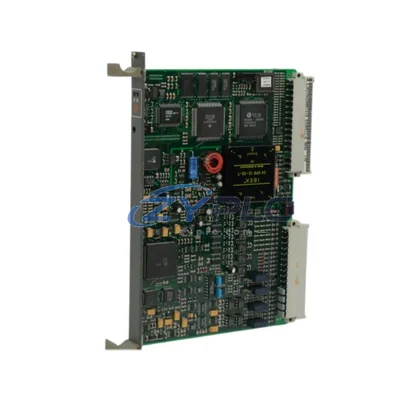
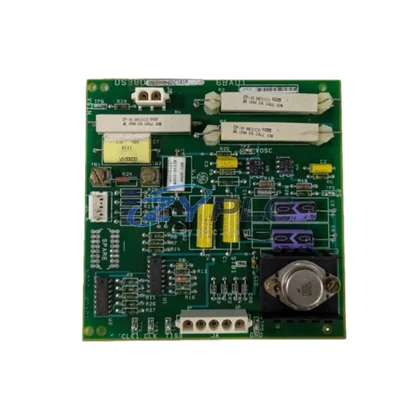
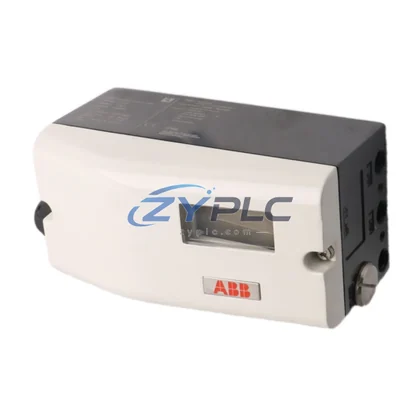
ABB 1KHW002238R0001 OPIC1 Fiber Optic Interface for ACS880
In modern industrial automation, the integrity of a drive control system depends not only on the performance of individual components but on the seamless coordination between every layer of the architecture. The ABB 1KHW002238R0001 OPIC1 Fiber Optic Interface Board (N4BG) is a precision-engineered signal transmission module designed to occupy a critical position within the ACS880 and ACS580 drive control hierarchy. By converting electrical signals into fiber optic transmissions, this board eliminates electromagnetic interference at the source, ensuring that control signals between the drive’s main control unit and its power electronics remain stable, fast, and immune to the noise-rich environments typical of heavy industrial installations.
The OPIC1 board is not a standalone component — it is a system-enabling element. Its role within the ACS880 multi-drive architecture is to maintain the high-speed, low-latency communication link between the RDCU-02C drive control unit and the AINT-02C inverter interface board, forming the optical backbone of the drive’s internal control loop. This architecture supports redundant signal paths, allowing engineers to design systems where a single point of failure in the signal chain does not result in unplanned downtime. For facilities operating continuous processes — such as petrochemical plants, steel mills, water treatment stations, or large-scale packaging lines — this level of signal reliability is not optional; it is a fundamental design requirement.
When integrated into a complete ACS880 cabinet solution, the 1KHW002238R0001 works in coordination with the RDCU-02C main control board, the AINT-02C inverter interface, the APBU-44C branching unit for multi-drive configurations, and the ADUM-01 drive module. On the network layer, the drive system communicates upstream via PROFIBUS, PROFINET, or EtherNet/IP fieldbus adapters, connecting to Siemens S7-series PLCs, Allen-Bradley ControlLogix controllers, or ABB AC500 automation platforms. The OPIC1 board ensures that the internal fiber optic link remains the fastest and most reliable segment of this entire signal chain, preventing bottlenecks between the control layer and the power conversion layer.
From a system architecture perspective, the 1KHW002238R0001 supports the I/O layer by stabilizing the feedback signals from encoder modules and resolver interfaces mounted on the motor shaft. Accurate speed and position feedback is essential for vector control and direct torque control (DTC) algorithms, and any degradation in the fiber optic link directly impacts the drive’s ability to maintain precise torque output. In applications such as mine hoists, rolling mill drives, or centrifuge control systems, this precision is directly tied to product quality and operational safety.
The power layer of the ACS880 system — comprising the APOW-01 power supply board and associated DC bus capacitor banks — relies on the OPIC1 board to relay gate firing signals to the IGBT power modules with microsecond-level timing accuracy. Any jitter or delay in this signal path can result in switching anomalies, increased harmonic distortion, or in extreme cases, overcurrent faults that trigger protective shutdowns. The 1KHW002238R0001 is designed to maintain signal integrity across the full operating temperature range of the drive cabinet, from cold-start conditions in outdoor substations to the sustained thermal loads of enclosed motor control centers.
For HMI and supervisory control integration, the ACS880 system connects to ABB CP600 operator panels or third-party SCADA platforms via the drive’s fieldbus interface. The OPIC1 board’s role in maintaining a clean internal communication environment directly supports the accuracy of the real-time data — speed references, torque feedback, fault codes, and energy consumption metrics — that these HMI systems display to operators. In process industries where operators make real-time decisions based on drive status data, the reliability of this data chain is operationally critical.
Maintenance engineers working with ACS880 multi-drive systems will recognize the 1KHW002238R0001 as a high-priority spare part. Its position in the signal chain means that a failed OPIC1 board will typically manifest as a communication fault between the control unit and the inverter, often triggering fault codes such as FF61 or FF6A on the drive’s diagnostic panel. Having a verified replacement unit RFQ Available — backed by a warranty terms confirmed during quotation — allows maintenance teams to restore drive operation within minutes rather than waiting days for emergency procurement. ZYPLC maintains verified inventory of the 1KHW002238R0001 to support exactly this scenario, with global shipping capability and full pre-shipment functional verification.
Product Specification Table
| System Role |
Fiber Optic Interface Board — Internal Drive Communication Link |
| Part Number |
1KHW002238R0001 (OPIC1, N4BG) / Cross-ref: 1KHW002237R0001 R1A |
| Compatible Platform |
ABB ACS880 Multi-Drive, ACS580 Single Drive Series |
| Communication Type |
Fiber Optic (Plastic Optical Fiber, POF) |
| Signal Function |
IGBT Gate Drive Signal Transmission, Control Unit ↔ Inverter Interface Link |
| Electrical Interface |
Compatible with RDCU-02C Control Unit and AINT-02C Inverter Interface |
| Operating Temperature |
-10°C to +55°C (drive cabinet ambient) |
| EMI Immunity |
Full galvanic isolation via optical transmission — immune to conducted EMI |
| Installation Environment |
Internal drive module bay; DIN rail or direct board mounting per ACS880 frame |
| Origin |
Finland |
| Warranty |
warranty terms confirmed during quotation — Covered by ZYPLC pre-shipment verification program |
System Compatibility Notes
The 1KHW002238R0001 OPIC1 board achieves its full value only when considered within the context of a complete ACS880 drive system. At the control layer, the RDCU-02C drive control unit generates the PWM switching commands that govern the inverter’s output waveform. These commands are transmitted to the AINT-02C inverter interface board via the OPIC1 fiber optic link, where they are decoded and used to drive the gate signals for the IGBT power modules. The APBU-44C branching unit extends this architecture to multi-drive configurations, allowing a single RDCU-02C to coordinate multiple inverter units within a common DC bus system.
On the I/O and feedback layer, the FEN-31 HTL encoder interface and FEN-11 TTL encoder interface modules provide shaft position and speed data back to the RDCU-02C. The OPIC1 board’s role in maintaining a clean, interference-free control link ensures that this feedback data is processed without corruption, which is essential for the DTC algorithm’s torque estimation accuracy. The ADUM-01 drive module integrates these elements into a compact, cabinet-ready assembly, while the APOW-01 power supply board provides the regulated DC voltages required by the control electronics.
For network integration, the FPBA-01 PROFIBUS adapter, FENA-21 EtherNet/IP adapter, and FMBA-01 Modbus adapter connect the ACS880 system to plant-level control networks. The ABB AC500 PLC or third-party controllers such as Siemens S7-1500 or Rockwell ControlLogix manage the drive’s speed and torque references via these fieldbus connections. The OPIC1 board’s contribution to system stability at the internal communication level directly supports the responsiveness and determinism of these higher-level control loops.
Industrial Application Notes
In steel and metals processing, ACS880 multi-drive systems equipped with the 1KHW002238R0001 OPIC1 board are deployed in rolling mill main drives, coiler drives, and tension control systems. The fiber optic interface’s immunity to the intense electromagnetic fields generated by large induction motors and thyristor rectifiers makes it the preferred signal transmission technology in these environments. In mining and mineral processing, the same architecture supports conveyor drives, crusher drives, and hoist systems, where the consequences of a control signal fault can include both equipment damage and personnel safety incidents.
In the petrochemical and oil and gas sectors, ACS880 drives with OPIC1 interface boards are used in compressor drives, pump drives, and agitator control systems within hazardous area installations. The drive’s ability to maintain precise speed control under variable load conditions — enabled in part by the clean signal path provided by the OPIC1 board — is essential for process stability and energy efficiency. Water and wastewater treatment facilities use ACS880 systems in pump station automation, where the drive’s maintenance planning features reduce operating costs over the system’s multi-decade service life.
In packaging and material handling, ACS880 drives coordinate multiple axes of motion within high-speed production lines. The OPIC1 board’s role in maintaining synchronization between the drive’s control unit and its power stage ensures that speed references are executed with the precision required for accurate product positioning and consistent packaging quality. In all of these applications, the availability of a warranty terms confirmed during quotation-backed replacement unit from ZYPLC’s verified inventory provides the supply chain assurance that maintenance planners require when specifying critical spare parts.
Product Compatibility FAQ
Q1: Is the 1KHW002238R0001 OPIC1 board compatible with both ACS880 and ACS580 drive platforms, and can it be used as a direct replacement for the 1KHW002237R0001 R1A?
The OPIC1 board (1KHW002238R0001, N4BG variant) is designed primarily for the ACS880 multi-drive architecture, where it serves as the fiber optic link between the RDCU-02C control unit and the AINT-02C inverter interface. The 1KHW002237R0001 R1A is a closely related variant used in specific ACS580 and ACS880 frame configurations. Cross-compatibility depends on the specific drive frame size and firmware revision. ZYPLC’s technical team can verify compatibility based on your drive’s nameplate data and existing board revision before shipment, ensuring that the replacement unit integrates correctly into your existing architecture without requiring firmware updates or hardware modifications.
Q2: What diagnostic fault codes are typically associated with a failed OPIC1 board, and how should maintenance engineers approach troubleshooting before replacing the board?
A failed or degraded 1KHW002238R0001 OPIC1 board typically generates communication fault codes on the ACS880 drive panel, most commonly in the FF6x fault code range (e.g., FF61 — PPCC link fault, FF6A — inverter communication loss). Before replacing the board, engineers should verify that the fiber optic cables are clean, undamaged, and fully seated in their connectors, as contaminated or bent fiber cables are a common cause of optical link faults. If cable inspection does not resolve the fault, the OPIC1 board itself should be replaced. ZYPLC supplies pre-verified replacement units with a warranty terms confirmed during quotation, allowing maintenance teams to restore drive operation quickly and with confidence in the replacement component’s integrity.
Q3: How does ZYPLC’s warranty terms confirmed during quotation and pre-shipment verification process support long-term maintenance planning for ACS880 drive systems?
ZYPLC’s pre-shipment verification process subjects each 1KHW002238R0001 OPIC1 board to functional testing that confirms optical signal transmission integrity, electrical interface compatibility, and absence of latent component defects. The warranty terms confirmed during quotation covers the replacement or repair of any unit that fails in service due to manufacturing or component defects within the warranty period. For maintenance planners managing ACS880 drive fleets in continuous-process industries, this warranty provides the contractual assurance required to justify holding verified spare units in local inventory. ZYPLC also supports customers with technical consultation on spare parts strategy, helping engineering teams identify the critical boards — including the OPIC1 — that should be stocked at site to minimize mean time to repair (MTTR) for drive-related unplanned outages.