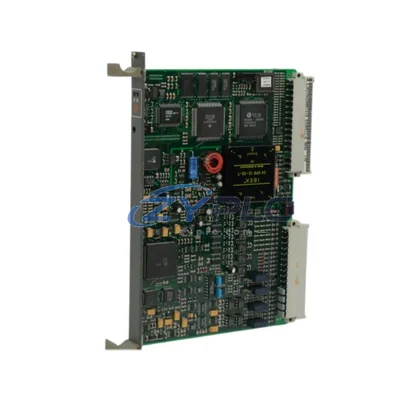
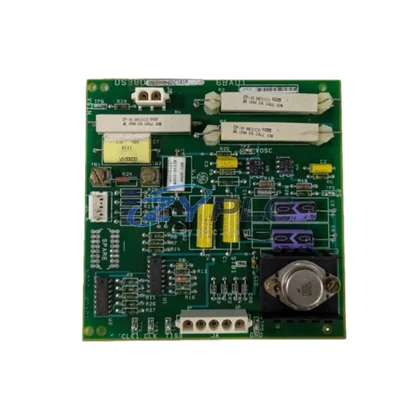
ABB 3BHE009017R0101 XVC724BE101: Industrial Excitation Control Data Link for XVC700 Systems
The ABB 3BHE009017R0101 XVC724BE101 is a precision-engineered excitation control PC board designed for the ABB XVC700 excitation system — one of ABB’s most widely deployed platforms for synchronous generator and motor excitation management in power generation, heavy industry, and process automation environments. As a core hardware component within the XVC700 control architecture, this board governs the real-time regulation of field current, voltage feedback, and reactive power output, forming a critical node in the industrial data chain that connects field devices to supervisory control systems.
In modern smart factory and power plant environments, excitation control is no longer an isolated function. The 3BHE009017R0101 XVC724BE101 operates as an active participant in a broader industrial communication network — receiving setpoint commands from SCADA platforms, exchanging status data with DCS controllers, and feeding real-time excitation telemetry back to HMI operator stations. Its integration into the XVC700 system enables seamless data flow across the full automation hierarchy, from field-level signal acquisition to enterprise-level energy management.
Compatibility & Integration Notes
| Parameter |
Specification |
| Product SKU |
3BHE009017R0101 XVC724BE101 |
| Brand |
ABB |
| Series |
XVC700 Excitation System |
| Product Type |
Excitation Control PC Board |
| Communication Protocol |
ABB Advant / MOD 300 fieldbus; PROFIBUS DP compatible via gateway; Modbus RTU/TCP via XVC700 communication modules |
| Interface Type |
Backplane bus interface; analog/digital I/O signal interface; serial communication port |
| Transmission Capability |
Real-time excitation voltage and current regulation; reactive power (Q) and AVR setpoint data exchange |
| Network Compatibility |
ABB DCS (Symphony Plus, AC800M); SCADA via OPC-DA/UA gateway; HMI integration via ABB Panel 800 / CP600 series |
| System Application |
Power generation (hydro, thermal, gas turbine); synchronous motor drives; industrial UPS excitation; reactive power compensation |
| Origin |
Germany (DE) |
| Warranty |
warranty terms confirmed during quotation |
| Shipping |
Global DHL / FedEx — full export compliance |
Connected Automation Data Flow
Understanding the ABB 3BHE009017R0101 XVC724BE101 requires tracing the full data path it participates in across a typical industrial site. At the field level, voltage transformers (VTs) and current transformers (CTs) feed analog measurement signals into the XVC700 excitation system, where this PC board processes and regulates the excitation response in real time. The board’s output directly controls the thyristor firing circuits or IGBT gate drivers in the power converter stage, ensuring stable terminal voltage under dynamic load conditions.
Moving up the automation hierarchy, the XVC700 system communicates with the plant’s ABB AC800M PLC controller via the ABB Advant fieldbus or a dedicated communication module. The AC800M aggregates excitation data alongside other generator protection signals from ABB REG670 generator protection relays and feeds consolidated status information to the plant DCS — typically an ABB Symphony Plus distributed control system. From Symphony Plus, operators at ABB Panel 800 HMI workstations can monitor excitation current, field voltage, power factor, and AVR mode in real time.
For sites requiring protocol bridging, an ABB CI854 PROFIBUS DP communication interface module can be deployed alongside the XVC700 to translate excitation data into PROFIBUS frames, enabling integration with third-party SCADA platforms or Siemens S7-series PLC environments. Similarly, ABB NETA-21 remote monitoring adapters can be used to publish excitation telemetry over Modbus TCP or IEC 61850 to enterprise energy management systems (EMS) or cloud-based condition monitoring platforms.
In power plant environments, the data chain extends further: excitation status from the 3BHE009017R0101 XVC724BE101 board is correlated with turbine governor signals from ABB Unitrol 1000 or Unitrol 6800 AVR systems, speed signals from proximity sensors on the shaft encoder, and temperature data from PT100 RTD sensors embedded in the stator windings. All of this converges at the SCADA layer, where alarm management, trend logging, and remote diagnostic functions are executed — enabling plant engineers to detect excitation anomalies, voltage instability, or field winding degradation without physical site visits.
Remote I/O expansion via ABB S800 I/O modules further extends the data acquisition reach, collecting auxiliary signals from cooling fans, AVR bypass contactors, and field breaker status — all of which are processed through the XVC700 control loop and reflected in the excitation board’s operating state. This tightly integrated data flow is what makes the ABB 3BHE009017R0101 XVC724BE101 not merely a replacement part, but a functional node in a living industrial network.
Solving Data Isolation in Industrial Sites
One of the most persistent challenges in power generation and heavy industrial facilities is data isolation — excitation systems, protection relays, turbine controllers, and SCADA platforms that cannot exchange information in a unified, real-time manner. Legacy excitation hardware often operates as a closed-loop black box, providing no visibility into field current trends, AVR mode transitions, or reactive power contributions to plant operators or remote engineering teams.
The ABB XVC700 system, anchored by the 3BHE009017R0101 XVC724BE101 PC board, directly addresses this problem. By supporting communication interfaces compatible with ABB’s DCS and SCADA ecosystems, the XVC700 breaks down the data silo between the excitation layer and the plant control layer. Operators gain live visibility into excitation parameters — field voltage, field current, terminal voltage, reactive power output — directly on their SCADA dashboards, without requiring manual meter readings or local panel inspections.
Protocol unification is another key benefit. Sites running mixed automation environments — ABB DCS alongside Siemens or Schneider PLCs — can deploy gateway modules to bridge the XVC700’s native communication protocol to PROFIBUS DP, Modbus TCP, or OPC-UA, ensuring that excitation data flows freely into any supervisory system. This eliminates the need for parallel, isolated monitoring infrastructure and reduces the risk of missed alarms or delayed fault response.
For remote diagnostic capability, the XVC700 platform supports event logging and fault history retrieval, allowing maintenance engineers to analyze excitation disturbances, overcurrent events, or AVR hunting episodes from a remote workstation. Combined with predictive maintenance algorithms running on edge gateways or cloud platforms, this transforms the excitation system from a reactive maintenance item into a proactive asset health indicator — a cornerstone of transparent, data-driven production line management.
System scalability is equally important. As plant capacity expands or generation units are added, the XVC700 architecture accommodates additional I/O modules, redundant communication paths, and parallel AVR channels without requiring a full system replacement. The 3BHE009017R0101 XVC724BE101 board is a field-replaceable unit (FRU) that can be swapped during planned maintenance windows, minimizing downtime and preserving system continuity.
Industrial Connectivity FAQ
Q1: What communication protocols does the ABB XVC700 excitation system support, and can it integrate with non-ABB SCADA platforms?
The XVC700 natively supports ABB’s Advant/MOD 300 fieldbus architecture and can be extended with communication modules supporting PROFIBUS DP, Modbus RTU/TCP, and OPC-DA/UA. This makes it compatible with a wide range of SCADA platforms including Wonderware, Ignition, and Siemens WinCC, provided an appropriate protocol gateway or communication interface module is deployed. The 3BHE009017R0101 XVC724BE101 board operates within this communication framework, ensuring excitation data is accessible at the supervisory level regardless of the SCADA vendor.
Q2: How does the 3BHE009017R0101 XVC724BE101 contribute to network stability and real-time control performance?
As the excitation control PC board, the 3BHE009017R0101 XVC724BE101 executes closed-loop AVR algorithms with millisecond-level response times, ensuring terminal voltage stability under sudden load changes, fault clearance events, or grid disturbances. Its deterministic control cycle minimizes communication latency between the measurement inputs and the firing pulse outputs, which is critical for maintaining power quality and preventing voltage collapse in interconnected grid environments.
Q3: Can this board be replaced in the field without recalibrating the entire XVC700 system?
Yes. The 3BHE009017R0101 XVC724BE101 is designed as a field-replaceable unit within the XVC700 modular architecture. Replacement typically requires restoring the board’s parameter configuration from a backup file stored in the XVC700 controller, followed by a functional test of the AVR loop and communication interfaces. All units supplied by ZYPLC undergo pre-shipment functional testing to verify board integrity before dispatch, reducing commissioning time on site.
Q4: What warranty and supply assurance does ZYPLC provide for the ABB 3BHE009017R0101 XVC724BE101?
ZYPLC provides a warranty terms confirmed during quotation on all ABB XVC700 series components, including the 3BHE009017R0101 XVC724BE101 PC board. Each unit is inspected and tested prior to shipment via DHL or FedEx with full export documentation. ZYPLC maintains inventory of XVC700 series boards to support urgent replacement requirements, with expedited shipping available for critical plant outage scenarios. For pricing, availability, and technical consultation, contact ZYPLC directly.