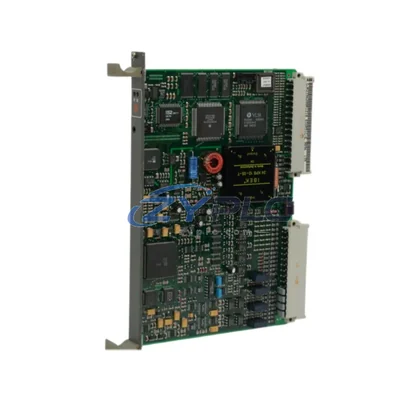
ABB 3BHE009017R0102 XVC724BE102 Excitation Control for Unitrol
The ABB 3BHE009017R0102 XVC724BE102 is a precision-engineered excitation control board designed for seamless integration within the ABB Unitrol 6000 automatic voltage regulator (AVR) platform and the AC800PEC high-performance controller ecosystem. In modern power generation and industrial drive systems, excitation control is not an isolated function — it is the backbone of generator stability, reactive power management, and grid synchronization. This module occupies a critical position in the control layer of layered automation architectures, interfacing directly with the AVR’s signal processing chain, the field current regulation loop, and the supervisory SCADA or DCS layer above it.
Within a complete Unitrol 6000 system, the XVC724BE102 board works in close coordination with companion modules such as the XVC724AE101 gate pulse amplifier board, the XVC724CE101 measurement and protection board, and the SDCS-CON-4 converter control board used in thyristor bridge configurations. The excitation control board receives setpoint commands from the AC800PEC processor unit — typically a PM866 or PM891 CPU module — via the internal DDCS fiber-optic communication link, ensuring deterministic, noise-immune signal transmission even in high-interference generator hall environments. This architecture eliminates ground loop issues that plague copper-based control wiring in high-voltage environments.
From a system architecture perspective, the 3BHE009017R0102 sits at the intersection of the control layer and the power conversion layer. Above it, the AC800PEC CPU handles closed-loop AVR algorithms, PSS (Power System Stabilizer) functions, and communication with plant-level DCS systems via PROFIBUS-DP or IEC 61850 protocols. Below it, the thyristor firing pulses are distributed to the power bridge, which directly controls the DC field current injected into the generator rotor. The XVC724BE102 board manages the critical handoff between these two layers — translating digital control commands into precisely timed analog firing signals while simultaneously feeding back measured electrical quantities for closed-loop regulation.
Redundancy is a key design consideration in power plant excitation systems. The Unitrol 6000 platform supports N+1 redundant excitation channel configurations, and the XVC724BE102 is fully compatible with this architecture. In redundant installations, a standby excitation channel — including a parallel XVC724BE102 board set — remains in hot-standby mode, ready to assume control within milliseconds of a primary channel fault. This bumpless transfer capability is essential for maintaining generator field current continuity during channel switchover, preventing voltage transients that could trip protection relays or destabilize the grid connection.
The board also plays a role in the I/O layer of the excitation system. Analog measurement inputs — including generator terminal voltage (PT signals), stator current (CT signals), and field voltage feedback — are conditioned and digitized on the measurement board before being passed to the XVC724BE102 for processing. Digital I/O signals, including AVR/manual mode selection, channel transfer commands, and fault relay outputs, are routed through the system’s I/O backplane. The UNITROL 6000 rack backplane provides the mechanical and electrical interconnect between all boards in the excitation cubicle, and the XVC724BE102 is designed to seat directly into this backplane without requiring additional interface adapters.
For engineering teams managing long-term maintenance of power plant excitation systems, the availability of the 3BHE009017R0102 XVC724BE102 as a stocked spare is a critical operational consideration. Excitation system failures are among the most consequential unplanned outages in power generation — a failed excitation board can force a generator offline within seconds, with significant revenue and grid stability implications. Maintaining a verified spare of the XVC724BE102, along with companion boards such as the XVC724AE101 and XVC724CE101, ensures that mean time to repair (MTTR) is minimized to the board swap and recommissioning time rather than weeks of procurement lead time.
All units supplied by ZYPLC are covered by a warranty terms confirmed during quotation and undergo functional verification prior to dispatch. Our technical team provides system integration support, assisting engineers with board identification, firmware compatibility verification, and installation guidance within the Unitrol 6000 system architecture.
Product Specification Table
| Parameter |
Specification |
| Part Number |
3BHE009017R0102 |
| Module Designation |
XVC724BE102 |
| Manufacturer |
ABB |
| System Role |
Excitation Control Board — AVR Signal Processing & Gate Pulse Interface |
| Compatible Platform |
ABB Unitrol 6000 AVR / AC800PEC High-Performance Controller |
| Communication Interface |
DDCS Fiber-Optic Link (internal); PROFIBUS-DP / IEC 61850 (system level) |
| Control Layer Position |
Between AC800PEC CPU and Thyristor Power Bridge |
| Redundancy Support |
N+1 Hot-Standby Excitation Channel Architecture |
| Installation Environment |
Unitrol 6000 Excitation Cubicle / UNITROL Rack Backplane |
| Origin |
Germany |
| Warranty |
warranty terms confirmed during quotation (ZYPLC) |
| Integration Support |
system integration — Technical Advisory Included |
System Compatibility Notes
The 3BHE009017R0102 XVC724BE102 does not operate in isolation — its value is realized through tight coordination with every layer of the Unitrol 6000 excitation system. At the CPU level, the AC800PEC PM866 or PM891 processor module executes the AVR control algorithms and PSS functions, issuing setpoint commands to the XVC724BE102 via the DDCS fiber link. The XVC724AE101 gate pulse amplifier board receives firing angle commands from the XVC724BE102 and drives the thyristor gate circuits in the power bridge. The XVC724CE101 measurement and protection board feeds back generator terminal voltage, stator current, and field voltage measurements, closing the regulation loop.
At the power conversion layer, the SDCS-CON-4 converter control board — used in DC drive and excitation thyristor bridge applications — shares architectural similarities with the XVC724 series and may be found in adjacent cubicles within the same switchgear lineup. The UNITROL 6000 rack backplane provides the physical interconnect for all boards in the excitation cubicle, while the UNITROL 6000 power supply module delivers regulated DC auxiliary power to the control electronics. For HMI and operator interface, the ABB Panel 800 PP886 operator panel or a SCADA workstation running ABB’s Control Builder M software provides the human-machine interface layer, displaying excitation system status, alarms, and trend data.
In installations requiring communication gateway functionality, the ABB CI854 PROFIBUS-DP communication interface module bridges the AC800PEC controller to plant-level DCS systems, enabling remote AVR setpoint adjustment and excitation system monitoring from the central control room. Terminal modules and marshalling components within the excitation cubicle — such as ABB NAIO terminal blocks and surge protection modules — complete the I/O wiring layer, ensuring signal integrity between field instrumentation and the control boards.
Industrial Application Notes
The ABB 3BHE009017R0102 XVC724BE102 finds application across a wide range of power generation and heavy industrial environments where generator excitation control is critical to operational continuity.
In thermal and hydroelectric power plants, the Unitrol 6000 system with the XVC724BE102 board manages generator terminal voltage regulation, reactive power sharing between parallel generators, and power system stabilization to damp inter-area oscillations. The board’s compatibility with IEC 61850 communication standards makes it suitable for modern digital substation architectures where excitation system data must be integrated into the station bus.
In petrochemical and offshore platform applications, where generator reliability is non-negotiable and maintenance access is constrained, the hot-standby redundancy architecture supported by the XVC724BE102 provides the fault tolerance required by safety integrity level (SIL) assessments. The board’s robust design for installation in enclosed, climate-controlled excitation cubicles suits the harsh ambient conditions typical of offshore and refinery environments.
In mining and metallurgical facilities with large synchronous motors or generators, the Unitrol 6000 excitation system provides reactive power compensation and motor starting support. The XVC724BE102 board’s precise firing angle control enables smooth, controlled field current ramp-up during motor starting sequences, reducing mechanical stress on couplings and driven equipment.
In water treatment and pumping stations with variable-speed synchronous pump-turbine units, the excitation control board supports both motoring and generating modes of operation, with seamless mode transitions managed by the AC800PEC controller. The board’s deterministic DDCS communication ensures that mode transition commands are executed within the tight timing windows required for stable pump-turbine operation.
Product Compatibility FAQ
Q1: Is the 3BHE009017R0102 XVC724BE102 compatible with both Unitrol 6000 and earlier Unitrol 5000 systems?
The XVC724BE102 is specifically designed for the Unitrol 6000 platform and its associated AC800PEC controller architecture. It is not directly interchangeable with Unitrol 5000 hardware due to differences in backplane connector pinout, DDCS communication protocol version, and firmware architecture. Engineers migrating from Unitrol 5000 to Unitrol 6000 should consult ABB’s system migration documentation and verify full board set compatibility before installation. ZYPLC’s technical team can assist with compatibility assessment as part of our system integration support service.
Q2: What commissioning steps are required after replacing the XVC724BE102 board in a live excitation system?
Board replacement in a Unitrol 6000 system typically requires: (1) safe isolation of the excitation cubicle and de-energization of the thyristor bridge; (2) physical board swap and backplane reseating; (3) firmware version verification using ABB’s Control Builder M or UNITROL 6000 commissioning tool; (4) parameter download from the AC800PEC application backup; (5) functional test of AVR regulation, manual control mode, and protection relay outputs; and (6) synchronization check before reconnecting the generator to the busbar. ZYPLC provides pre-dispatch functional verification to confirm board operability before shipment, reducing on-site commissioning risk.
Q3: What does the warranty terms confirmed during quotation cover, and what long-term maintenance support does ZYPLC provide?
ZYPLC’s warranty terms confirmed during quotation covers manufacturing defects and functional failures under normal operating conditions for the 3BHE009017R0102 XVC724BE102 board. In the event of a warranty claim, ZYPLC provides replacement or repair with priority dispatch to minimize system downtime. Beyond the warranty period, ZYPLC supports RFQ sourcing for XVC724 series boards and companion Unitrol 6000 components to support long-term maintenance programs. Our system integration support includes technical advisory on board identification, spare parts planning, and system architecture documentation review, helping engineering teams maintain excitation system reliability throughout the generator’s operational lifecycle.