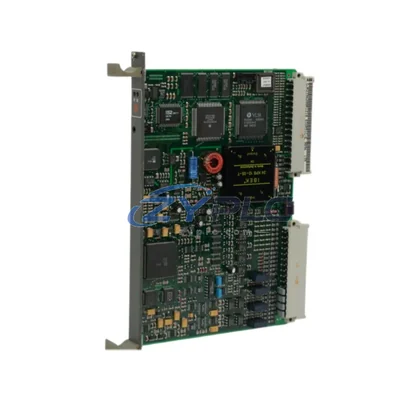
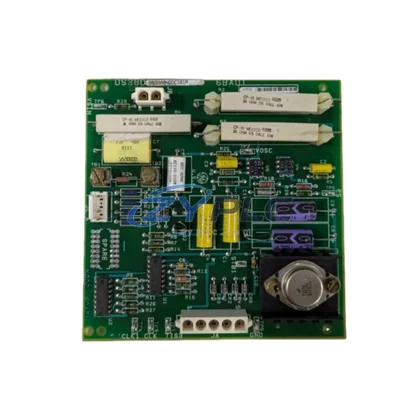
ABB 3BHE013299R0001 LTC743C: Industrial Signal Amplifier Enabling Smart Factory Data Flow in LTC Series Excitation Systems
The ABB 3BHE013299R0001, also designated as the LTC743C amplifier board, serves as a critical signal conditioning and amplification node within ABB’s LTC series excitation control architecture. In modern power generation and heavy industrial environments, reliable data flow between field-level sensors, programmable logic controllers, and supervisory systems determines overall plant efficiency and uptime. This amplifier board ensures that low-level analog signals from current transformers, voltage sensors, and temperature probes are accurately amplified and conditioned before transmission to higher-level control and monitoring platforms.
Compatibility & Integration Notes
| Parameter |
Specification |
| Part Number |
3BHE013299R0001 |
| Board Designation |
LTC743C |
| Manufacturer |
ABB |
| Series |
LTC Series (Excitation Control) |
| Function |
Signal Amplification and Conditioning |
| Interface Compatibility |
Analog I/O, Backplane Bus Communication |
| Protocol Support |
Interfaces with Profibus, Modbus via system gateway |
| System Integration |
UNITROL Excitation Controllers, SCADA, DCS |
| Network Architecture |
Compatible with ABB 800xA, Symphony Plus DCS |
| Operating Environment |
Industrial Grade, -20°C to +60°C |
| Origin |
Germany (DE) |
| Warranty |
warranty terms confirmed during quotation — ZYPLC |
| Pre-Shipment Testing |
Full functional test before dispatch |
Connected Automation Data Flow
Within a typical power generation or heavy industrial facility, the ABB 3BHE013299R0001 LTC743C amplifier board occupies a pivotal position in the signal chain. Field-level sensors — including rotor current transducers and stator voltage monitors — generate raw analog signals that require precise amplification before they can be digitized and transmitted across the plant network. The LTC743C receives these signals from sensor interface modules and amplifies them to standardized levels compatible with the ABB UNITROL 1020 excitation controller, which manages generator field current regulation in real time.
Once amplified, these signals feed into the excitation controller’s processing unit, where they are digitized and made available on the system backplane. Communication gateway modules such as the ABB CI854AK01 Profibus interface card and the ABB CI867AK01 Modbus TCP communication module then relay the processed data to the plant-wide distributed control system. In facilities running ABB 800xA or Symphony Plus, the data flows seamlessly into engineering workstations and SCADA displays, enabling operators to monitor generator excitation parameters, reactive power output, and voltage regulation status from centralized control rooms.
The amplified signals also support closed-loop feedback to the ABB SDCS-PIN-4 power interface board, which adjusts thyristor firing angles based on real-time excitation demand. Meanwhile, the ABB 3BHE024577R0101 PPC907BE controller board coordinates overall system sequencing, ensuring that the amplifier output remains within calibrated bounds during load transients and fault conditions. For remote I/O expansion in distributed generator halls, the ABB CI840A communication interface module extends the data path to satellite control cabinets, maintaining signal integrity across extended cable runs.
At the supervisory level, historians and analytics platforms ingest the amplified and digitized signals for long-term trend analysis. The ABB 3BHE021889R0101 UFC760BE control board provides additional processing capacity for advanced excitation algorithms, while the ABB 3BSE040662R1 AI830A analog input module at the DCS level receives conditioned signals with confidence, enabling accurate cross-unit comparisons and automated load sharing algorithms. Edge computing gateways aggregate data from multiple excitation systems and push summarized KPIs to cloud-based asset performance management platforms, completing the data journey from field sensor to enterprise dashboard.
Solving Data Isolation in Industrial Sites
Legacy excitation systems frequently suffer from data isolation, where critical amplifier outputs and control signals remain trapped within proprietary backplane architectures inaccessible to modern monitoring tools. The ABB 3BHE013299R0001 LTC743C addresses this challenge by providing clean, accurately amplified signals that downstream communication modules can readily digitize and expose to open industrial protocols. Plants upgrading from older UNITROL systems to networked architectures benefit from the LTC743C’s stable output characteristics, which reduce signal noise and calibration drift that previously made protocol conversion unreliable.
In facilities where multiple generator sets operate in parallel, each equipped with its own excitation system, the absence of unified data access creates blind spots in reactive power coordination and voltage regulation. By ensuring that each amplifier board delivers consistent, high-fidelity signals to the communication layer, plant engineers can implement coordinated excitation control strategies across all units, enabling accurate cross-unit comparisons and automated load sharing through the DCS infrastructure.
Remote diagnostic capabilities depend entirely on signal quality at the amplification stage. When maintenance teams need to assess excitation system health from offsite locations, the data transmitted through SCADA must faithfully represent actual field conditions. The LTC743C’s precision amplification ensures that remote engineers can trust the waveform data displayed on their diagnostic terminals, reducing unnecessary site visits and accelerating fault identification. This transparency extends to predictive maintenance algorithms that analyze signal trends to forecast component degradation before failures occur.
System expansion scenarios also benefit from reliable amplification. When additional measurement points are added to monitor new parameters such as brush wear indicators or slip ring temperature sensors, the amplifier board’s stable gain characteristics ensure that new channels integrate smoothly into the existing data infrastructure without requiring recalibration of adjacent channels. This scalability supports the incremental digitalization strategies that many power generation facilities adopt as they transition toward fully connected smart plant architectures.
Industrial Connectivity FAQ
Q: Does the ABB 3BHE013299R0001 introduce signal latency that affects excitation control loop performance?
A: The LTC743C amplifier board operates with minimal propagation delay, typically in the microsecond range, which is well within the timing requirements of excitation control loops operating at millisecond cycle times. The amplified output is available to the controller within the same scan cycle, ensuring no degradation of regulation performance.
Q: Is this amplifier board compatible with both legacy and modern ABB excitation platforms?
A: Yes. The 3BHE013299R0001 is designed for the LTC series architecture and maintains backward compatibility with earlier UNITROL configurations while supporting integration with current ABB 800xA and Symphony Plus environments through appropriate communication gateway modules.
Q: How does ZYPLC ensure the board functions correctly before shipping?
A: Every ABB 3BHE013299R0001 unit undergoes comprehensive functional testing at our facility prior to dispatch. We verify amplification gain accuracy, signal linearity, thermal stability, and connector integrity. Units ship with test documentation confirming operational parameters meet ABB factory specifications.
Q: What warranty coverage and network stability guarantees does ZYPLC provide?
A: ZYPLC provides a full warranty terms confirmed during quotation covering manufacturing defects and functional failures under normal operating conditions. Our technical support team is available to assist with installation guidance, protocol compatibility questions, and troubleshooting throughout the warranty period and beyond.