ABB 3BHE014070R0101 Protection Unit: Compatibility and Replacement Notes
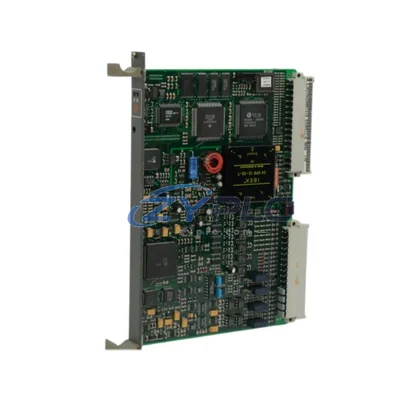
The ABB PP C905 AE101 (3BHE014070R0101) is a dedicated protection unit engineered for deployment within the ABB Symphony Plus distributed control system (DCS) architecture. Rather than functioning as a standalone device, this module is designed to operate as an integral node within a layered automation hierarchy — coordinating with CPU modules, I/O subsystems, communication gateways, power supply units, and human-machine interface (HMI) stations to deliver consistent, reliable, and scalable process protection across demanding industrial environments.
In modern industrial control architectures, protection functions cannot be isolated from the broader system design. The 3BHE014070R0101 is positioned within the Symphony Plus control layer to monitor critical process variables, execute protective logic, and communicate status upstream to supervisory controllers and downstream to field-level actuators and relay modules. Its integration into the Symphony Plus platform ensures that protection actions are synchronized with the overall control strategy — reducing response latency, eliminating signal conflicts, and maintaining system-wide coherence during fault conditions.
Product Specification Table
| Parameter |
Specification |
| Part Number |
3BHE014070R0101 |
| Module Designation |
PP C905 AE101 |
| Brand |
ABB |
| Series |
Symphony Plus (S+) |
| System Role |
Protection Unit — Control Layer |
| Product Type |
Protection Unit / Process Controller Module |
| Country of Origin |
Germany (DE) |
| Mounting |
DIN Rail / Rack-mount (Symphony Plus backplane compatible) |
| Communication Capability |
Symphony Plus internal bus; compatible with S+ Operations and S+ Engineering toolchain |
| Power Supply Compatibility |
Symphony Plus system power rail (24 VDC nominal) |
| Operating Temperature |
0°C to +60°C (standard industrial range) |
| Humidity |
5% to 95% RH, non-condensing |
| Installation Environment |
Control cabinet / marshalling panel; IEC 61010 compliant enclosure recommended |
| Redundancy Support |
Compatible with Symphony Plus redundant controller configurations |
| Warranty |
warranty terms confirmed during quotation — covers manufacturing defects and functional failure under normal operating conditions |
System Compatibility Notes
The 3BHE014070R0101 achieves its full operational value when integrated within a complete Symphony Plus system architecture. At the controller level, it works alongside the ABB PM891 and PM895 processor modules, which serve as the primary CPU nodes managing scan cycles, logic execution, and inter-module communication. The protection unit receives setpoint data and operational parameters from these controllers and feeds back real-time status and alarm signals, enabling the CPU to make informed control decisions without delay.
On the I/O layer, the PP C905 AE101 interfaces with ABB AI810 analog input modules and DI810 digital input modules to acquire field signals — including temperature, pressure, current, and discrete trip signals — that trigger protection logic. Output actions are routed through DO810 digital output modules or directly to relay modules such as the ABB TU810V1 termination unit, which provides the physical interface between the control system and field-mounted circuit breakers, contactors, and solenoid valves.
At the network and communication layer, the Symphony Plus architecture relies on the ABB CI854 PROFIBUS DP communication interface module to bridge the DCS controller network with field devices, variable frequency drives, and intelligent electronic devices (IEDs). The 3BHE014070R0101 protection unit’s status and alarm data are propagated across this communication backbone, ensuring that the SCADA layer and ABB S+ Operations HMI workstations receive timely, accurate protection system status for operator awareness and incident response.
Power integrity is maintained through dedicated ABB SD821 or SD823 power supply modules, which provide regulated DC power to the Symphony Plus backplane. The protection unit depends on stable, clean power delivery to maintain its protective logic without nuisance trips or false alarms — making the power supply selection a critical architectural decision. In redundant configurations, dual power supply modules with automatic switchover ensure that a single power supply failure does not compromise the protection function.
The backplane and rack infrastructure — including the ABB TB820V2 media redundancy module and associated rack assemblies — provides the physical and electrical foundation for the entire Symphony Plus node. The 3BHE014070R0101 slots into this backplane, inheriting the rack’s communication bus, power distribution, and grounding architecture. This plug-in design simplifies module replacement during maintenance windows, reducing mean time to repair (MTTR) and minimizing production downtime.
Industrial Application Notes
Power Generation and Utilities: In thermal power plants and combined-cycle facilities, the 3BHE014070R0101 is deployed within turbine protection and boiler management systems. It monitors critical parameters such as turbine overspeed, bearing temperature, and steam pressure, executing trip logic that isolates equipment before damage occurs. Its integration with the Symphony Plus DCS ensures that protection actions are logged, time-stamped, and communicated to the plant historian for post-event analysis and regulatory compliance reporting.
Oil, Gas, and Petrochemical Processing: In upstream and downstream hydrocarbon processing facilities, protection units of this class are embedded within emergency shutdown (ESD) and safety instrumented system (SIS) architectures. The 3BHE014070R0101 supports process protection logic for compressor trains, heat exchangers, and separation vessels — coordinating with pressure transmitters, flow meters, and final control elements to execute safe-state transitions in accordance with IEC 61511 functional safety requirements.
Water and Wastewater Treatment: Municipal and industrial water treatment plants rely on Symphony Plus-based control systems to manage pump stations, filtration processes, and chemical dosing systems. The protection unit monitors motor current, pump differential pressure, and tank levels, providing automated protection against dry-running, overload, and process excursions that could compromise water quality or equipment integrity.
Mining and Mineral Processing: In mining operations — including ore crushing, conveyor systems, and flotation circuits — the 3BHE014070R0101 provides protection for high-power drive systems and process equipment operating in harsh, dusty environments. Its robust design and compatibility with the Symphony Plus redundant architecture ensure continuous protection even in remote locations with limited maintenance access.
Metallurgy and Steel Production: Electric arc furnaces, rolling mills, and continuous casting lines demand precise, fast-acting protection systems. The PP C905 AE101 integrates into the Symphony Plus control architecture to provide overcurrent, overvoltage, and thermal protection for critical drive and transformer systems, coordinating with the plant-wide DCS to maintain production continuity and equipment longevity.
Packaging and Discrete Manufacturing: In high-speed packaging lines and assembly systems, the protection unit monitors servo drive health, conveyor motor status, and safety relay states, enabling rapid fault isolation without halting the entire production line. Its modular design within the Symphony Plus architecture allows engineers to add or reconfigure protection zones as production layouts evolve.
Product Compatibility FAQ
Q1: Is the 3BHE014070R0101 compatible with both new Symphony Plus installations and legacy Symphony HI/Harmony system upgrades?
The PP C905 AE101 is designed for the Symphony Plus (S+) platform. For legacy Symphony HI or Harmony system migrations, compatibility depends on the specific backplane, communication bus version, and firmware revision in use. It is recommended to verify the target rack assembly and CPU module firmware version against ABB’s Symphony Plus compatibility matrix before installation. In most structured migration projects, the 3BHE014070R0101 is deployed as part of a phased upgrade where the Symphony Plus backplane and power supply infrastructure are installed first, followed by controller and I/O module replacement.
Q2: Can this protection unit be used in a redundant controller configuration, and what additional modules are required?
Yes. The Symphony Plus architecture supports redundant controller configurations where a primary and secondary CPU module operate in hot-standby mode. The 3BHE014070R0101 protection unit participates in this redundant architecture by maintaining synchronized state data with the active controller. To implement full redundancy, the system requires a redundant CPU pair (e.g., dual PM891 modules), a media redundancy module such as the TB820V2, redundant power supply modules (e.g., dual SD821 units), and appropriate redundancy communication cabling. The protection unit itself does not require duplication — it communicates with whichever CPU module is currently active.
Q3: What does the warranty terms confirmed during quotation cover, and what is the process for warranty claims or long-term spare parts support?
The warranty terms confirmed during quotation covers manufacturing defects and functional failures arising under normal operating conditions from the date of shipment. It does not cover damage resulting from incorrect installation, electrical overstress, unauthorized modification, or operation outside specified environmental limits. For warranty claims, customers should contact our technical support team with the module serial number, purchase documentation, and a description of the observed fault. For long-term spare parts planning, we supports RFQ sourcing for Symphony Plus modules including the 3BHE014070R0101 and related components to support multi-year maintenance contracts and emergency replacement requirements. Contact our team to discuss consignment stock arrangements or scheduled supply agreements tailored to your plant’s maintenance cycle.