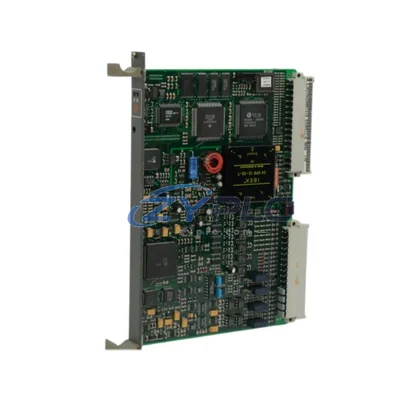
The ABB 3BHE024313R0101 KSD211A101 is a precision-engineered Input Coupling Unit designed for ABB’s UNITROL excitation control systems. In modern industrial power generation and motor drive environments, the quality of input signal coupling directly determines how efficiently the excitation system responds to load changes, voltage fluctuations, and reactive power demands. This unit serves as the critical interface between the measurement input stage and the excitation controller, ensuring that energy conversion processes remain stable, accurate, and optimized for minimum power loss.
Sourced from verified supply channels, each 3BHE024313R0101 KSD211A101 unit available through ZYPLC undergoes functional testing prior to shipment, is Warranty terms are confirmed during quotation.
Product Specification Table
| Parameter |
Specification / Value |
| SKU / Part Number |
3BHE024313R0101 KSD211A101 |
| Brand |
ABB |
| Series |
UNITROL Excitation Control |
| Product Category |
Input Coupling Unit |
| Origin |
Switzerland (CH) |
| Operating Environment |
Industrial Power Generation, Synchronous Generator Control |
| Compatible Systems |
ABB UNITROL 5000 / 6000 / 1000 Excitation Systems |
| Power Consumption |
Low-loss signal coupling design; minimizes auxiliary power draw |
| Running Efficiency |
High-fidelity signal transmission with minimal phase distortion |
| Maintenance Value |
Reduces excitation overshoot, stabilizes reactive power output, lowers heat generation |
| Warranty |
12 Months |
| Condition |
New / Tested Surplus |
| Lead Time |
Availability confirmed via RFQ before quotation |
System Compatibility and Application
In a fully optimized industrial power control loop, the ABB 3BHE024313R0101 KSD211A101 Input Coupling Unit does not operate in isolation — it is one node in a tightly integrated excitation and maintenance planning architecture. Understanding how it interacts with surrounding components helps engineers design systems that minimize downtime at every stage.
At the measurement layer, voltage and current transducers feed analog signals into the UNITROL excitation controller. The KSD211A101 coupling unit conditions and routes these signals with high accuracy, ensuring that the ABB UNITROL 5000 or UNITROL 6000 controller receives clean, noise-free input data. This directly reduces the frequency of unnecessary excitation corrections — each unnecessary correction cycle wastes reactive energy and increases thermal stress on the generator windings.
On the control execution side, the excitation controller — often paired with an ABB AC800M PLC or a PM866 processor module — uses the conditioned input data to calculate precise field current setpoints. When the input coupling is accurate, the controller can apply finer, more maintenance-focused corrections rather than coarse adjustments that overshoot and require compensating corrections. This reduces the total reactive power consumed by the excitation circuit itself.
For drive-level energy regulation, the UNITROL system interfaces with ABB ACS880 industrial drives or ACS580 general-purpose drives in hybrid power plant configurations where both synchronous generators and variable-speed motor loads share the same bus. Accurate excitation input coupling ensures that voltage regulation on the shared bus remains tight, preventing drive systems from drawing excess reactive current to compensate for voltage sag.
Power quality monitoring is handled by dedicated instruments such as the ABB M2M Power Analyzer or third-party power meters integrated via PROFIBUS DP or Modbus RTU communication modules. The data collected by these instruments feeds back into the UNITROL controller, and the quality of that feedback loop depends directly on the integrity of the input coupling stage — the role fulfilled by the 3BHE024313R0101 KSD211A101.
At the I/O and field signal level, ABB S800 I/O modules distribute digital and analog signals across the control cabinet. The input coupling unit bridges the gap between field-level measurement signals and the high-speed processing environment of the excitation controller, maintaining signal integrity even in electrically noisy generator hall environments. Complementary components such as the ABB 3BHE022294R0101 SDCS-CON-4 control board and 3BHE009681R0101 interface modules are commonly found in the same control rack, each contributing to the overall efficiency of the excitation chain.
For HMI and operator visibility, ABB CP600 operator panels or SCADA systems connected via IEC 61850 or OPC UA gateways provide real-time excitation status, reactive power output, and energy efficiency KPIs. Accurate input coupling data ensures that what operators see on the HMI reflects the true state of the generator — enabling faster, more confident decisions that reduce unnecessary manual interventions and associated energy disturbances.
Maintenance and Replacement Notes
In thermal power plants, hydroelectric stations, and large industrial facilities with on-site generation, excitation system performance has a direct and measurable impact on energy costs. A poorly conditioned input signal causes the excitation controller to apply excessive field current corrections, which increases copper losses in the rotor winding, raises operating temperature, and accelerates insulation degradation — all of which translate into higher maintenance costs and shorter equipment service intervals.
By ensuring that the ABB 3BHE024313R0101 KSD211A101 Input Coupling Unit is functioning correctly, plant engineers can expect tighter voltage regulation bands — typically within ±0.5% of setpoint — which reduces reactive power oscillations on the generator bus. Tighter voltage control means that downstream motor loads, including large induction motors and variable frequency drives, operate closer to their rated power factor, reducing line losses and improving overall plant energy efficiency.
From a production line rhythm perspective, voltage instability caused by poor excitation control introduces micro-interruptions and voltage dips that can trigger protective relays on sensitive equipment, causing unplanned stops. Each unplanned stop disrupts production cadence, wastes the energy consumed during restart sequences, and increases wear on mechanical components. A reliable input coupling unit eliminates one of the root causes of these disturbances, contributing to higher equipment utilization rates and more predictable production throughput.
Predictive maintenance programs benefit as well. When the input coupling unit is operating correctly, the excitation controller’s internal diagnostics can accurately detect developing faults in the generator field winding or AVR components — because the baseline signal quality is known and stable. Anomalies in excitation behavior are more easily distinguished from measurement noise, enabling maintenance teams to schedule interventions before failures occur rather than reacting to breakdowns.
ZYPLC maintains ready inventory of the 3BHE024313R0101 KSD211A101 and related UNITROL excitation components, with each unit tested for functional integrity before dispatch. export shipping options after RFQ confirmation and a warranty and support terms confirmed before quote ensure that replacement cycles do not become bottlenecks in plant maintenance schedules.
Product Sourcing FAQ
Q1: How does the ABB 3BHE024313R0101 KSD211A101 contribute to operational stability in a generator excitation system?
The KSD211A101 Input Coupling Unit ensures that voltage and current measurement signals are accurately conditioned before reaching the UNITROL excitation controller. Accurate input data allows the controller to apply precise, minimal field current corrections rather than over-correcting, which reduces rotor copper losses, lowers operating temperature, and improves the overall reactive power efficiency of the generator. Over a full operating year, tighter excitation control can meaningfully reduce auxiliary energy consumption and extend equipment service life.
Q2: Which ABB UNITROL systems is the 3BHE024313R0101 KSD211A101 compatible with?
This Input Coupling Unit is designed for use within ABB’s UNITROL excitation control platform, including the UNITROL 5000 and UNITROL 6000 series. It is intended for synchronous generator applications in power generation, industrial co-generation, and reactive power compensation systems. For specific compatibility confirmation with your installed UNITROL version, contact ZYPLC with your system’s full configuration details.
Q3: Can the 3BHE024313R0101 KSD211A101 be used as a direct replacement for a failed unit, and what is the testing process?
Yes. Each unit supplied by ZYPLC is tested for functional performance prior to shipment, verifying signal coupling integrity and electrical parameters against ABB specifications. The unit is designed as a plug-compatible replacement within the UNITROL control rack. Replacement does not require firmware changes to the excitation controller in standard configurations. If your application involves a customized UNITROL setup, our technical team can advise on any additional commissioning steps required.
Q4: What warranty and after-sales support does ZYPLC provide for the ABB 3BHE024313R0101 KSD211A101?
Warranty terms are confirmed during quotation. During the warranty period, ZYPLC provides technical support for installation and commissioning questions, and will replace or refund any unit confirmed to have a manufacturing or functional defect. Our inventory is maintained in climate-controlled storage to preserve component integrity, and all units are dispatched with test records upon request.