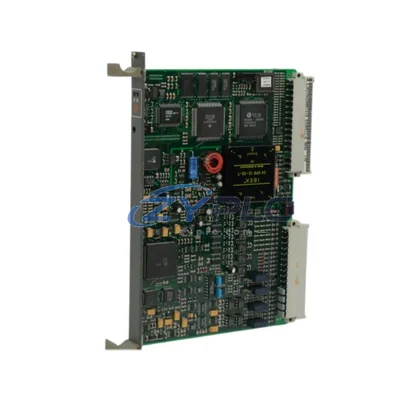
ABB 3BHE057901R0101 PCD235 C101 Communication Module for Symphony Plus
The ABB 3BHE057901R0101 PCD235 C101 is a dedicated communication module engineered for deployment within ABB’s Symphony Plus distributed control system (DCS) architecture. Rather than functioning as a standalone component, this module is designed to serve as a critical communication bridge within a layered automation hierarchy — connecting the control layer, I/O subsystems, network infrastructure, and human-machine interface (HMI) platforms into a unified, coherent control fabric. Its role in the system is to ensure deterministic, low-latency data exchange between process controllers and field devices, enabling operators to maintain full situational awareness and precise control across complex industrial environments.
In a complete Symphony Plus control architecture, the PCD235 C101 module is typically installed within the AC800M or PM866 controller chassis, working in close coordination with the S800 I/O modules — including AI810, AO810, DI810, and DO810 series — to relay real-time process signals from the field to the control layer. The module supports ABB’s proprietary Advant Fieldbus 100 (AF100) and is compatible with PROFIBUS DP and Modbus RTU communication protocols, making it a versatile integration point for both legacy field instruments and modern smart devices. This protocol flexibility is essential in brownfield projects where heterogeneous device ecosystems must be unified under a single control platform without costly hardware replacement.
From a system architecture perspective, the 3BHE057901R0101 PCD235 C101 contributes directly to the network layer of the Symphony Plus hierarchy. It interfaces with the Plant Network (PN) and the Control Network (CN), ensuring that process data flows reliably from field-level sensors and actuators through the I/O layer, across the control network, and up to the supervisory SCADA or DCS operator stations. This multi-layer communication capability is what allows Symphony Plus systems to scale from small process units to plant-wide automation networks spanning hundreds of I/O points and multiple controller nodes.
Redundancy is a core design consideration in any mission-critical control system, and the PCD235 C101 supports hot-standby redundancy configurations when paired with a redundant controller module such as the PM866K01 or PM891. In redundant architectures, two PCD235 C101 modules operate in parallel — one active, one standby — with automatic bumpless switchover in the event of a primary module failure. This design eliminates single points of failure at the communication layer, which is particularly important in continuous process industries such as oil and gas, chemical processing, and power generation, where unplanned downtime carries significant operational and safety consequences.
The module’s physical design is optimized for installation within standard Symphony Plus S900 I/O cabinets and AC800M controller enclosures. It mounts directly onto the controller backplane, drawing power from the system power supply unit (PSU) — typically the SD821 or SD822 power supply modules — without requiring an external power source. This integrated power architecture simplifies cabinet design, reduces wiring complexity, and improves overall system reliability by minimizing the number of discrete power conversion stages within the control enclosure.
For engineering teams responsible for system commissioning and long-term maintenance, the 3BHE057901R0101 PCD235 C101 offers significant advantages in terms of diagnostic transparency. The module exposes real-time communication health data — including link status, error counters, and protocol-level diagnostics — through the ABB Control Builder Plus engineering environment. This allows maintenance engineers to identify communication degradation trends before they escalate into process disruptions, supporting a proactive maintenance strategy that reduces unplanned outages and extends the operational lifespan of the control system.
In terms of inventory management and supply chain continuity, the PCD235 C101 is a high-demand spare part for facilities operating Symphony Plus DCS platforms. Maintaining an adequate stock of communication modules is a recognized best practice in industrial asset management, as communication layer failures — while less frequent than I/O or field device failures — tend to have a disproportionately large impact on system availability. ZYPLC maintains availability subject to RFQ confirmation of the 3BHE057901R0101 PCD235 C101 with a warranty terms confirmed during quotation, ensuring that replacement units meet original ABB performance specifications and can be deployed without additional qualification testing.
The module is fully compatible with Symphony Plus system versions R5.0 and above, and has been validated for use in conjunction with the AC800M High Integrity (HI) controller platform for safety-instrumented system (SIS) applications. When integrated into a Safety Integrity Level (SIL) 2 or SIL 3 architecture alongside the PM865 or PM867 safety controllers, the PCD235 C101 enables seamless data exchange between the safety layer and the basic process control system (BPCS), supporting integrated alarm management and safety loop monitoring from a unified operator interface.
Product Specification Table
| Parameter |
Specification |
| System Role |
Communication Module — Control Network / Field Bus Interface |
| Compatible Platform |
ABB Symphony Plus DCS (AC800M, PM866, PM891 series) |
| Supported Protocols |
AF100 (Advant Fieldbus 100), PROFIBUS DP, Modbus RTU |
| Backplane Interface |
Symphony Plus S900 / AC800M Controller Backplane |
| Power Supply |
Supplied via controller backplane (SD821 / SD822 PSU compatible) |
| Redundancy Support |
Hot-standby redundancy with bumpless switchover |
| Operating Temperature |
0°C to +55°C (storage: -40°C to +70°C) |
| Humidity |
5% to 95% RH, non-condensing |
| Mounting |
Direct backplane mount — no external wiring required |
| Country of Origin |
Germany |
| Diagnostic Interface |
ABB Control Builder Plus (real-time link status, error counters) |
| Safety Compatibility |
SIL 2 / SIL 3 (with PM865 / PM867 safety controllers) |
| Warranty |
warranty terms confirmed during quotation — verified OEM-specification performance |
System Compatibility Notes
The 3BHE057901R0101 PCD235 C101 does not operate in isolation — its value is realized through its integration with the broader Symphony Plus control ecosystem. At the controller level, it works alongside the PM866K01 and PM891K01 processor modules, which serve as the computational core of the DCS architecture. These controllers execute the control logic — PID loops, sequence programs, and safety interlocks — while the PCD235 C101 handles the communication burden, offloading protocol translation and network management from the main processor.
At the I/O layer, the module coordinates with S800 I/O modules such as the AI810 (8-channel analog input), AO810 (8-channel analog output), DI810 (16-channel digital input), and DO810 (16-channel digital output), which connect directly to field instruments including transmitters, control valves, motor starters, and position switches. The PCD235 C101 aggregates the I/O data from these modules and transmits it across the control network to the operator stations and historian servers.
For network infrastructure, the module interfaces with CI854 and CI857 communication interface modules, which extend the system’s connectivity to PROFIBUS DP field device networks and Foundation Fieldbus H1 segments respectively. This layered communication architecture allows a single Symphony Plus system to simultaneously manage hundreds of field devices across multiple communication protocols without compromising scan cycle performance or data integrity.
At the power layer, the system relies on SD821 and SD822 power supply modules to deliver regulated DC power to the controller backplane, ensuring that the PCD235 C101 and all co-installed modules receive stable, noise-free power even in electrically harsh industrial environments. Redundant power supply configurations — using two SD821 units in parallel — are standard practice in high-availability installations.
At the HMI and supervisory layer, the communication data managed by the PCD235 C101 is consumed by ABB Ability System 800xA operator stations and the PP886 operator panel, providing process engineers and operators with real-time visualization of plant status, alarm management, and trend analysis. The seamless data flow enabled by the PCD235 C101 is what makes this end-to-end visibility possible.
Industrial Application Notes
The ABB 3BHE057901R0101 PCD235 C101 finds application across a wide range of process industries where Symphony Plus DCS platforms are deployed as the primary automation backbone.
In power generation and transmission facilities — including thermal power plants, hydroelectric stations, and grid substations — the module supports turbine control, boiler management, and grid synchronization applications where communication reliability and deterministic response times are non-negotiable. Its hot-standby redundancy capability is particularly valued in these environments, where a communication failure could trigger a plant trip or grid disturbance.
In oil and gas processing — including upstream wellhead automation, midstream pipeline SCADA, and downstream refinery DCS — the PCD235 C101 enables integration of PROFIBUS DP field instruments (pressure transmitters, flow meters, control valves) into the Symphony Plus control architecture, supporting both normal operations and emergency shutdown system (ESD) coordination.
In chemical and petrochemical plants, the module’s SIL compatibility makes it suitable for deployment in integrated BPCS/SIS architectures, where the communication layer must simultaneously support continuous process control and safety interlock monitoring without cross-contamination of safety and non-safety data streams.
In water and wastewater treatment facilities, the PCD235 C101 supports distributed pump station control, chemical dosing automation, and SCADA integration across geographically dispersed treatment sites, leveraging the module’s Modbus RTU capability to interface with legacy RTUs and smart meters.
In mining and metallurgical processing — including ore crushing, flotation, smelting, and electrolytic refining — the module’s robust operating temperature range and vibration tolerance make it suitable for deployment in harsh industrial environments where standard commercial-grade communication hardware would be unreliable.
Product Compatibility FAQ
Q1: Is the ABB 3BHE057901R0101 PCD235 C101 compatible with both AC800M and older Advant OCS controller platforms?
The PCD235 C101 is primarily designed and validated for use within the ABB Symphony Plus (AC800M) controller platform. While it shares communication protocol heritage with the older Advant OCS (Master) architecture — particularly the AF100 fieldbus — direct backward compatibility with legacy Advant controllers such as the PM511 or PM630 is not guaranteed without engineering validation. For brownfield migration projects involving Advant-to-Symphony Plus upgrades, it is recommended to conduct a compatibility assessment using ABB’s migration tools before deploying the PCD235 C101 in a mixed-generation architecture.
Q2: What is the recommended installation procedure for the PCD235 C101 in a redundant controller configuration, and how is switchover tested during commissioning?
In a redundant configuration, two PCD235 C101 modules are installed in the primary and secondary controller chassis respectively. Both modules must be configured identically within ABB Control Builder Plus, with redundancy parameters set to enable automatic switchover. During commissioning, switchover testing is performed by simulating a primary module failure — typically by removing the active module from the backplane — and verifying that the standby module assumes control within the specified switchover time (typically less than 100ms for bumpless transfer). Communication continuity to all connected I/O modules and field devices should be confirmed during and after the switchover event. All switchover test results should be documented in the Factory Acceptance Test (FAT) and Site Acceptance Test (SAT) records.
Q3: What does the warranty terms confirmed during quotation cover for the ABB 3BHE057901R0101 PCD235 C101, and what is the process for warranty claims?
The warranty terms confirmed during quotation provided by ZYPLC covers manufacturing defects, component failures, and performance deviations from ABB’s original published specifications under normal operating conditions. The warranty period begins from the date of shipment. In the event of a warranty claim, the defective module should be returned to ZYPLC with a description of the observed failure mode and the operating conditions at the time of failure. ZYPLC will evaluate the returned unit and, upon confirmation of a warranty-covered defect, will provide a replacement module at no additional cost. Warranty claims resulting from improper installation, operation outside specified environmental limits, or unauthorized modification are excluded. For warranty inquiries, contact ZYPLC at plc.sales@zyplc.com or +86 19859288691.