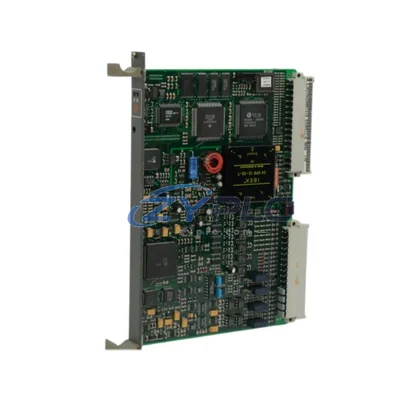
ABB SDCS-FEP-1 3BSE006309R1: Industrial Data Link for DCS800 Drive Systems
In modern smart factory environments, the integrity of the industrial data chain determines the efficiency of the entire production line. The ABB SDCS-FEP-1 (3BSE006309R1) Field Protection Unit is a critical hardware module engineered for the DCS800 series DC drive platform, providing robust field excitation protection, real-time signal conditioning, and seamless integration within ABB’s distributed drive control architecture. As industrial sites evolve toward fully connected automation, this module serves as a foundational node in the data flow between field devices, PLC controllers, drive systems, and upper-level SCADA/HMI platforms.
The SDCS-FEP-1 is designed to operate within the modular control board stack of the DCS800 drive, working in close coordination with the SDCS-CON-4 main control board and the SDCS-PIN-4 pulse encoder interface module. Together, these components form a tightly integrated signal processing and communication backbone that ensures accurate armature current feedback, field current regulation, and fault detection — all of which are essential for maintaining drive stability in demanding industrial applications such as rolling mills, winding machines, extruders, and crane systems.
Compatibility & Integration Notes
| Parameter |
Specification |
| SKU |
SDCS-FEP-1 / 3BSE006309R1 |
| Brand |
ABB |
| Series |
DCS800 DC Drive Series |
| Product Type |
Field Protection Unit |
| Protocol Support |
ABB Drive Bus, DDCS (Distributed Drive Control System) |
| Interface Type |
Internal drive module interface (SDCS board stack) |
| Communication Role |
Field excitation signal conditioning and protection |
| Network Compatibility |
DCS800 control platform, SDCS-CON-4, SDCS-PIN-4, SDCS-POW-4 |
| System Application |
DC drive control, SCADA integration, PLC-linked drive systems |
| Origin |
Sweden (ABB) |
| Warranty |
Warranty and support terms confirmed before quote |
Connected Automation Data Flow
The SDCS-FEP-1 sits at the intersection of field-level signal acquisition and drive-level control logic. In a typical DCS800 installation, field current and voltage signals are captured at the motor terminals and routed through the SDCS-FEP-1 for conditioning and protection before being passed to the SDCS-CON-4 control board. The CON-4 processes these signals in real time and communicates drive status, fault codes, and operational parameters upstream via the DDCS (Distributed Drive Control System) protocol — the same communication backbone used by ABB’s DCS880 next-generation DC drive platform.
At the PLC level, a Siemens S7-300 or ABB AC500 controller typically manages the drive start/stop commands, speed references, and torque limits through a PROFIBUS-DP or Modbus RTU link to the DCS800’s optional fieldbus adapter. The RDCU-12C remote drive control unit can extend this communication path, enabling the PLC to monitor and control the drive from a remote panel or control room without direct wiring to the drive cabinet.
For HMI and SCADA integration, the drive’s real-time data — including armature current, field current, motor speed, and fault status — is aggregated by an edge gateway such as the ABB Ability™ Edge or a third-party industrial IoT gateway, then forwarded to a SCADA platform like ABB System 800xA or Wonderware InTouch. Operators can monitor drive performance, set alarm thresholds, and initiate remote diagnostics without interrupting production. The CDP312R control panel provides local parameter access and fault readout directly on the drive, serving as a first-line diagnostic tool before escalating to SCADA-level analysis.
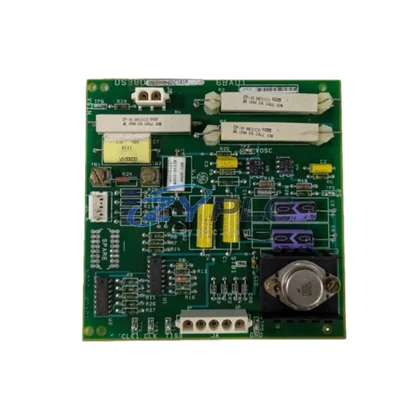
On the power supply side, the SDCS-POW-4 power supply board works in tandem with the SDCS-FEP-1 to ensure stable low-voltage DC power to the control electronics, while the SDCS-IOB-3 I/O extension board expands the drive’s digital and analog I/O capacity for connecting additional sensors, encoders, and process instruments. This modular architecture allows system integrators to scale the DCS800 installation to match the complexity of the application — from a single-axis winder to a multi-drive coordinated rolling mill line.
In sensor-to-cloud data chains, tachometer signals from incremental encoders are processed through the SDCS-PIN-4 pulse encoder interface, providing precise speed feedback to the CON-4 board. This closed-loop speed data is simultaneously available to the SCADA system via the fieldbus link, enabling real-time process visualization and historical trend analysis. The result is a fully transparent production line where every drive parameter is visible, logged, and actionable from the control room.
Solving Data Isolation in Industrial Sites
One of the most persistent challenges in legacy industrial environments is protocol fragmentation — where DC drives, AC drives, PLCs, remote I/O stations, and HMI systems each speak a different communication language, creating data silos that prevent unified monitoring and control. The ABB DCS800 platform, anchored by modules like the SDCS-FEP-1, addresses this challenge through a layered communication architecture that bridges field-level signals with plant-level networks.
By standardizing on the DDCS protocol within the drive system and supporting optional fieldbus adapters for PROFIBUS, DeviceNet, Modbus, and Ethernet/IP, the DCS800 eliminates the need for custom protocol converters between the drive and the PLC or SCADA system. This reduces integration complexity, shortens commissioning time, and lowers the risk of communication errors that can cause unplanned downtime.
Remote monitoring and diagnostics are further enhanced by the drive’s fault logging capability. When the SDCS-FEP-1 detects an overcurrent or overvoltage condition in the field circuit, it immediately triggers a fault code that is logged in the CON-4’s event buffer and transmitted to the SCADA system. Maintenance teams can review fault histories remotely, identify recurring issues, and schedule preventive maintenance before a critical failure occurs — transforming reactive maintenance into a proactive, data-driven strategy.
For production line transparency, the integration of DCS800 drives with MES (Manufacturing Execution Systems) via OPC-UA gateways allows production managers to correlate drive performance data with product quality metrics, energy consumption, and throughput KPIs. This level of visibility is the foundation of Industry 4.0 implementation in heavy industry sectors such as metals, paper, and mining.
ZYPLC maintains RFQ-confirmed availability of the SDCS-FEP-1 (3BSE006309R1) with full pre-shipment functional testing. Every unit is covered by a warranty and support terms confirmed before quote and ships globally via DHL or FedEx with full export documentation. Our technical team supports protocol compatibility verification, system integration consultation, and spare parts planning for DCS800 installations worldwide.
Industrial Connectivity FAQ
Q1: What communication protocols does the DCS800 / SDCS-FEP-1 system support?
The DCS800 drive uses ABB’s DDCS protocol for internal board-to-board communication. For external PLC and SCADA connectivity, optional fieldbus adapter modules support PROFIBUS-DP, Modbus RTU, DeviceNet, CANopen, and Ethernet/IP, allowing seamless integration with virtually any industrial control platform.
Q2: How does the SDCS-FEP-1 contribute to network stability in multi-drive systems?
The SDCS-FEP-1 provides hardware-level field circuit protection, preventing overcurrent and overvoltage faults from propagating to the control electronics. This isolation ensures that a field fault in one drive does not disrupt the communication network or control logic of adjacent drives in a coordinated multi-drive system.
Q3: Can the DCS800 with SDCS-FEP-1 be integrated into an existing SCADA system without replacing the PLC?
Yes. The DCS800’s fieldbus adapter options allow it to connect to any SCADA system via the existing PLC communication network. No PLC replacement is required — the drive appears as a standard fieldbus node, and all drive parameters are accessible through standard SCADA data tags.
Q4: What does the warranty and support terms confirmed before quote cover, and how is pre-shipment testing conducted?
ZYPLC’s warranty and support terms confirmed before quote covers all manufacturing defects and functional failures under normal operating conditions. Each SDCS-FEP-1 unit undergoes pre-shipment functional testing to verify signal conditioning performance, protection circuit integrity, and board-level communication. A test report is available upon request.