ABB 57160001-ADF DSDP 170: Industrial Data Link for Smart Factory Connectivity
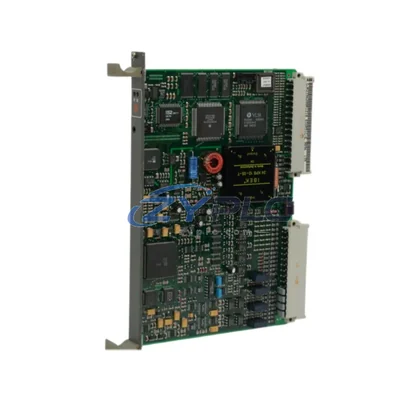
The ABB 57160001-ADF DSDP 170 is a high-performance Pulse Counting Module engineered for precision signal acquisition and seamless data transmission across industrial automation networks. Designed as a core component within ABB’s DSDP Series distributed control architecture, this module bridges the gap between field-level pulse-generating devices and upper-layer control systems — enabling real-time data flow from sensors and encoders through to PLC controllers, SCADA platforms, and HMI visualization layers.
In modern smart factory environments, the integrity of pulse signal data is foundational to production efficiency. The 57160001-ADF DSDP 170 captures high-frequency pulse inputs from flow meters, rotary encoders, turbine sensors, and proximity switches, converting raw field signals into structured digital data that can be transmitted across the plant network. This module is purpose-built for environments where signal accuracy, network stability, and protocol compatibility are non-negotiable.
Compatibility & Integration Notes
| Parameter |
Specification |
| Product SKU |
57160001-ADF DSDP 170 |
| Brand |
ABB |
| Series |
DSDP Series (Distributed Control) |
| Module Type |
Pulse Counting Module |
| Protocol Support |
PROFIBUS-DP, HART, Modbus RTU (via gateway), ABB proprietary DCS bus |
| Interface Type |
Digital pulse input, backplane bus interface |
| Transmission Capability |
High-frequency pulse counting, real-time data acquisition |
| Network Compatibility |
ABB Advant OCS, ABB Symphony Plus, ABB 800xA DCS |
| System Application |
DCS, SCADA, PLC integration, HMI data feed, remote I/O expansion |
| Origin |
Germany |
| Warranty |
warranty terms confirmed during quotation |
| Availability |
RFQ Available — shipment arranged after confirmation |
Connected Automation Data Flow
The ABB 57160001-ADF DSDP 170 sits at the heart of a layered industrial data architecture. At the field level, pulse signals originate from devices such as ABB FSM4000 electromagnetic flow transmitters, rotary encoders on conveyor drives, and proximity sensors mounted on packaging lines. These raw pulse streams are captured by the DSDP 170 module with high-frequency accuracy, ensuring no count is lost even under demanding production conditions.
Once acquired, the structured pulse data is passed via the DSDP Series backplane to the ABB AC800M PLC controller, which serves as the central processing node for logic execution and data aggregation. The AC800M communicates upstream via PROFIBUS-DP to the plant’s distributed I/O network, where modules such as the ABB CI854 PROFIBUS DP Interface Module relay data packets to the control room infrastructure. For facilities running ABB’s 800xA platform, the DSDP 170’s data is natively integrated into the ABB System 800xA DCS historian and alarm management layer without requiring additional protocol conversion.
In mixed-protocol environments — common in brownfield upgrades — the pulse data can be routed through an ABB AC500 gateway module or a third-party Modbus-to-PROFIBUS protocol converter, enabling legacy PLCs and SCADA systems to consume the DSDP 170’s output without infrastructure overhaul. This makes the module highly compatible with Siemens SIMATIC S7-300/S7-400 PLC environments when deployed alongside appropriate communication bridges.
At the SCADA and HMI layer, operators using platforms such as ABB Ability™ System 800xA or third-party SCADA solutions like Wonderware InTouch or Ignition can visualize real-time pulse count data, configure threshold alarms, and trigger automated responses — all driven by the accurate signal acquisition of the 57160001-ADF. Remote I/O expansion is supported through ABB S800 I/O modules, allowing the pulse counting function to be distributed across multiple field cabinets while maintaining centralized data management. Variable frequency drives such as the ABB ACS880 series can also feed speed-related pulse feedback into the DSDP 170, closing the loop between drive control and process monitoring.
Solving Data Isolation in Industrial Sites
One of the most persistent challenges in industrial automation is data isolation — where field devices, PLCs, and upper-level systems operate in silos, preventing plant-wide visibility and real-time decision-making. The ABB 57160001-ADF DSDP 170 directly addresses this by providing a standardized, high-integrity pulse data input point that integrates cleanly into both ABB-native and multi-vendor control architectures.
In facilities where legacy equipment uses proprietary pulse output formats, the DSDP 170’s compatibility with ABB’s DSDP Series backplane and its support for standard industrial communication protocols eliminates the need for custom signal conditioning hardware. Plant engineers can achieve production line transparency by mapping pulse count data directly to OEE (Overall Equipment Effectiveness) dashboards, enabling real-time tracking of throughput, cycle times, and equipment utilization.
For remote monitoring and diagnostics, the module’s integration with ABB 800xA’s remote access capabilities allows maintenance teams to review pulse count trends, identify anomalies, and perform predictive maintenance interventions without requiring physical presence on the plant floor. This is particularly valuable in hazardous or hard-to-access installation environments such as offshore platforms, chemical processing plants, and large-scale utilities.
System scalability is another key advantage. As production lines expand, additional DSDP Series modules — including analog input, digital output, and communication interface cards — can be added to the same backplane without disrupting existing network configurations. This modular architecture ensures that the investment in the 57160001-ADF DSDP 170 scales with the facility’s growth, protecting long-term automation budgets.
Every unit supplied by ZYPLC undergoes pre-shipment functional testing, verifying pulse counting accuracy, backplane communication integrity, and module identification. RFQ-confirmed availability supports rapid deployment for both planned upgrades and emergency replacement scenarios, with global logistics support for time-critical industrial projects.
Industrial Connectivity FAQ
Q1: What communication protocols does the ABB 57160001-ADF DSDP 170 support?
The DSDP 170 operates natively on ABB’s DSDP Series backplane communication bus, which is compatible with ABB Advant OCS, Symphony Plus, and 800xA DCS platforms. For integration with external networks such as PROFIBUS-DP or Modbus RTU, a compatible ABB communication interface module or protocol gateway is required. This ensures the module can participate in both ABB-native and multi-vendor industrial network architectures.
Q2: How does the module perform in high-frequency pulse counting applications?
The ABB 57160001-ADF DSDP 170 is designed for reliable high-frequency pulse acquisition, making it suitable for flow measurement, speed monitoring, and position counting applications. Its hardware architecture minimizes counting errors under high pulse rates, ensuring data integrity for critical process control loops. For specific maximum frequency ratings, refer to the ABB DSDP Series technical datasheet.
Q3: Can the DSDP 170 be integrated with third-party SCADA or HMI systems?
Yes. When deployed within an ABB 800xA or AC800M-based control system, the DSDP 170’s data is accessible to any SCADA or HMI platform that supports OPC DA/UA, Modbus TCP, or PROFIBUS-DP communication — covering the majority of industrial visualization and supervisory systems in use today, including Wonderware, Ignition, and Siemens WinCC.
Q4: What warranty and testing standards apply to this module?
All ABB 57160001-ADF DSDP 170 modules supplied by ZYPLC are covered by a warranty terms confirmed during quotation and undergo pre-shipment functional testing to verify operational integrity. Testing includes pulse input response verification, backplane communication handshake confirmation, and module status diagnostics. Certificates of testing are available upon request for quality-critical procurement processes.
—