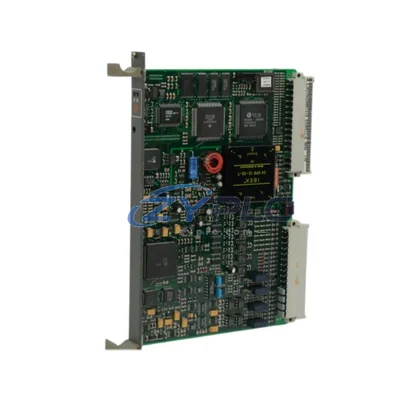
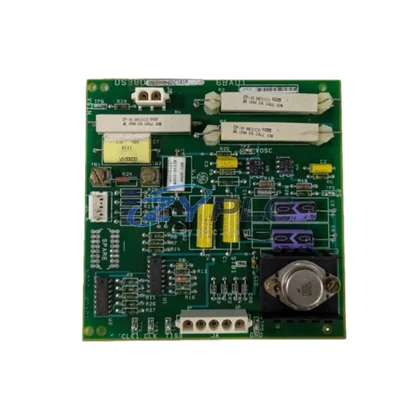
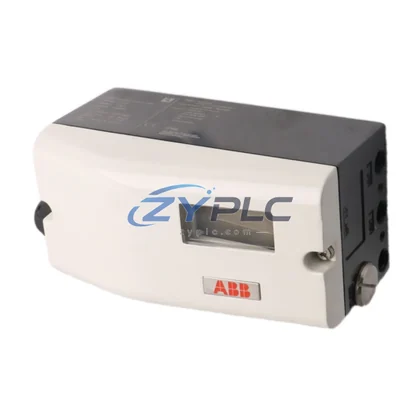
ABB BRC-100 P-HC-BRC-10000000: Industrial Data Link and Smart Factory Connectivity for Symphony Plus DCS
In modern industrial automation, seamless data flow between field devices, controllers, and supervisory systems is the backbone of operational efficiency. The ABB BRC-100 P-HC-BRC-10000000 Harmony Bridge Controller is engineered to serve as a critical communication node within the ABB Symphony Plus Distributed Control System (DCS) architecture. It bridges legacy and contemporary control layers, enabling real-time data exchange across protocol boundaries while maintaining the system integrity that demanding process industries require.
Unlike standalone communication adapters, the BRC-100 P-HC is designed for deep system integration within the Symphony Plus platform. It connects the Harmony control layer to higher-level SCADA, historian, and MES systems, ensuring that every signal — from field transmitters to enterprise dashboards — travels through a verified, low-latency data path. This makes it indispensable in environments where data isolation is not an option and where production transparency is a regulatory or operational mandate.
Compatibility & Integration Notes
| Attribute |
Specification |
| Product SKU |
BRC-100 P-HC-BRC-10000000 |
| Brand |
ABB |
| Series |
Symphony Plus / Harmony |
| Product Type |
Communication Gateway / Bridge Controller |
| Protocol Support |
Harmony Bus, PROFIBUS, Modbus, OPC, TCP/IP |
| Interface Type |
Ethernet, Serial (RS-232/RS-485), Harmony Fieldbus |
| Transmission Capability |
Real-time bidirectional data exchange across control layers |
| Network Compatibility |
Symphony Plus DCS, SCADA, MES, Historian systems |
| System Role |
Protocol bridging, data aggregation, system integration |
| Installation Environment |
Control room, DCS cabinet, industrial panel |
| Origin |
Sweden (ABB) |
| Warranty |
warranty terms confirmed during quotation |
Connected Automation Data Flow
The BRC-100 P-HC-BRC-10000000 operates at the intersection of the control layer and the network layer in a Symphony Plus DCS environment. Its role begins at the field level, where instruments such as pressure transmitters, flow meters, and temperature sensors feed analog and digital signals into ABB S800 I/O modules — including AI810, AO810, and DI810 series cards — mounted on S800 I/O stations connected via the Harmony Fieldbus. These I/O stations relay process data upward through the BRC-100 P-HC, which acts as the protocol translation engine between the Harmony bus and Ethernet-based supervisory networks.
At the controller level, the BRC-100 P-HC interfaces directly with ABB AC800M controllers and PM866 processor modules, which execute the control logic for process loops, interlocks, and sequence programs. The bridge controller ensures that the real-time data generated by these controllers — setpoints, process values, alarm states, and diagnostic flags — is accurately and continuously forwarded to the SCADA layer without packet loss or latency spikes that could compromise process safety.
On the supervisory side, the BRC-100 P-HC connects to ABB System 800xA operator stations and engineering workstations, enabling operators to monitor live process data, acknowledge alarms, and execute remote commands from centralized HMI screens. The OPC server interface embedded in the Symphony Plus architecture allows third-party SCADA platforms and historian databases — such as OSIsoft PI or Wonderware — to subscribe to real-time tag data exported through the BRC-100 P-HC gateway.
For drive and motor control integration, the BRC-100 P-HC supports data exchange with ABB ACS880 variable frequency drives and ACS580 drives deployed on pump, fan, and compressor applications. Drive status, speed references, fault codes, and operating load data are aggregated through the bridge controller and made available to the SCADA historian for trend analysis and predictive maintenance workflows.
In redundant DCS architectures, the BRC-100 P-HC is paired with redundant ABB CI854 PROFIBUS communication interfaces and CI840 fieldbus modules to ensure that a single communication path failure does not interrupt process visibility. The bridge controller supports hot-standby configurations, allowing seamless failover without operator intervention — a critical requirement in continuous process plants such as refineries, chemical reactors, and power generation facilities.
Edge connectivity is further extended through ABB Ethernet switches and industrial-grade network infrastructure that segment the DCS network from the corporate IT network, maintaining cybersecurity boundaries while still enabling authorized data flows to MES and ERP systems. The BRC-100 P-HC’s role in this architecture is to serve as the trusted data broker — validating, formatting, and routing process data across these boundaries with full auditability.
Solving Data Isolation in Industrial Sites
One of the most persistent challenges in brownfield industrial facilities is protocol fragmentation. Legacy Harmony DCS nodes, newer Symphony Plus controllers, third-party PLCs, and modern IIoT edge devices often speak incompatible communication languages. Without a capable bridge controller, process data becomes siloed within individual subsystems, preventing operators from achieving a unified view of plant operations.
The BRC-100 P-HC-BRC-10000000 directly addresses this challenge by providing multi-protocol translation in a single, DIN-rail-mountable module. It eliminates the need for external protocol converters or custom middleware by natively supporting Harmony Bus, PROFIBUS DP, Modbus RTU/TCP, and OPC DA/UA — the four most common protocol stacks found in mixed-generation DCS environments. This means that a plant engineer can connect a legacy Harmony node from a 1990s installation directly to a modern System 800xA operator station without replacing the field hardware or rewriting control logic.
Remote monitoring and diagnostics are equally transformed by the BRC-100 P-HC. In geographically distributed facilities — such as water treatment networks, pipeline SCADA systems, or multi-site power substations — the bridge controller enables centralized visibility of remote RTUs and field panels over TCP/IP WAN connections. Alarm events, device health indicators, and process exceedances are transmitted in real time to the central SCADA server, reducing the need for on-site inspection and enabling faster fault response.
Production line transparency is another key benefit. By aggregating data from multiple I/O stations and controllers into a single OPC data stream, the BRC-100 P-HC enables MES systems to calculate OEE (Overall Equipment Effectiveness), track batch genealogy, and generate compliance reports without manual data entry. This level of automation transparency is increasingly required in pharmaceutical, food and beverage, and semiconductor manufacturing environments subject to FDA 21 CFR Part 11 or IEC 62443 cybersecurity standards.
System expansion is simplified as well. When a plant adds new process units or upgrades existing control loops, the BRC-100 P-HC’s modular architecture allows new I/O stations and communication nodes to be integrated without disrupting the existing network topology. Engineering teams can commission new segments offline, validate communication paths in simulation, and then bring them online with minimal process interruption — reducing commissioning risk and project cost.
Every BRC-100 P-HC-BRC-10000000 unit supplied by ZYPLC undergoes pre-shipment functional testing, including communication loop verification, protocol handshake validation, and power-on diagnostics. Units are shipped with full documentation and are covered by a warranty terms confirmed during quotation, giving procurement and maintenance teams confidence in both product quality and post-sale support.
Industrial Connectivity FAQ
Q1: Does the BRC-100 P-HC-BRC-10000000 support both legacy Harmony and modern Symphony Plus protocols simultaneously?
Yes. The BRC-100 P-HC is specifically designed for mixed-generation ABB DCS environments. It supports simultaneous communication on the Harmony Fieldbus and Ethernet-based Symphony Plus networks, enabling legacy Harmony nodes to exchange data with modern System 800xA operator stations and OPC-UA clients without hardware replacement.
Q2: What is the typical communication latency, and is it suitable for real-time process control?
The BRC-100 P-HC is optimized for deterministic, low-latency data transfer within the Symphony Plus architecture. For supervisory data exchange (SCADA, historian, HMI), typical cycle times are in the range of 100–500 ms, which is well within the requirements of process monitoring and alarm management applications. For time-critical control loops, the primary control execution remains within the AC800M controller, with the BRC-100 P-HC handling the supervisory data path.
Q3: Can the BRC-100 P-HC be integrated into a redundant DCS architecture?
Yes. The BRC-100 P-HC supports redundant configurations when paired with redundant CI854 or CI840 communication interfaces and redundant Ethernet switch infrastructure. In the event of a primary communication path failure, the system automatically switches to the standby path, maintaining continuous data flow to the SCADA and historian systems without operator intervention.
Q4: What does the warranty terms confirmed during quotation cover, and what pre-shipment testing is performed?
All BRC-100 P-HC-BRC-10000000 units supplied by ZYPLC are covered by a warranty terms confirmed during quotation against manufacturing defects and functional failures. Pre-shipment testing includes power-on diagnostics, communication protocol handshake verification, and I/O loop checks. Units are shipped with original documentation where available. For warranty claims or technical support, contact ZYPLC at plc.sales@zyplc.com or +86 19859288691.