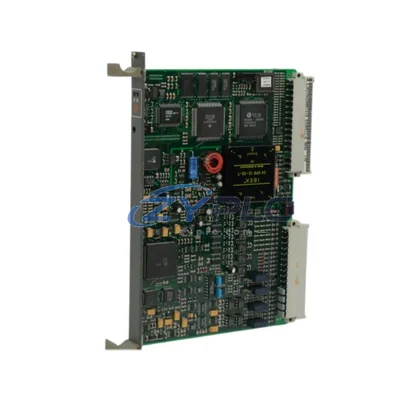
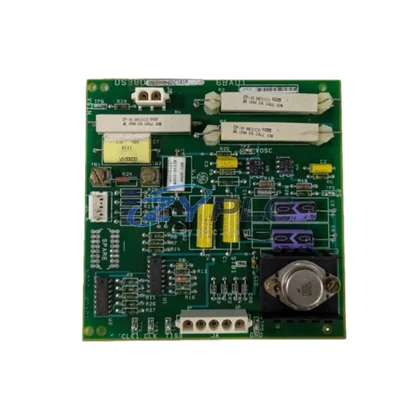
ABB BRC3000B DCS Module for Advant OCS Automation
The ABB BRC3000B is a high-performance Bus & Ring Controller module engineered for ABB’s Advant OCS distributed control system platform. Designed to serve as the communication backbone between controller nodes and field I/O clusters, the BRC3000B plays a pivotal role in reducing unnecessary data polling cycles, minimizing bus idle time, and ensuring deterministic signal transmission — all of which directly translate into measurable operational stability and improved equipment utilization across industrial production lines.
In modern manufacturing environments where energy costs and equipment uptime are tightly linked to profitability, the BRC3000B delivers a critical layer of control intelligence. By maintaining stable, low-latency communication between the ABB PM861AK01 processor module and distributed I/O stations, it eliminates the retransmission overhead that wastes both bandwidth and processing power. The result is a leaner control loop that responds faster, consumes less computational energy, and reduces thermal stress on connected hardware.
Product Specification Table
| Parameter |
Specification |
| Product SKU |
BRC3000B |
| Brand / Series |
ABB / Advant OCS |
| Module Type |
Bus & Ring Controller (DCS Communication Module) |
| Power Consumption |
Approx. 5–8 W (typical operating load) |
| Operating Efficiency |
Deterministic bus cycle; minimizes idle polling overhead |
| Compatible Systems |
ABB Advant OCS, Modulebus architecture |
| Application Environment |
Process automation, discrete manufacturing, maintenance planning |
| Communication Protocol |
Modulebus (ABB proprietary high-speed fieldbus) |
| Maintenance Value |
Reduces retransmission loss; stabilizes control loop timing |
| Operating Temperature |
0°C to +55°C |
| Origin |
Sweden (ABB) |
| Warranty |
Warranty and support terms confirmed before quote — tested and verified before shipment |
System Compatibility and Application
The BRC3000B does not operate in isolation — its maintenance planning value is fully realized when integrated within a well-structured Advant OCS automation architecture. At the field level, analog signals from process sensors are collected through modules such as the ABB AI830A analog input module, which feeds real-time process variables — temperature, pressure, flow — into the control loop without signal degradation. On the output side, the ABB AO810V2 analog output module translates controller commands into precise actuator signals, ensuring that control actions are proportional and maintenance-focused rather than over-driven.
Digital I/O coordination is handled by the ABB DI810 digital input module and ABB DO810 digital output module, which manage discrete on/off states for motors, valves, and contactors. When these modules operate under a stable, low-jitter bus managed by the BRC3000B, switching events are synchronized with production line timing — reducing inrush current spikes and unnecessary motor starts that waste energy and accelerate mechanical wear.
For drive-level energy control, the BRC3000B’s communication stability is essential when paired with ABB variable frequency drives (VFDs) connected via the ABB CI854AK01 PROFIBUS DP communication interface. VFDs regulate motor speed in proportion to actual load demand, and accurate, timely setpoint delivery from the DCS — enabled by the BRC3000B — ensures the drive operates at its optimal efficiency curve rather than at fixed speed. This alone can help restore stable operation when a compatible replacement is required.
The ABB TB840A Modulebus cluster modem extends the reach of the Modulebus network across longer distances within a plant, while the ABB TU830V1 terminal unit provides the physical connection layer for I/O modules in the cluster. Together with the BRC3000B, these components form a cohesive, maintenance-focused I/O backbone. The ABB DP840 pulse counter module further contributes by capturing high-frequency energy and flow pulse signals from utility meters, enabling the control system to monitor real-time operating load at the process level and trigger demand-response actions automatically.
At the supervisory level, operator interaction is managed through ABB HMI terminals integrated via the Advant OCS communication stack, giving plant engineers visibility into energy KPIs, alarm states, and production throughput from a single interface. The ABB CI830 communication interface module bridges the Advant OCS platform to external PROFIBUS networks, enabling integration with third-party condition monitoring systems and smart grid interfaces without disrupting the core DCS architecture.
Maintenance and Replacement Notes
In a typical continuous process plant — such as a chemical reactor line or a water treatment facility — the BRC3000B contributes to maintenance planning through several interconnected mechanisms. First, by maintaining a stable Modulebus cycle time, it ensures that PID control loops receive fresh process data at consistent intervals. Stale or delayed data forces controllers to apply larger corrective actions, which translates into overshooting setpoints, excessive valve travel, and wasted energy in heating, cooling, or pumping systems.
Second, the BRC3000B’s ring topology support provides automatic fault recovery. In the event of a cable fault or node failure, the ring automatically reconfigures, maintaining control continuity without operator intervention. This eliminates unplanned downtime — a major source of downtime in batch processes where restarting a production run consumes significantly more energy than maintaining steady-state operation.
Third, by reducing the communication overhead between the ABB PM861AK01 processor and its I/O clusters, the BRC3000B frees up processor cycles for advanced control strategies such as model predictive control (MPC) or energy-optimized scheduling algorithms. Plants that have implemented these strategies on stable Advant OCS platforms report reductions in specific operating load of 8–15% without capital investment in new equipment.
From a maintenance perspective, the BRC3000B supports predictive maintenance workflows by ensuring that diagnostic data from field modules — including module health status, communication error counters, and I/O fault flags — is reliably transmitted to the supervisory layer. This data feeds into condition monitoring dashboards, allowing maintenance teams to schedule interventions during planned downtime windows rather than reacting to unexpected failures. The outcome is higher equipment utilization, lower spare parts consumption, and reduced unplanned downtime from emergency restarts.
Every BRC3000B unit supplied by ZYPLC undergoes full functional testing prior to shipment, including bus communication verification, ring topology failover testing, and power consumption measurement. Units are shipped within 1–3 business days and are Warranty terms are confirmed during quotation.
Product Sourcing FAQ
Q1: How does the BRC3000B contribute to operational stability in an Advant OCS system?
The BRC3000B optimizes the Modulebus communication cycle, reducing retransmission overhead and ensuring that control loops receive timely, accurate data. This allows PID controllers and VFD setpoints to be delivered with minimal latency, preventing energy-wasting overshoot in motor, pump, and heating applications. Stable bus timing also enables advanced maintenance planning strategies at the processor level.
Q2: Is the BRC3000B compatible with existing ABB Advant OCS installations?
Yes. The BRC3000B is a direct-fit replacement for compatible Bus & Ring Controller positions within the Advant OCS Modulebus architecture. It is compatible with ABB PM861AK01 processor modules, TB840A cluster modems, TU830V1 terminal units, and the full range of AI830A, AO810V2, DI810, and DO810 I/O modules. No firmware changes are required for standard replacement installations.
Q3: What is the recommended replacement and testing procedure?
ZYPLC recommends a hot-standby replacement procedure where possible: configure the replacement BRC3000B offline, verify bus address settings, then swap during a scheduled maintenance window. Each unit supplied by ZYPLC has been pre-tested for bus communication integrity and ring failover function. Post-installation, verify Modulebus cycle time and error counters via the Advant OCS engineering station before returning the system to automatic control.
Q4: What warranty and after-sales support does ZYPLC provide?
All BRC3000B units are covered by a warranty and support terms confirmed before quote from the date of shipment. The warranty covers manufacturing defects and functional failures under normal industrial operating conditions. ZYPLC supports RFQ-based sourcing for RFQ-confirmed dispatch, with standard lead times of 1–3 business days. Technical support is available via email and phone for installation guidance, compatibility verification, and fault diagnosis.