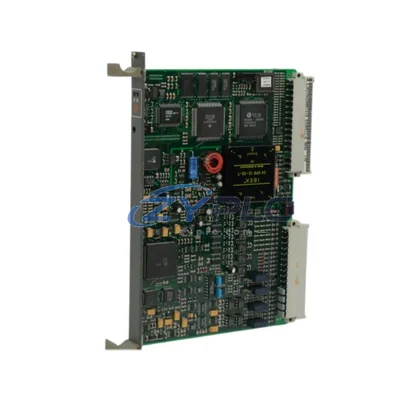
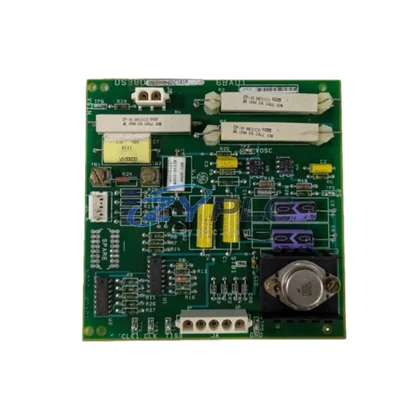
ABB DSBC110 57310256-E Termination for Symphony Plus
The ABB DSBC110 (57310256-E) is a precision-engineered termination module designed to serve as a critical signal interface layer within the ABB Symphony Plus distributed control system (DCS) architecture. Rather than functioning as a standalone component, the DSBC110 occupies a defined structural role between the field wiring layer and the controller I/O subsystem, enabling clean, reliable signal conditioning and system integration across all automation tiers. In modern industrial control environments — spanning power generation, petrochemical processing, water treatment, metallurgy, and continuous manufacturing — the integrity of the termination layer directly determines the reliability of the entire control loop. The DSBC110 addresses this requirement with a robust, rack-compatible form factor, standardized terminal assignments, and full compatibility with the Symphony Plus modular backplane ecosystem.
Deployed within a layered automation architecture, the DSBC110 bridges field instrumentation signals — including 4–20 mA analog loops, discrete digital inputs, and thermocouple or RTD sensor circuits — to the corresponding I/O modules mounted on the Symphony Plus controller rack. Its passive termination design eliminates active failure points at the signal entry boundary, while its clearly labeled terminal blocks reduce wiring errors during commissioning and simplify fault isolation during maintenance cycles. Engineers integrating the DSBC110 into a new or retrofit control panel benefit from its direct compatibility with ABB’s established cabling and marshalling conventions, reducing engineering hours and accelerating loop checkout procedures.
Within the Symphony Plus platform, the DSBC110 is typically deployed alongside modules such as the DSDP170 digital I/O module, the DSAI130 analog input module, the DSAO120 analog output module, and the DSMB176 motherboard backplane, forming a coherent signal chain from field device to controller. The DSBC110’s terminal layout is engineered to align with these modules’ pin assignments, ensuring that signal routing remains consistent and traceable across the full I/O subsystem. This consistency is especially valuable in large-scale installations where hundreds of field loops must be documented, tested, and maintained over a multi-decade plant lifecycle.
Product Specification Table
| System Role |
Field Signal Termination Interface — Symphony Plus DCS I/O Layer |
| Part Number |
DSBC110 / 57310256-E |
| Brand |
ABB |
| Series |
Symphony Plus (Harmony / Melody compatible) |
| Module Type |
Passive Termination Module |
| Signal Compatibility |
Analog (4–20 mA), Digital I/O, Thermocouple, RTD |
| Terminal Configuration |
Screw-type, field-side wiring, marshalling-compatible |
| Backplane Compatibility |
Symphony Plus modular rack / DSMB176 motherboard |
| Communication Layer |
Passive — interfaces with DSAI130, DSAO120, DSDP170 I/O modules |
| Installation Environment |
Control cabinet / DIN rail panel, IEC 61010 compliant enclosure |
| Operating Temperature |
0°C to +55°C (standard industrial range) |
| Country of Origin |
Sweden |
| Warranty |
warranty terms confirmed during quotation — covers manufacturing defects and functional failure |
| Condition |
New / Refurbished — tested and verified prior to dispatch |
System Compatibility Notes
The DSBC110 termination module achieves its full value when evaluated within the context of a complete Symphony Plus control system architecture. At the controller layer, the DSBC110 interfaces with the ABB AC800M controller or the Symphony Plus PM865 processor module, which executes the control logic and communicates with the supervisory SCADA or DCS operator station via Ethernet-based protocols including PROFINET and Modbus TCP. The I/O subsystem connected through the DSBC110 typically includes the DSAI130 analog input module for process variable acquisition, the DSAO120 analog output module for control signal transmission to final control elements, and the DSDP170 digital I/O module for discrete status and command signals.
At the backplane and rack level, the DSBC110 mounts in coordination with the DSMB176 motherboard, which provides the internal bus structure connecting all I/O modules to the controller. Power distribution within the rack is managed by the DSPS110 or equivalent Symphony Plus power supply module, ensuring stable 24 VDC rail voltage across all connected modules. For installations requiring redundancy — common in power plant DCS applications and critical process control environments — the DSBC110 supports dual-channel wiring configurations that align with the Symphony Plus redundant I/O architecture, where paired modules such as the DSDI110 digital input module operate in hot-standby mode.
At the network communication layer, the Symphony Plus system integrates the CI857 PROFIBUS communication interface or the CI854 PROFIBUS DP module to extend the control network to remote I/O stations and intelligent field devices. The DSBC110’s role in this architecture is to ensure that field signals entering the system at the termination boundary are correctly conditioned and routed before reaching these communication-dependent modules. At the human-machine interface layer, operator workstations running ABB’s System 800xA or Freelance engineering environment provide real-time visualization of all process variables whose signal chains pass through the DSBC110 termination points.
For relay output and actuator drive applications, the DSBC110 termination layer connects downstream to relay modules and motor drive interfaces, completing the execution layer of the control hierarchy. This full-stack integration — from field sensor through termination module, I/O card, backplane bus, controller, and HMI — demonstrates the DSBC110’s position as a foundational element of system consistency and long-term maintainability.
Industrial Application Notes
In power generation facilities, the DSBC110 is deployed within turbine control panels and boiler management systems where the Symphony Plus DCS manages hundreds of analog and digital field loops simultaneously. The module’s passive design and standardized terminal layout reduce the risk of wiring errors during annual maintenance outages, where rapid loop restoration is critical to plant availability. In petrochemical and refinery applications, the DSBC110 supports SIL-rated control loops by providing a clean, documented termination point that satisfies functional safety audit requirements under IEC 61511.
Water treatment and municipal utility installations benefit from the DSBC110’s compatibility with the Symphony Plus remote I/O architecture, enabling distributed termination panels to be located close to field instrumentation while maintaining centralized control from a single operator station. In metallurgical and mining operations, where vibration, dust, and temperature cycling place elevated stress on control panel components, the DSBC110’s robust screw-terminal construction and rack-mounted form factor provide long-term mechanical reliability without requiring frequent recalibration or replacement.
Packaging line and discrete manufacturing applications use the DSBC110 to consolidate field wiring from conveyor sensors, actuator feedback signals, and safety interlock circuits into a single, organized termination layer that simplifies both initial commissioning and ongoing troubleshooting. In all these environments, the availability of the DSBC110 as a stocked, tested, and immediately shippable component — backed by a warranty terms confirmed during quotation — reduces the risk of extended unplanned downtime caused by obsolete or unavailable spare parts.
Product Compatibility FAQ
Q1: Is the DSBC110 (57310256-E) compatible with both the Symphony Plus and legacy Harmony/Melody DCS platforms?
The DSBC110 was originally developed within the ABB Harmony/Melody product family and carries forward full mechanical and electrical compatibility with the Symphony Plus modular rack system. It can be installed in existing Harmony control cabinets undergoing Symphony Plus migration projects without requiring changes to field wiring, making it a preferred choice for brownfield upgrade programs where minimizing rewiring scope is a primary engineering objective.
Q2: How does the DSBC110 support long-term maintenance and spare parts management in a multi-decade DCS lifecycle?
Because the DSBC110 is a passive termination module with no active electronic components, its failure rate over a typical 20–30 year plant lifecycle is extremely low. However, maintaining a documented spare parts inventory that includes the DSBC110 alongside active modules such as the DSAI130, DSAO120, and DSDP170 is considered best practice for DCS lifecycle management. ZYPLC supports RFQ sourcing for the DSBC110 with pre-shipment functional verification and a warranty terms confirmed during quotation, supporting both planned maintenance programs and emergency replacement scenarios.
Q3: What installation and commissioning considerations apply when integrating the DSBC110 into a new Symphony Plus control panel?
The DSBC110 should be installed in the designated termination slot of the Symphony Plus rack prior to field wiring connection. Terminal assignments must be verified against the project’s I/O list and loop drawings before energization. Shielded cable grounding should be terminated at the DSBC110’s designated shield bar to prevent common-mode noise from affecting analog signal accuracy. After wiring completion, loop continuity checks and signal injection tests should be performed at the DSBC110 terminals before enabling the corresponding I/O module channels in the controller configuration. These steps ensure that the system integration between field devices and the DCS control logic is validated at the physical layer before system commissioning proceeds.