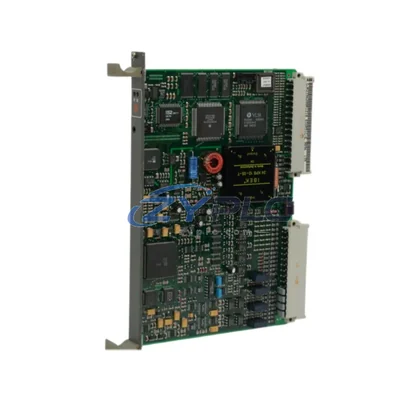
ABB EL1020-02 Gas Analyzer for Advance Optima Automation
In modern industrial facilities where energy accountability is no longer optional, the ABB EL1020-02 gas analyzer module delivers the measurement precision and process integration that energy managers and automation engineers demand. Designed as a core analytical component within the ABB Advance Optima AO2000 platform, the EL1020-02 continuously monitors combustion gases, process emissions, and flue gas composition — providing the real-time data backbone that drives smarter energy decisions across the production line.
Unlike passive monitoring instruments, the EL1020-02 feeds directly into closed-loop control architectures. When paired with the ABB AC500 PLC series, measured gas concentration values can trigger automated adjustments to burner air-fuel ratios, fan speeds, and heat exchanger bypass valves — eliminating the unplanned downtime that accumulates from manual, time-delayed corrections. In facilities running continuous kilns, boilers, or thermal oxidizers, this real-time feedback loop can reduce fuel consumption by measurable margins while maintaining process stability.
The EL1020-02 supports multiple gas measurement channels within a single analyzer housing, reducing the instrument footprint and the associated wiring, calibration, and maintenance overhead. Its modular architecture within the Advance Optima AO2000 system allows integration alongside other analytical modules such as the ABB EL3060 extractive gas analyzer, enabling simultaneous monitoring of O₂, CO, CO₂, NOₓ, and SO₂ — the full combustion efficiency signature. This multi-parameter visibility is essential for facilities operating under emissions compliance mandates while simultaneously pursuing energy cost reduction targets.
Product Specification Table
| Parameter |
Specification / Value |
| SKU / Model |
EL1020-02 |
| Brand / Series |
ABB / Advance Optima AO2000 |
| Product Category |
Gas Analyzer Module |
| Measurement Principle |
Non-Dispersive Infrared (NDIR) |
| Electrical / System Notes |
≤ 30 W (module only) |
| Operating Efficiency |
Continuous 24/7 industrial-grade operation |
| Compatible Systems |
ABB Advance Optima AO2000, AC500 PLC, CI590 PROFIBUS gateway |
| Application Environment |
Combustion control, emissions monitoring, process gas analysis |
| Energy Saving Value |
Enables closed-loop combustion optimization; reduces excess air and fuel waste |
| Communication Protocols |
PROFIBUS DP, Modbus RTU, 4–20 mA analog output |
| Origin |
Germany (DE) |
| Warranty |
warranty terms confirmed during quotation — tested and verified before shipment |
System Compatibility and Application
The EL1020-02 does not operate in isolation — its value multiplies when embedded within a coordinated automation architecture. In a typical energy-optimized plant layout, the analyzer module sits at the measurement layer, feeding gas concentration data upward to the control layer via the ABB CI590 PROFIBUS DP gateway, which bridges the AO2000 analyzer system to the plant’s primary control network.
At the control execution layer, the ABB AC500-eCo PLC processes incoming gas data alongside temperature, pressure, and flow signals from distributed I/O modules such as the ABB TU515 terminal unit and DC532 digital I/O module. The PLC executes combustion efficiency algorithms that modulate variable-speed drives — typically the ABB ACS580 general-purpose drive for combustion air fans or the ABB ACS880 industrial drive for high-demand blower applications — adjusting airflow in direct response to measured O₂ and CO levels rather than fixed time schedules.
Operator visibility is maintained through the ABB CP635 HMI panel, which displays live gas trends, efficiency KPIs, and alarm states. When gas readings drift outside optimized bands, the HMI alerts operators before the condition escalates into a process upset or an unplanned shutdown. For facilities with distributed monitoring requirements, the ABB Ability™ Energy Manager platform aggregates analyzer data alongside power consumption readings from ABB PM5560 power quality meters, creating a unified energy dashboard that correlates gas efficiency with electrical demand — a critical capability for facilities pursuing ISO 50001 maintenance planning certification.
In motor-intensive applications adjacent to the combustion system — such as raw material conveyors, exhaust fans, and cooling circuits — the ABB REF615 feeder protection relay safeguards motor assets, ensuring that energy-optimized drive settings do not compromise equipment protection margins. This layered architecture — from gas measurement through drive control to power monitoring and asset protection — represents the complete maintenance planning stack that the EL1020-02 anchors at the analytical foundation.
Maintenance and Replacement Notes
Consider a cement plant operating a rotary kiln with a coal-fired burner. Without real-time gas analysis, operators typically run with excess air coefficients of 1.3–1.5 to ensure complete combustion — a safety margin that wastes 8–15% of fuel energy in unnecessary heat carried out with flue gases. With the EL1020-02 continuously measuring O₂ and CO at the kiln exit, the AC500 PLC can maintain excess air coefficients closer to 1.05–1.10, recovering that fuel energy directly as kiln thermal efficiency.
In a chemical plant running a thermal oxidizer for VOC destruction, the EL1020-02 monitors combustion completeness in real time. When CO readings rise — indicating incomplete combustion — the ACS880 drive increases combustion air fan speed within seconds, restoring destruction efficiency without operator intervention. When CO readings are consistently low, the drive reduces fan speed, cutting electrical consumption on a motor that may run continuously for 8,000 hours per year.
Across both scenarios, the EL1020-02 reduces unplanned downtime by providing early warning of combustion anomalies — burner fouling, fuel quality shifts, or heat exchanger degradation — before they cause process trips. Predictive maintenance intervals can be extended because the analyzer data confirms equipment is performing within design parameters, rather than relying on fixed calendar-based service schedules. Every unit shipped undergoes full functional testing and calibration verification, and is backed by a warranty terms confirmed during quotation, ensuring that the analyzer performs to specification from day one of installation.
Product Sourcing FAQ
Q1: How much energy can the EL1020-02 help save in a combustion application?
The operational stability depend on the baseline excess air level and process type, but facilities that transition from manual combustion control to closed-loop control using the EL1020-02 typically report fuel savings of 3–12%. In high-throughput applications such as kilns, boilers, and furnaces, this translates to significant annual cost reductions. The analyzer pays for itself rapidly when integrated with ABB ACS-series drives that respond dynamically to measured gas data.
Q2: Is the EL1020-02 compatible with existing ABB Advance Optima AO2000 installations?
Yes. The EL1020-02 is a modular plug-in component of the AO2000 platform and is designed for direct installation into existing AO2000 analyzer housings. It communicates natively with the AO2000 system controller and supports PROFIBUS DP and Modbus RTU output protocols, making it compatible with ABB AC500 PLCs, third-party DCS systems, and SCADA platforms without additional signal conditioning hardware.
Q3: What is the recommended replacement or upgrade path for older gas analyzer modules?
For facilities operating legacy NDIR analyzer modules from earlier Advance Optima generations, the EL1020-02 provides a direct upgrade path with improved measurement stability and lower power consumption. Before replacement, verify the AO2000 housing firmware version and confirm CI590 gateway compatibility. Our technical team can assist with pre-shipment configuration verification to minimize installation downtime.
Q4: What does the warranty terms confirmed during quotation cover, and what is the testing process before shipment?
Every EL1020-02 unit undergoes functional calibration testing, zero and span verification, and communication protocol validation before shipment. The warranty terms confirmed during quotation covers manufacturing defects and measurement performance within published specifications under normal operating conditions. Units are shipped with a test report confirming pre-delivery performance. For warranty claims or technical support, contact our team directly.