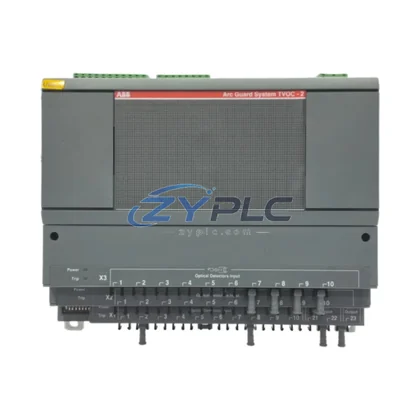
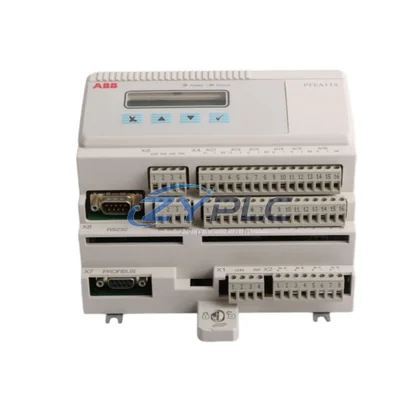
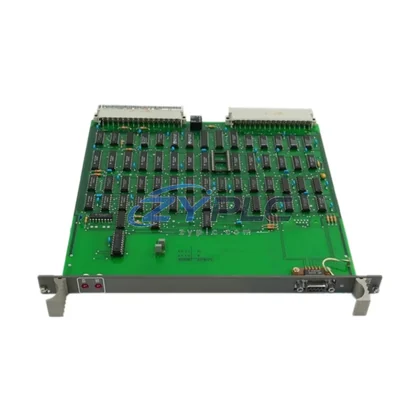
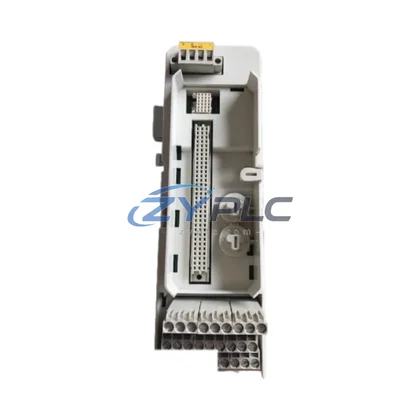
ABB GJR2365700R1010 Circuit Board DSPC 172: Precision Control for Optimized Production Line Efficiency
The ABB GJR2365700R1010 is a high-performance processor and communication circuit board module designed for the DSPC 172 platform within ABB’s Advant OCS (Open Control System) architecture. In modern industrial environments where equipment uptime and replacement lead time directly affect production continuity, this module plays a critical role in reducing unnecessary power consumption, tightening control loop response times, and enabling predictive maintenance strategies that keep production lines running at peak efficiency.
Sourced directly from verified supply channels, each unit undergoes full functional testing prior to shipment. All modules are backed by a warranty terms confirmed during quotation, ensuring confidence in both quality and long-term operational reliability.
Product Specification Table
| Parameter |
Specification / Value |
| SKU / Part Number |
GJR2365700R1010 (Variant: 88VA02A-E) |
| Series |
DSPC 172 — ABB Advant OCS |
| Product Category |
Processor / Communication Circuit Board |
| Electrical / System Notes |
Low-power embedded processor design; optimized for continuous 24/7 industrial operation |
| Operating Efficiency |
High-cycle deterministic processing; minimizes idle CPU load and bus contention |
| Compatible Systems |
ABB Advant OCS, AC 450, AC 410, MOD 300 migration platforms |
| Application Environment |
Process automation, maintenance planning, motor drive coordination, SCADA integration |
| Maintenance Value |
Reduces control latency → fewer overcorrections → lower motor energy draw |
| Origin |
Sweden (SE) |
| Warranty |
warranty terms confirmed during quotation — Tested & Verified Before Shipment |
System Compatibility and Application
The ABB GJR2365700R1010 DSPC 172 module functions as the central processing unit within a distributed control node, coordinating data exchange between field devices and the supervisory control layer. In a typical energy-optimized plant architecture, this board works in concert with a range of complementary components to form a closed-loop efficiency system.
On the drive side, ABB ACS880 and ACS580 variable frequency drives (VFDs) receive speed and torque setpoints from the DSPC 172 control layer. By precisely matching motor output to actual process demand — rather than running at fixed speed — these drives can help restore stable operation when a compatible replacement is required. The DSPC 172 board ensures that setpoint updates are delivered with deterministic timing, preventing the hunting and oscillation that waste energy and accelerate mechanical wear.
For I/O integration, the ABB DSDI 110A digital input module and DSDO 115A digital output module connect field sensors and actuators to the control bus. Accurate, low-latency I/O data allows the DSPC 172 to make faster control decisions, reducing the time equipment spends in transitional states — a significant source of hidden unplanned downtime in batch and continuous processes alike.
Power quality monitoring is handled upstream by devices such as the ABB B23 energy meter or compatible CM-series power monitoring relays, which feed real-time consumption data into the Advant OCS historian. The DSPC 172 can act on this data to implement demand-response logic — automatically shedding non-critical loads during peak tariff windows without operator intervention.
Communication between the DSPC 172 node and higher-level SCADA or MES systems is typically handled via PROFIBUS DP or Modbus RTU/TCP protocol gateways, such as the ABB CI854A PROFIBUS interface module. This connectivity enables plant-wide energy dashboards, remote diagnostics, and integration with enterprise maintenance planning platforms — all without adding latency to the real-time control loop.
For human-machine interaction, ABB CP600 series HMI panels provide operators with live visibility into drive status, operating load trends, and alarm states. When paired with the DSPC 172 control architecture, operators can identify inefficient operating modes — such as motors running unloaded or at suboptimal speed — and make corrections in real time, directly from the panel.
Redundancy and system integrity are further supported by the ABB DSCS 140 communication supervisor module, which monitors inter-node traffic and triggers failover sequences if a communication fault is detected. This prevents the uncontrolled shutdowns and emergency restarts that consume disproportionate energy and stress mechanical components.
Maintenance and Replacement Notes
In continuous process industries — including chemical, pulp and paper, water treatment, and food and beverage — the ABB GJR2365700R1010 DSPC 172 delivers measurable operational stability through tighter process control. Consider a water treatment facility running multiple pump stations: without precise control, pumps frequently overshoot pressure setpoints, triggering bypass valve cycling and wasting both electrical energy and mechanical service life. With the DSPC 172 managing setpoint delivery to ABB ACS880 drives, pump speed is continuously adjusted to match actual flow demand, eliminating overshoot and reducing average motor load.
In discrete manufacturing environments, the module’s deterministic scan cycle ensures that conveyor systems, robotic cells, and assembly stations receive synchronized control signals. This reduces inter-station buffer times and prevents the energy-intensive stop-start cycles that occur when upstream and downstream equipment fall out of rhythm. Tighter line synchronization directly translates to improved overall equipment effectiveness (OEE) and lower operating load per unit produced.
Predictive maintenance is another key energy lever enabled by this platform. By logging control loop performance data — including drive response times, valve positioning errors, and sensor drift indicators — the Advant OCS system can flag developing faults before they cause unplanned downtime. Unplanned stops are among the most energy-intensive events in any plant: restarting cold equipment, purging process lines, and running quality checks all consume significant power. Preventing even one unplanned stop per month can yield operational stability that far exceed the cost of the control hardware itself.
Each ABB GJR2365700R1010 unit shipped by ZYPLC is tested under load conditions that simulate real production environments. Functional verification includes communication bus integrity checks, processor cycle time validation, and I/O response testing. Units that do not meet specification are not shipped. This pre-shipment testing protocol, combined with the warranty terms confirmed during quotation, ensures that replacement modules integrate seamlessly into existing Advant OCS architectures without introducing new failure modes or commissioning delays.
Inventory availability is maintained to support rapid deployment. Whether you are executing a planned maintenance shutdown or responding to an unplanned failure, ZYPLC supports RFQ sourcing for the GJR2365700R1010 and related DSPC 172 series components to minimize your mean time to repair (MTTR) and get your production line back to full efficiency as quickly as possible.
Product Sourcing FAQ
Q1: How does the ABB GJR2365700R1010 DSPC 172 contribute to operational stability in my plant?
The DSPC 172 module improves energy efficiency by delivering precise, low-latency control signals to downstream drives and actuators. Faster, more accurate control reduces the overcorrections and oscillations that cause motors and actuators to consume more energy than the process actually requires. When integrated with ABB ACS-series variable frequency drives, the system can reduce motor load by matching speed to actual load demand rather than running at fixed rated speed.
Q2: Is the GJR2365700R1010 compatible with my existing ABB Advant OCS or AC 450 system?
Yes. The GJR2365700R1010 is designed for the ABB Advant OCS platform and is compatible with AC 450 and AC 410 controller families. It supports standard Advant communication buses and can be integrated alongside existing DSPC, DSDI, DSDO, and CI-series modules without requiring firmware upgrades or hardware modifications in most configurations. If you are migrating from a MOD 300 platform, compatibility should be verified against your specific system revision.
Q3: What is the recommended replacement and testing procedure for this module?
Before installation, verify that the replacement GJR2365700R1010 carries the correct hardware revision for your controller rack. Power down the affected control node following your site’s lockout/tagout procedure, swap the module, and restore power. The Advant OCS system will perform an automatic self-test on startup. ZYPLC recommends running a full I/O scan and communication loop test before returning the node to automatic control. All units supplied by ZYPLC have been pre-tested and are ready for installation.
Q4: What does the warranty terms confirmed during quotation cover, and what is the process for a warranty claim?
The warranty terms confirmed during quotation covers functional defects in the module under normal operating conditions. If the unit fails to perform as specified within the warranty period, ZYPLC will provide a replacement or repair at no additional cost. To initiate a warranty claim, contact ZYPLC with your order reference, a description of the fault, and any diagnostic data from your Advant OCS system. Our technical team will assess the claim and arrange return logistics. Warranty does not cover damage resulting from incorrect installation, overvoltage events, or use outside the module’s rated environmental specifications.