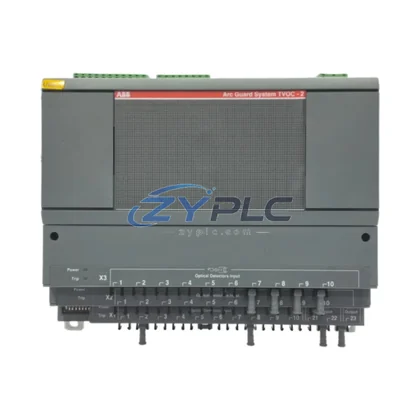
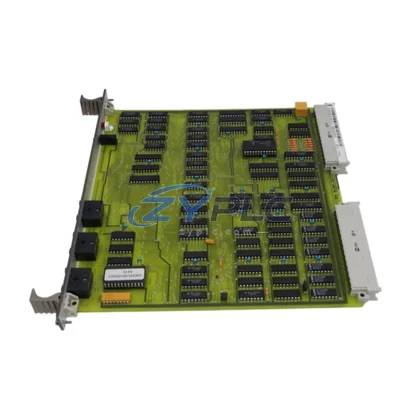
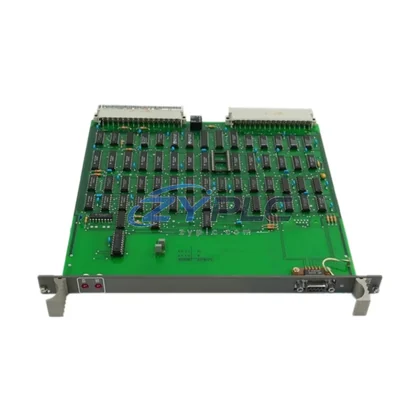
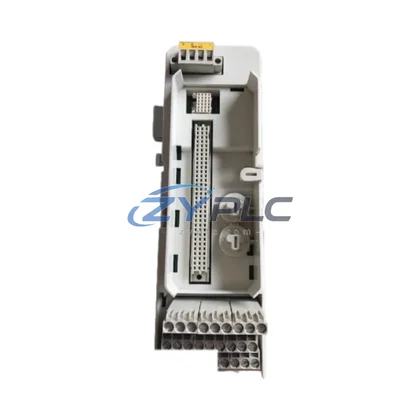
ABB PFEA113-3BSE028144R0020 Tension Control for PFEA Series Automation
The ABB PFEA113-3BSE028144R0020 is a high-performance tension control module engineered for industrial drive systems where energy efficiency, process stability, and production line throughput are critical operational priorities. Designed as part of ABB’s PFEA Series, this module delivers precise closed-loop tension regulation across web-handling, winding, and unwinding applications — directly reducing motor overload events, eliminating unnecessary energy draw, and extending the operational lifespan of connected drive components.
In modern manufacturing environments, uncontrolled web tension is one of the most overlooked sources of unplanned downtime. Fluctuating tension forces drive motors to compensate dynamically, consuming excess power and generating heat that accelerates component wear. The PFEA113-3BSE028144R0020 addresses this at the source by continuously monitoring tension feedback signals and issuing precise correction commands to the drive system, keeping motor output aligned with actual process demand rather than worst-case estimates.
This module is fully compatible with ABB’s ACS880 and ACS580 variable frequency drives, enabling seamless integration into existing ABB drive architectures without additional signal conditioning hardware. When paired with an ACS880 industrial drive, the PFEA113-3BSE028144R0020 enables direct torque control strategies that reduce reactive power consumption and improve overall power factor — measurable improvements that appear directly on facility energy bills.
Product Specification Table
| Parameter |
Specification |
| Model |
PFEA113-3BSE028144R0020 |
| Series |
ABB PFEA |
| Product Type |
Tension Control Module |
| Power Consumption |
Low-power signal processing design |
| Operating Efficiency |
Closed-loop tension regulation, minimizes motor overcompensation |
| Compatible Drive Systems |
ABB ACS880, ACS580, ACS550 Series VFDs |
| Compatible Control Platforms |
ABB AC500 PLC, ABB Automation Builder |
| Application Environment |
Web handling, winding, unwinding, printing, converting lines |
| Communication Protocol |
PROFIBUS, PROFINET (via ABB drive fieldbus adapters) |
| Origin |
Sweden |
| Energy Saving Value |
Reduces motor overload cycles, lowers reactive energy draw |
| Warranty |
warranty terms confirmed during quotation |
| Condition |
New / Tested & Verified |
System Compatibility and Application
The PFEA113-3BSE028144R0020 does not operate in isolation — its maintenance planning value is realized through tight integration with the surrounding automation architecture. In a typical high-efficiency production line, this module sits between the tension measurement layer and the drive execution layer, processing load cell or dancer roll signals and translating them into torque reference adjustments delivered to the connected ABB ACS880 variable frequency drive.
At the control level, the module interfaces with an ABB AC500 PLC, which coordinates production line sequencing, speed references, and tension setpoints across multiple winding zones. The AC500’s high-speed I/O processing ensures that tension corrections are applied within the response window required to prevent web breaks or slack accumulation — both of which result in material waste and unplanned downtime that carry significant energy and cost penalties.
For facilities running PROFIBUS or PROFINET fieldbus architectures, the PFEA113-3BSE028144R0020 communicates tension status and fault diagnostics upstream to the control system via ABB’s FPBA-01 PROFIBUS adapter or FENA-21 PROFINET adapter, depending on the drive configuration. This real-time data stream feeds into the plant’s condition monitoring layer, where systems such as the ABB Power and Energy Monitoring System (PEMS) or third-party SCADA platforms can log tension-correlated energy consumption data for analysis and optimization.
On the HMI layer, operators interact with tension parameters and energy performance indicators through an ABB CP600 operator panel or equivalent HMI terminal connected to the AC500 control network. Visualizing tension trends alongside motor current draw allows production engineers to identify inefficient operating windows — such as acceleration ramps that generate tension spikes — and adjust drive parameters accordingly.
The module also works in conjunction with ABB’s FCAN-01 CANopen adapter for installations where CANopen is the preferred fieldbus, and integrates with ABB’s DriveAP application programming environment for custom tension control logic. In multi-zone winding systems, multiple PFEA113-3BSE028144R0020 modules can be deployed in parallel, each controlling an independent drive zone while sharing a common tension reference from the master PLC — a configuration that significantly reduces the energy overhead of manual tension adjustment and operator intervention.
For power quality monitoring at the drive input, pairing the system with an ABB M2M energy meter or a dedicated power analyzer at the MCC panel provides the baseline consumption data needed to quantify the operational stability delivered by closed-loop tension control versus open-loop operation.
Maintenance and Replacement Notes
In paper and board converting lines, uncontrolled tension is directly responsible for web breaks that require full line stops, waste material, and consume significant restart energy as drives accelerate back to operating speed. The PFEA113-3BSE028144R0020 eliminates the root cause of these events by maintaining tension within a tight control band throughout acceleration, steady-state running, and deceleration phases. Production facilities that have implemented PFEA Series tension control report measurable reductions in web break frequency — translating directly into fewer unplanned stops, lower restart energy consumption, and higher overall equipment effectiveness (OEE).
In textile and nonwoven manufacturing, the module’s ability to compensate for roll diameter changes in real time means that the connected ACS580 or ACS880 drive does not need to operate at conservative, energy-inefficient torque margins to handle worst-case tension scenarios. Instead, the drive operates at the minimum torque required for the actual process condition at any given moment — a strategy that reduces motor heating, extends insulation life, and lowers energy consumption per unit of output.
For printing and laminating lines where register accuracy depends on consistent web tension, the PFEA113-3BSE028144R0020 provides the tension stability that allows press speeds to be increased without sacrificing print quality. Running at higher speeds with stable tension is more energy-efficient per unit produced than running at lower speeds with frequent tension-related quality rejects that require reprinting.
Predictive maintenance benefits are also significant. By monitoring tension feedback signal quality and drive response characteristics over time, maintenance teams can identify degrading load cells, worn nip rolls, or bearing friction increases before they cause process failures. Early intervention based on tension data trends reduces emergency maintenance costs and the unplanned downtime associated with running degraded equipment at compensatory power levels.
All units supplied by ZYPLC are tested prior to shipment, with full functional verification of tension signal processing, drive interface communication, and control output response. Stock is maintained for prompt dispatch, and each unit is covered by a warranty terms confirmed during quotation from the date of delivery.
Product Sourcing FAQ
Q: How does the PFEA113-3BSE028144R0020 contribute to measurable operational stability on a production line?
A: By maintaining closed-loop tension control, the module prevents the motor overcompensation cycles that occur in open-loop systems. Drive motors operate at demand-matched torque levels rather than fixed worst-case margins, reducing average current draw and reactive power consumption. The reduction in web breaks and unplanned stops also eliminates the high-energy restart cycles that represent a disproportionate share of line energy consumption.
Q: Is the PFEA113-3BSE028144R0020 compatible with existing ABB drive installations?
A: Yes. The module is designed for integration with ABB ACS880, ACS580, and ACS550 series variable frequency drives. It is compatible with PROFIBUS and PROFINET fieldbus architectures via standard ABB drive adapter modules, and interfaces with ABB AC500 PLC platforms for coordinated line control. Retrofitting into existing ABB drive systems typically requires no additional signal conditioning hardware.
Q: What is the recommended replacement or upgrade path for older ABB tension control modules?
A: The PFEA113-3BSE028144R0020 is a direct functional replacement for earlier PFEA Series tension control modules. For systems currently using analog tension control without closed-loop feedback, upgrading to the PFEA113-3BSE028144R0020 with a compatible load cell input and ABB drive torque reference interface provides the most significant efficiency improvement. ZYPLC technical support can advise on specific replacement compatibility based on your existing drive and control system configuration.
Q: What does the warranty terms confirmed during quotation cover, and what is the testing process before shipment?
A: Every PFEA113-3BSE028144R0020 unit supplied by ZYPLC undergoes functional testing prior to dispatch, verifying tension signal input processing, drive communication interface operation, and control output response. The warranty terms confirmed during quotation covers manufacturing defects and functional failures under normal operating conditions from the date of delivery. Warranty claims are supported directly by ZYPLC with replacement or repair as appropriate.