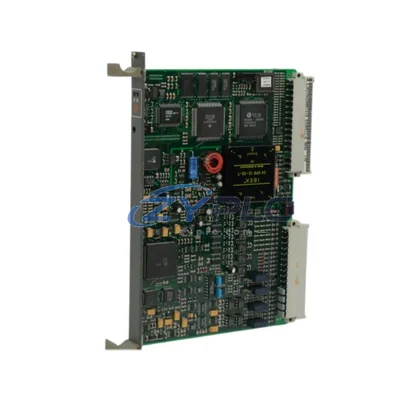
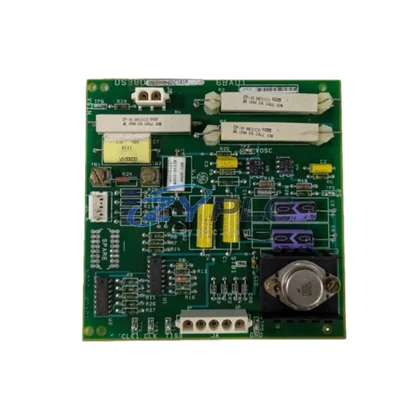
ABB HIEE320639R1 HI024049-313 LT 8978B V1: Industrial Data Link for Unitrol Excitation Systems
The ABB HIEE320639R1 HI024049-313 LT 8978B V1 is a precision Pulse Amplifier module engineered for the ABB Unitrol Series excitation control platform. In modern smart factory environments, reliable signal amplification and pulse conditioning are foundational to maintaining synchronised communication between field-level devices and supervisory control systems. This module serves as a critical node in the industrial data chain — bridging the gap between rotating machine excitation hardware and the digital control infrastructure that governs generator performance, grid stability, and plant-wide automation.
Deployed across power generation facilities, heavy industrial plants, and process automation sites, the HIEE320639R1 ensures that pulse signals from excitation feedback circuits are accurately amplified, conditioned, and transmitted to the ABB Unitrol 5000 or Unitrol 6000 automatic voltage regulator (AVR) controllers. Its role in the data flow is indispensable: without stable pulse amplification, the AVR cannot accurately regulate field current, leading to voltage instability, protection relay trips, and unplanned downtime.
Compatibility & Integration Notes
| Parameter |
Specification |
| SKU |
HIEE320639R1 HI024049-313 LT 8978B V1 |
| Brand |
ABB |
| Series |
Unitrol (Excitation Control) |
| Product Type |
Pulse Amplifier Module |
| Protocol Support |
Analogue Pulse / Digital Signal Interface |
| Interface Type |
Backplane / Internal Bus (Unitrol Rack) |
| Communication Role |
Excitation Feedback Signal Conditioning |
| Network Compatibility |
ABB Unitrol 5000 / Unitrol 6000 AVR Platforms |
| System Application |
Generator Excitation, AVR Control, Power Plant Automation |
| Origin |
Sweden |
| Warranty |
warranty terms confirmed during quotation |
| Availability |
RFQ Available — shipment arranged after confirmation |
Connected Automation Data Flow
In a typical power plant or heavy industrial site running on the ABB Unitrol platform, the HIEE320639R1 sits at the heart of the excitation signal chain. The data flow begins at the generator’s field winding and current transformers, where raw analogue signals are captured and routed into the Unitrol rack. The HIEE320639R1 amplifies these pulse signals with high fidelity before they are processed by the ABB Unitrol 5000 AVR or Unitrol 6000 AVR controller boards — such as the HIEE300936R1 voltage measurement module and the HIEE300024R1 power supply card — which together regulate field current and terminal voltage in real time.
Upstream, the conditioned data is passed to the ABB AC800M PLC or AC500 PLC via the plant’s control network, where SCADA systems — commonly running on ABB Ability System 800xA or third-party platforms such as Wonderware or Ignition — aggregate excitation data alongside turbine speed, active power output, and reactive power measurements. HMI panels, including the ABB CP600 series, display real-time generator status and allow operators to issue setpoint commands back through the control loop.
For remote monitoring and diagnostics, the excitation data stream is forwarded through industrial Ethernet switches — such as those in the ABB Ethernet Switch ES series — to the plant’s DCS or energy management system. Remote I/O modules and gateway devices translate field-level signals into IEC 61850 or Modbus TCP packets for integration with substation automation systems. The HIEE320639R1 therefore acts as the foundational signal conditioner that makes this entire data chain possible — from raw pulse at the generator terminals to actionable data on the SCADA dashboard.
Solving Data Isolation in Industrial Sites
One of the most persistent challenges in power generation and heavy industrial automation is data isolation — where excitation systems, protection relays, DCS controllers, and SCADA platforms operate in silos, unable to share real-time operational data. The ABB HIEE320639R1 directly addresses this by ensuring that pulse signals from the excitation circuit are accurately conditioned and made available to the broader control architecture.
Without a properly functioning pulse amplifier, the AVR controller loses visibility into field current feedback, causing it to operate on stale or corrupted data. This leads to poor voltage regulation, increased wear on the generator’s excitation winding, and potential protection relay misoperation. By maintaining signal integrity at the hardware level, the HIEE320639R1 enables the Unitrol AVR to deliver precise, closed-loop excitation control — a prerequisite for stable grid connection and compliance with grid code requirements.
From a system transparency perspective, the HIEE320639R1 supports the broader goal of production line visibility: when excitation data flows cleanly from the field device through the AVR to the SCADA layer, plant engineers gain the real-time insight needed to optimise generator dispatch, schedule predictive maintenance, and respond rapidly to abnormal conditions. Remote diagnostics become practical — maintenance teams can monitor excitation performance from the control room or via remote access tools without dispatching personnel to the generator floor.
For sites planning system expansion — adding new generator units, upgrading to a higher-capacity Unitrol platform, or integrating with a new DCS — the HIEE320639R1’s compatibility with the Unitrol rack architecture ensures a smooth upgrade path. Replacement modules are tested prior to shipment, with full functional verification against ABB Unitrol platform specifications, and are backed by a warranty terms confirmed during quotation covering manufacturing defects and operational failures under normal use conditions.
Industrial Connectivity FAQ
Q1: Is the ABB HIEE320639R1 compatible with both Unitrol 5000 and Unitrol 6000 platforms?
The HIEE320639R1 is designed for the ABB Unitrol excitation control rack architecture. Compatibility with specific Unitrol sub-variants (5000 or 6000) should be verified against your system’s rack configuration and firmware version. Our technical team can assist with cross-referencing your existing module layout before shipment.
Q2: What is the communication latency of the pulse amplifier in a closed-loop excitation control system?
As a hardware signal conditioning module, the HIEE320639R1 operates at analogue signal speeds with negligible latency — typically in the microsecond range. This ensures that the AVR controller receives real-time excitation feedback without delay, which is critical for maintaining voltage stability during load transients and grid disturbances.
Q3: Can this module be integrated with third-party SCADA or DCS systems?
Yes. While the HIEE320639R1 interfaces directly with the ABB Unitrol AVR platform, the processed excitation data can be forwarded to any SCADA or DCS system that communicates with the Unitrol controller via standard industrial protocols such as Modbus RTU, Modbus TCP, PROFIBUS DP, or IEC 61850. Gateway modules within the Unitrol system handle protocol conversion to the supervisory layer.
Q4: What does the warranty terms confirmed during quotation cover, and how is pre-shipment testing conducted?
Every HIEE320639R1 unit is functionally tested prior to dispatch to verify signal amplification performance, backplane interface integrity, and compatibility with ABB Unitrol rack standards. The warranty terms confirmed during quotation covers manufacturing defects and component failures under normal operating conditions. Warranty claims are processed promptly, with replacement or repair options available to minimise site downtime.