ABB IMDSO14 Industrial Network Interface for Infi 90 Systems: Bridging the Industrial Data Link in Smart Factory Environments
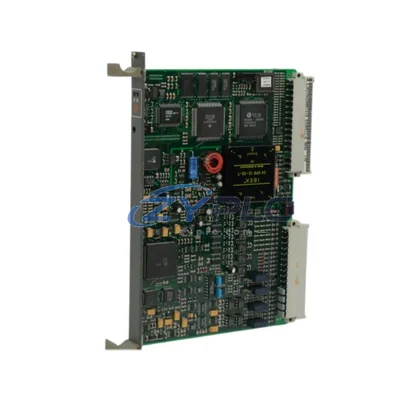
The ABB IMDSO14 is a high-reliability digital output module engineered for the ABB Infi 90 Distributed Control System (DCS). Designed to serve as a critical node in the industrial data chain, the IMDSO14 enables seamless signal output, protocol-level communication, and real-time control across complex automation architectures. Whether deployed in power generation, oil & gas processing, chemical manufacturing, or advanced discrete production lines, this module delivers the deterministic output performance and network stability that modern smart factories demand.
In today’s industrial landscape, the ability to move data reliably from field devices to supervisory systems is not optional — it is foundational. The IMDSO14 occupies a pivotal position in this chain, converting digital control signals from the Infi 90 DCS controller into actionable outputs for actuators, relays, solenoid valves, and motor starters. Its integration into the broader automation network ensures that every command issued by the PLC or DCS reaches its destination with minimal latency and maximum fidelity.
Compatibility & Integration Notes
| Parameter |
Specification |
| Module SKU |
IMDSO14 |
| Brand / Manufacturer |
ABB |
| Compatible Platform |
ABB Infi 90 DCS |
| Module Type |
Digital Output Module |
| Communication Protocol |
Infi-Net / SDCS Bus (ABB Proprietary Industrial Protocol) |
| Interface Type |
Backplane Bus Interface (Infi 90 Rack-Mounted) |
| Output Channels |
14 Digital Output Channels |
| Signal Transmission |
Discrete digital control signals to field actuators and relays |
| Network Compatibility |
ABB Infi 90 DCS, SDCS Control Network, Infi-Net Communication Bus |
| System Application |
DCS Output Control, SCADA Integration, HMI Feedback, Remote I/O Expansion |
| Diagnostic Support |
Real-time fault detection, module status reporting via DCS console |
| Warranty |
warranty terms confirmed during quotation — Tested and verified before shipment |
| Origin |
Sweden (ABB Group) |
| Inventory Status |
RFQ Available — shipment arranged after confirmation |
Connected Automation Data Flow
Understanding the IMDSO14’s role requires mapping the full data flow of an Infi 90-based automation system. At the field level, sensors and transmitters — including pressure transducers, flow meters, and temperature probes — feed analog and digital signals into the system via input modules such as the ABB IMASI23 analog input module and the ABB IMDSI22 digital input module. These signals are processed by the Infi 90 DCS controller, which executes control logic and issues output commands.
The IMDSO14 receives these digital output commands over the Infi-Net communication bus and translates them into discrete switching signals for field actuators. In a typical process loop, this might mean energizing a solenoid valve, triggering a motor starter, or activating an alarm relay — all within the deterministic timing constraints required for safe industrial operation.
Upstream, the Infi 90 DCS communicates with SCADA platforms and HMI workstations via gateway modules such as the ABB IMCPM05 communication processor module, which bridges the proprietary Infi-Net bus to higher-level Ethernet or Modbus TCP networks. This allows operators at SCADA consoles to monitor output states in real time, receive alarm notifications, and issue override commands without interrupting the underlying control loop.
For remote I/O expansion across large plant footprints, the IMDSO14 can be deployed in distributed rack configurations alongside modules like the ABB IMFEC12 field interface module, extending the DCS output reach to remote process areas while maintaining synchronization with the central controller. Variable frequency drives (VFDs) and motor control centers connected downstream of the IMDSO14 receive start/stop and direction commands, enabling coordinated motor management across conveyor systems, pump stations, and compressor trains.
Edge gateway devices — such as industrial IoT gateways supporting OPC-UA or MQTT — can be integrated at the network boundary to forward real-time output status data to cloud-based analytics platforms or MES systems, completing the data chain from field actuator to enterprise dashboard. This architecture supports the full vision of Industry 4.0 connectivity, where every output state is visible, logged, and actionable at every level of the automation hierarchy.
Power supply stability for the IMDSO14 and its associated rack is typically provided by redundant industrial power supply units such as the ABB IMPS10, ensuring that output module operation is uninterrupted even during grid fluctuations or maintenance switching events.
Solving Data Isolation in Industrial Sites
One of the most persistent challenges in legacy industrial environments is data isolation — the condition where field devices, controllers, and supervisory systems operate in disconnected silos, unable to share real-time status information. The ABB IMDSO14, as part of the Infi 90 DCS ecosystem, directly addresses this problem by providing a standardized, protocol-consistent output interface that integrates cleanly with both legacy ABB infrastructure and modern network overlays.
Protocol Unification: Many industrial sites operate with a mix of communication standards — Modbus RTU, PROFIBUS DP, DeviceNet, and proprietary DCS buses — creating integration friction. The IMDSO14 operates natively on the Infi-Net bus, and when paired with ABB communication gateway modules, its output data can be translated and forwarded to any higher-level protocol, eliminating the need for custom middleware or manual data entry.
Production Line Transparency: With the IMDSO14 in place, every digital output command — valve open/close, motor start/stop, alarm activation — is logged and timestamped within the DCS historian. This creates a complete audit trail of production events, enabling root cause analysis, OEE calculation, and predictive maintenance scheduling without additional instrumentation.
Remote Monitoring and Diagnostics: The module’s built-in diagnostic capabilities allow the DCS to detect output channel faults, wiring failures, and load anomalies in real time. Maintenance teams can access this diagnostic data remotely via the SCADA interface, reducing the need for physical site inspections and enabling faster mean-time-to-repair (MTTR) across distributed plant assets.
System Scalability: As production capacity grows, additional IMDSO14 modules can be added to existing Infi 90 racks without reconfiguring the control network. This modular expansion capability allows plant engineers to scale output capacity incrementally, protecting the original capital investment while accommodating new process requirements.
Pre-Shipment Testing and Quality Assurance: Every IMDSO14 unit supplied by ZYPLC undergoes functional verification testing prior to dispatch. Output channel continuity, bus communication integrity, and module identification are confirmed against ABB factory specifications, ensuring that the module performs correctly from the moment it is installed in the target rack.
Industrial Connectivity FAQ
Q1: What communication protocol does the ABB IMDSO14 use, and is it compatible with modern Ethernet-based networks?
The IMDSO14 communicates natively over the ABB Infi-Net proprietary bus, which is the standard communication backbone of the Infi 90 DCS platform. For integration with Ethernet-based SCADA systems or OPC-UA networks, ABB communication processor modules (such as the IMCPM05) serve as protocol gateways, bridging the Infi-Net bus to standard industrial Ethernet without requiring modifications to the IMDSO14 itself.
Q2: How does the IMDSO14 perform in terms of output switching latency and network stability?
The IMDSO14 is designed for deterministic operation within the Infi 90 DCS scan cycle. Output switching latency is governed by the DCS controller’s execution rate, typically in the range of 50–500 milliseconds depending on system configuration. The Infi-Net bus provides stable, collision-free communication with built-in error detection, ensuring that output commands are delivered reliably even in electrically noisy industrial environments.
Q3: Can the IMDSO14 be used to expand an existing Infi 90 system, and what are the rack compatibility requirements?
Yes. The IMDSO14 is designed for modular expansion within the Infi 90 rack architecture. It is compatible with standard ABB Infi 90 I/O racks and requires no special configuration beyond standard DCS engineering tools. Multiple IMDSO14 modules can be installed in the same rack or across distributed racks, with the DCS automatically recognizing each module’s address and channel assignments during system initialization.
Q4: What warranty and post-shipment support does ZYPLC provide for the ABB IMDSO14?
ZYPLC provides a warranty terms confirmed during quotation on all ABB IMDSO14 units. Each module is functionally tested before shipment to verify output channel performance and bus communication integrity. In the event of a warranty claim, ZYPLC’s technical support team provides remote diagnostic assistance and, where necessary, expedited replacement to minimize production downtime. Stock is maintained for rapid dispatch to minimize lead times for urgent maintenance requirements.