ABB INTKM01 Token Master for INFI-NET: Compatibility and Replacement Notes
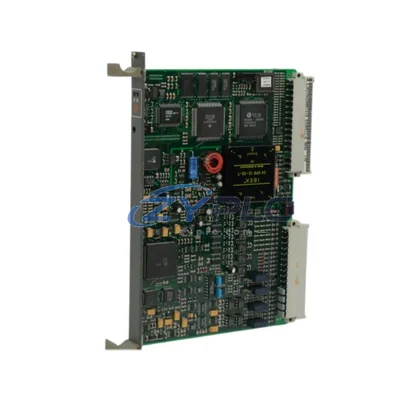
The ABB INTKM01 INFI-NET Token Master Communication Module is a foundational component within the ABB Bailey Controls distributed control system (DCS) architecture. Designed to govern token-passing communication across the INFI-NET plant loop, the INTKM01 ensures deterministic, collision-free data exchange between all nodes on the network — including controllers, I/O modules, operator workstations, and gateway devices. In any layered automation environment, the integrity of the communication backbone directly determines the reliability of the entire control hierarchy, and the INTKM01 fulfills this role with precision and long-term operational stability.
Understanding the INTKM01’s position within a complete control system architecture requires examining how it interacts with every functional layer — from the field device level up through the supervisory and enterprise tiers. This module does not operate in isolation; it is the communication coordinator that enables all other system components to exchange data in a structured, time-deterministic manner. Its correct specification, installation, and maintenance are therefore critical to the overall performance, redundancy, and scalability of the automation system.
Product Specification Table
| Parameter |
Specification |
| System Role |
INFI-NET Token Master — governs token-passing protocol on the plant loop network |
| Compatible Platform |
ABB Bailey Controls INFI-NET DCS (Network 90, SYMPHONY series) |
| Communication Protocol |
INFI-NET token-passing LAN (deterministic, peer-to-peer plant loop) |
| Network Topology |
Token ring / plant loop; supports multiple nodes including controllers and HMI stations |
| Module Form Factor |
Plug-in card for Bailey Controls MFP/IMMFP module carrier or compatible rack |
| Operating Voltage |
+5 VDC (supplied via backplane); low-power CMOS design |
| Operating Temperature |
0°C to 60°C (32°F to 140°F); suitable for standard control room environments |
| Mounting Environment |
DIN-rail or rack-mounted enclosure; requires compatible ABB Bailey backplane |
| Redundancy Support |
Supports hot-standby token master redundancy configurations |
| system integration |
Full system integration with INFI-NET node addressing and system-wide diagnostics |
| Warranty |
warranty terms confirmed during quotation — all units tested prior to shipment |
| Condition |
Refurbished / surplus; fully functional and system-verified |
System Compatibility Notes
The INTKM01 Token Master module sits at the heart of the INFI-NET communication layer, but its value is only fully realized when considered alongside the broader system architecture it supports. In a typical ABB Bailey DCS installation, the INTKM01 works in close coordination with the IMMFP12 Multi-Function Processor — the primary CPU module responsible for executing control strategies, PID loops, and sequence logic. The IMMFP12 relies on the INTKM01 to maintain uninterrupted token circulation so that scan cycle data from field I/O modules reaches the controller without latency or collision.
On the I/O layer, modules such as the IMASI23 Analog Signal Input and IMASO14 Analog Signal Output cards feed process variable data — temperatures, pressures, flow rates, and valve positions — into the control loop via the backplane and INFI-NET network. The INTKM01 ensures that these I/O nodes receive and transmit their data tokens in the correct sequence, maintaining the deterministic scan cycle that process control demands. Similarly, digital I/O modules like the IMDSI22 Digital Signal Input depend on the token master to arbitrate their network access without conflict.
At the power layer, the IMPS10 Power Supply Module provides the regulated DC voltages required by the backplane and all installed cards, including the INTKM01 itself. Proper power architecture — including redundant power supply configurations — is a prerequisite for stable token master operation. Any power instability that causes the INTKM01 to reset will temporarily disrupt token circulation across the entire plant loop, underscoring the importance of a well-engineered power layer.
For network-layer connectivity beyond the INFI-NET plant loop, the INNIS01 Network Interface Module or equivalent gateway devices bridge the INFI-NET environment to higher-level supervisory networks, including Ethernet-based SCADA systems and historian platforms. The INTKM01 manages the plant loop side of this communication chain, ensuring that data destined for the supervisory layer is available at the correct network node when the gateway polls for it.
At the human-machine interface layer, operator workstations running ABB’s INFI-NET compatible OIS (Operator Interface Station) software connect to the plant loop as network nodes. The INTKM01 governs their token access just as it does for controller and I/O nodes, ensuring that operator commands — setpoint changes, mode switches, alarm acknowledgments — are transmitted to the appropriate controller without delay. In redundant token master configurations, a secondary INTKM01 module monitors the primary and assumes token master duties automatically upon failure, providing the fault tolerance required in continuous process industries.
Backplane infrastructure, including the NTMP01 or NKLS01 module termination assemblies, provides the physical interconnection between the INTKM01 and the rest of the system. Correct backplane selection and slot assignment are essential during system commissioning to ensure that the token master module has the correct network address and priority settings for the installed configuration.
Industrial Application Notes
The INTKM01 has been deployed across a wide range of process industries where the ABB Bailey INFI-NET DCS platform has historically been the control system of choice. In power generation facilities — including coal-fired, gas turbine, and combined-cycle plants — the INTKM01 manages communication between boiler control modules, turbine protection systems, and balance-of-plant I/O, where any communication disruption can trigger costly unit trips. Its deterministic token-passing protocol is particularly well-suited to these high-consequence environments.
In petrochemical and refinery applications, the INTKM01 supports continuous process control across distillation columns, heat exchangers, and reactor systems. The module’s ability to maintain consistent network timing across dozens of nodes ensures that cascade control loops — where the output of one controller feeds the setpoint of another — remain synchronized and stable. This is critical in processes where even brief communication gaps can result in off-spec product or safety system activation.
For water and wastewater treatment plants, the INTKM01 enables reliable communication between pump control modules, chemical dosing systems, and filtration process controllers. Many of these facilities operate legacy ABB Bailey systems that have been in service for 20 or more years, and the availability of tested, warranted INTKM01 modules is essential for maintaining system uptime without the cost and disruption of a full DCS migration.
In pulp and paper, mining, and metals processing environments, the INTKM01 supports high-availability control architectures where production continuity is paramount. Redundant token master configurations — using two INTKM01 modules in primary/standby roles — provide the fault tolerance required to meet uptime targets in these demanding industrial settings. The module’s robust design and compatibility with the full range of INFI-NET I/O and controller modules make it a reliable long-term component in these architectures.
Product Compatibility FAQ
Q1: Is the INTKM01 compatible with all ABB Bailey INFI-NET system configurations, and can it be used in both primary and standby token master roles?
The INTKM01 is designed for use within ABB Bailey INFI-NET plant loop architectures, including Network 90 and SYMPHONY-era systems. It can be configured as either the primary token master or as a hot-standby unit in redundant configurations. When used in a redundant pair, the standby INTKM01 continuously monitors the primary and assumes token master duties automatically upon detection of a primary failure, with no operator intervention required. Compatibility should always be verified against the specific system firmware revision and backplane type installed at your site.
Q2: What commissioning steps are required when installing a replacement INTKM01, and how does it affect the rest of the running system?
Installing a replacement INTKM01 in a running system requires careful attention to network addressing and token master priority settings, which are typically configured via DIP switches or jumpers on the module. In most cases, the replacement module should be configured to match the address and priority of the unit being replaced. In redundant configurations, the standby module can often be replaced without disrupting the primary token master or the running plant loop. It is recommended to perform the replacement during a planned maintenance window and to verify network communication across all nodes after installation using the system’s diagnostic tools.
Q3: What does the warranty terms confirmed during quotation cover, and what support is available for long-term maintenance of INFI-NET systems?
All INTKM01 modules supplied by ZYPLC are covered by a warranty terms confirmed during quotation against defects in materials and workmanship. Each unit undergoes functional testing prior to shipment to verify communication performance and module integrity. For long-term INFI-NET system maintenance, ZYPLC maintains inventory of compatible modules — including CPU cards, I/O modules, power supplies, and communication components — to support ongoing spare parts requirements. Our engineering team can assist with system architecture review, module cross-referencing, and compatibility verification to ensure that replacement components integrate correctly with your existing control system. Contact us at plc.sales@zyplc.com or +86 19859288691 for technical support and availability inquiries.