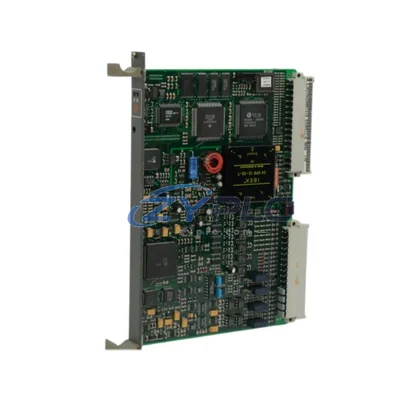
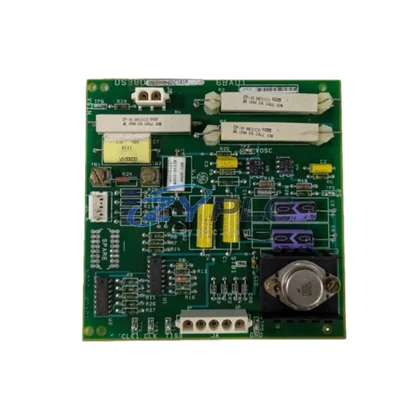
ABB MSR04XI Serial Communication for Advant MOD 300
The ABB MSR04XI is a dedicated serial communication module engineered for deployment within the Advant MOD 300 Distributed Control System (DCS) architecture. Rather than functioning as a standalone peripheral, the MSR04XI occupies a critical position in the communication layer of a multi-tier industrial automation hierarchy — bridging field-level serial devices with the supervisory and process control layers that define modern plant operations. In large-scale process environments such as petrochemical refineries, power generation facilities, water treatment plants, and metallurgical processing lines, the integrity of serial communication between controllers, I/O subsystems, and field instruments is non-negotiable. The MSR04XI addresses this requirement with precision, providing stable, deterministic data exchange across the full control architecture.
Within the Advant MOD 300 platform, the MSR04XI integrates directly into the system’s modular backplane structure, sharing the same rack infrastructure as the AC 450 controller modules and the S100 I/O family. This co-location within the control cabinet eliminates the need for external communication converters or protocol bridges, reducing both wiring complexity and potential failure points. Engineers commissioning a new control loop or expanding an existing automation segment can insert the MSR04XI into an available backplane slot and configure it through the standard MOD 300 engineering workstation environment, maintaining full consistency with the system’s existing configuration database.
The module’s role in the signal flow architecture is particularly significant in hybrid installations where legacy serial field devices — including HART-compatible transmitters, Modbus RTU instruments, and proprietary ABB field units — must coexist with newer digital communication networks. The MSR04XI provides the translation and buffering layer that allows these devices to report process variables, alarms, and diagnostic data upstream to the AC 450 processor without disrupting scan cycle timing or introducing latency into the control loop. This capability is essential in applications where millisecond-level response times govern safety interlock logic or regulatory control performance.
From a system redundancy perspective, the MSR04XI supports deployment in configurations where communication path availability is a design requirement. In power plant distributed control applications, for example, redundant communication modules are often specified to ensure that a single module failure does not interrupt the flow of critical process data from turbine control panels, generator excitation systems, or boiler management units. The MSR04XI’s compatibility with the MOD 300 redundancy framework allows system architects to implement hot-standby communication paths without requiring additional engineering infrastructure or custom software development.
Maintenance engineers working with long-established MOD 300 installations benefit from the MSR04XI’s form-factor and firmware compatibility with the broader Advant product family. Replacement of a failed communication module does not require system shutdown or reconfiguration of adjacent modules such as the AI810 analog input modules, the DI810 digital input modules, or the AO810 analog output modules that populate the same I/O rack. The hot-swap capability inherent in the MOD 300 backplane design means that the MSR04XI can be replaced during live plant operation, minimizing process interruption and reducing maintenance windows. This characteristic is particularly valued in continuous process industries where unplanned downtime carries significant financial and safety consequences.
In layered automation architectures that incorporate ABB’s System 800xA supervisory platform, the MSR04XI serves as a foundational element in the connectivity chain between field instruments and the operator interface layer. Data collected through the MSR04XI’s serial ports is aggregated by the AC 450 controller, processed according to configured control strategies, and then transmitted via the Advant Fieldbus 100 (AF 100) network to the 800xA server infrastructure. Operators monitoring the process through 800xA graphic displays receive real-time process values that originate from field devices connected through the MSR04XI, making the module’s reliability directly relevant to operator situational awareness and decision-making quality.
For system integrators managing multi-vendor control environments, the MSR04XI’s support for standard serial communication protocols provides a practical pathway for incorporating third-party devices — such as Yokogawa or Honeywell field transmitters, Allen-Bradley remote I/O adapters, or Siemens serial gateway units — into an ABB-centric control architecture. This interoperability reduces the engineering effort required to achieve system integration across heterogeneous plant systems, supporting the broader goal of unified data visibility and coordinated control across all automation layers.
Long-term inventory availability is a key consideration for plant operators managing aging DCS installations. ZYPLC supports RFQ sourcing for the MSR04XI and related Advant MOD 300 components, including communication processors, power supply modules, and backplane assemblies, to support both planned maintenance programs and emergency replacement requirements. All units supplied by ZYPLC are covered by a warranty terms confirmed during quotation, with pre-shipment functional testing performed to verify communication port integrity, backplane interface compliance, and firmware version compatibility with the target system configuration.
Product Specification Table
| System Role |
Serial Communication Module — Advant MOD 300 DCS Control Layer |
| Compatible Platform |
ABB Advant MOD 300 / System 800xA (via MOD 300 gateway) |
| Communication Protocols |
RS-232, RS-422, RS-485; Modbus RTU; ABB proprietary serial |
| Serial Ports |
4 × isolated serial channels (MSR04XI designation) |
| Backplane Interface |
S100 I/O bus / MOD 300 modular backplane |
| Power Supply |
Supplied via backplane from PM825 or PM856 power modules |
| Operating Temperature |
0°C to +55°C (standard industrial cabinet installation) |
| Mounting |
DIN rail / rack-mount within MOD 300 controller cabinet |
| Certifications |
CE; designed to IEC 61131-2 environmental standards |
| system integration |
Supported — compatible with 800xA asset integration framework |
| Warranty |
warranty terms confirmed during quotation (ZYPLC supply; functional pre-shipment test included) |
| Country of Origin |
Sweden |
System Compatibility Notes
The MSR04XI does not operate in isolation — its value is realized through its coordination with the full suite of Advant MOD 300 hardware components. In a typical process control cabinet, the MSR04XI occupies a backplane slot adjacent to the AC 450 controller module, which executes the control application and manages the scan cycle for all connected I/O and communication modules. Power to the entire rack assembly is provided by the PM825 or PM856 power supply modules, which deliver regulated DC bus voltage to the backplane and ensure that communication module operation is not affected by transient load variations from adjacent I/O cards.
On the I/O side, the MSR04XI works in parallel with AI810 analog input modules and DI810 digital input modules that collect process measurements from field sensors, while AO810 analog output modules and DO810 digital output modules drive final control elements such as control valves and motor starters. The serial data streams managed by the MSR04XI complement the hardwired I/O signals, providing a secondary data acquisition path for instruments that communicate digitally rather than through 4–20 mA or discrete wiring.
At the network layer, the MSR04XI’s data is aggregated by the AC 450 and transmitted over the Advant Fieldbus 100 (AF 100) communication network to supervisory systems. In installations that have migrated to or integrated with ABB System 800xA, the MOD 300 controller node appears as a connected asset within the 800xA topology, and the serial device data collected through the MSR04XI becomes visible in the operator graphics and historian database. For human-machine interface applications, ABB Panel 800 operator terminals or third-party SCADA systems connected via OPC DA/UA gateways consume this data to present real-time process status to control room operators.
In redundant architecture designs, a second MSR04XI may be installed in a mirrored backplane slot, with the MOD 300 system configured to switch communication traffic to the standby module in the event of a primary module fault. This redundancy pattern is consistent with the approach used for the AC 450 controller itself, where dual-controller configurations provide bumpless transfer during controller faults, and for the AF 100 network, where dual-ring topology protects against single cable or node failures.
Industrial Application Notes
The MSR04XI finds application across a broad range of process industries where the Advant MOD 300 platform has been deployed as the primary control infrastructure. In power generation facilities, the module connects serial-interface protection relays, excitation controllers, and turbine supervisory instruments to the plant DCS, enabling integrated monitoring and control from a single operator interface. In petrochemical and refinery environments, the MSR04XI provides the communication path for serial-interface analyzers, flow computers, and custody transfer meters that must report to the DCS for regulatory compliance and process optimization purposes.
In water and wastewater treatment plants, where MOD 300 systems often manage pump stations, chemical dosing systems, and filtration processes distributed across large geographic areas, the MSR04XI enables serial communication with remote terminal units (RTUs) and intelligent field devices over long cable runs using RS-485 multi-drop wiring. In metallurgical and mining applications, the module supports communication with drive systems, weighing controllers, and conveyor management units that use proprietary serial protocols, allowing these subsystems to be integrated into the plant-wide control and monitoring architecture without protocol conversion hardware.
For packaging and discrete manufacturing lines that incorporate MOD 300 as the supervisory controller, the MSR04XI provides connectivity to serial-interface vision systems, barcode readers, and label printers that must exchange production data with the control system in real time. In all of these applications, the module’s contribution to system consistency, data integrity, and maintenance simplicity makes it a preferred choice for both new installations and retrofit projects where existing serial field devices must be preserved within a modernized control architecture.
Product Compatibility FAQ
Q1: Is the MSR04XI compatible with both legacy MOD 300 backplanes and newer S100 I/O rack assemblies?
The MSR04XI is designed for the Advant MOD 300 modular backplane environment and is compatible with the S100 I/O bus architecture used across the MOD 300 product family. Engineers integrating the module into an existing installation should verify the backplane revision and firmware version of the AC 450 controller to confirm compatibility. ZYPLC’s technical team can assist with compatibility verification prior to shipment, and all supplied units are covered by a warranty terms confirmed during quotation that includes pre-shipment functional testing against the specified backplane interface standard.
Q2: Can the MSR04XI support Modbus RTU communication with third-party field devices in a mixed-vendor architecture?
Yes. The MSR04XI supports RS-485 physical layer communication, which is the standard wiring topology for Modbus RTU multi-drop networks. Configuration of the Modbus RTU protocol stack is performed through the MOD 300 engineering workstation, where serial port parameters — baud rate, parity, stop bits, and device addressing — are defined within the controller’s communication configuration database. This system integration capability allows third-party Modbus devices to be incorporated into the MOD 300 control architecture without external protocol converters, simplifying cabinet wiring and reducing potential failure points in the communication chain.
Q3: What is the recommended maintenance strategy for MSR04XI modules in long-running DCS installations, and what does the warranty terms confirmed during quotation cover?
For installations where the MSR04XI has been in service for more than five years, ZYPLC recommends maintaining at least one spare module in the plant’s critical spares inventory to support rapid replacement in the event of an unplanned failure. The warranty terms confirmed during quotation provided by ZYPLC covers manufacturing defects, communication port failures, and backplane interface faults identified during normal operation. Warranty claims are supported by ZYPLC’s technical team, who can provide replacement units from stock and assist with installation and recommissioning. For planned maintenance outages, ZYPLC can supply tested replacement modules with confirmed firmware compatibility to minimize recommissioning time and reduce the risk of configuration errors during module swap procedures.