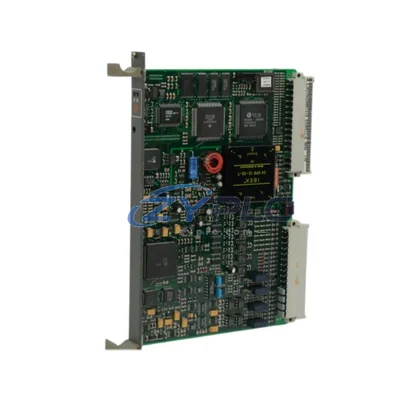
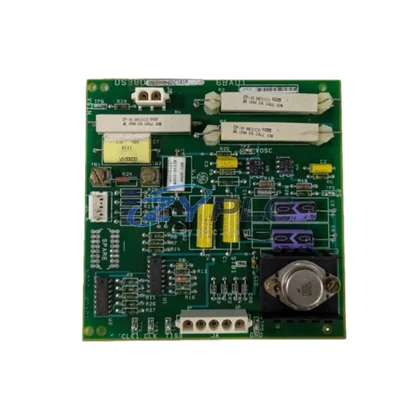
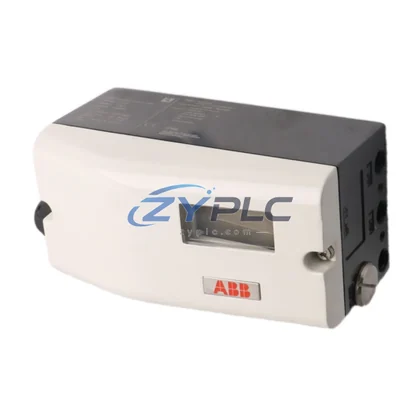
ABB RCNA-01 ControlNet Adapter for AC500: Precision Fieldbus Control for Optimized Automation
The ABB RCNA-01 is a high-performance ControlNet Adapter Module engineered for the ABB AC500 PLC series, delivering deterministic, real-time fieldbus communication that directly supports maintenance-focused motor control, drive coordination, and production line optimization. In modern industrial environments where uptime and replacement lead time matter, the RCNA-01 serves as a critical bridge between the control layer and the drive/actuator layer — enabling precise command execution that eliminates downtime risk caused by communication latency, polling delays, or uncoordinated drive starts.
At ZYPLC, every RCNA-01 unit is sourced from verified supply channels, undergoes outgoing shipment testing, and is Warranty terms are confirmed during quotation.
Product Specification Table
| Parameter |
Specification / Value |
| SKU / Part Number |
RCNA-01 |
| Brand / Series |
ABB / AC500 |
| Module Type |
ControlNet Fieldbus Adapter |
| Communication Protocol |
ControlNet (IEEE 802.4 / ODVA) |
| Power Consumption |
Low-power embedded design; bus-powered via AC500 backplane |
| Operating Efficiency |
Deterministic real-time I/O scan; minimizes idle polling cycles |
| Compatible Systems |
ABB AC500 PM5xx / PM5xx-ETH CPU modules; ControlNet-enabled drives and I/O |
| Application Environment |
Industrial automation, motor control centers, maintenance planning systems, process control |
| Maintenance Value |
Reduces drive start/stop energy spikes via synchronized fieldbus commands; supports load-side demand control |
| Origin |
Germany (ABB manufacturing) |
| Warranty |
Warranty and support terms confirmed before quote (ZYPLC) |
| Availability |
Confirmed via RFQ before quotation |
System Compatibility and Application
The RCNA-01 is most effective when deployed as part of a layered, industrial automation system. In a typical AC500-based control system, the ABB AC500 PM564-ETH CPU handles the primary logic execution, while the RCNA-01 extends the system’s reach to ControlNet-connected field devices — including ABB ACS880 industrial drives and ACS580 general-purpose drives — enabling coordinated motor speed regulation that directly reduces energy draw during partial-load operation.
On the I/O side, the RCNA-01 works in conjunction with ABB AC500 TU515 and TU516 terminal units and distributed DC532 digital I/O modules, allowing the control system to gather real-time feedback from sensors and actuators across the production floor. This feedback loop is essential for demand-based motor control: rather than running motors at fixed speeds, the system dynamically adjusts drive output based on actual process demand — a strategy that can help restore stable operation when a compatible replacement is required.
For power quality monitoring and energy data acquisition, the RCNA-01-equipped AC500 system integrates naturally with ABB M2M energy meters and CMS-700 condition monitoring sensors, feeding consumption data back to the PLC for real-time energy KPI tracking. When paired with an ABB CP635 HMI panel, operators gain a live dashboard of operating load per production zone, enabling informed decisions about load scheduling and shift-based maintenance planning.
Communication integrity is maintained through the ControlNet protocol’s inherent scheduled messaging, which ensures that drive commands, I/O updates, and energy data are transmitted with guaranteed timing — eliminating the communication jitter that can cause unnecessary drive re-acceleration events. For facilities also running PROFIBUS DP or Modbus TCP segments, the AC500 platform supports multi-protocol coexistence, allowing the RCNA-01 to serve as the ControlNet gateway while other adapter modules handle parallel fieldbus segments without cross-interference.
Maintenance and Replacement Notes
In real-world production environments, the RCNA-01 contributes to operational stability through several concrete mechanisms. First, by enabling synchronized drive start sequencing across multiple ACS880 or ACS580 units on the ControlNet network, the module prevents simultaneous motor inrush currents — a common cause of peak demand charges in facilities with multiple large motors. The AC500 PLC, via the RCNA-01, staggers drive enable commands with millisecond precision, smoothing the facility’s power demand curve.
Second, the RCNA-01 supports real-time process feedback integration: pressure sensors, flow meters, and temperature transmitters connected through AC500 I/O modules feed data into the PLC’s maintenance planning routines. When process conditions indicate reduced load — such as a conveyor running below capacity or a pump operating against low back-pressure — the PLC issues speed reduction commands to the connected drives via ControlNet, immediately reducing energy draw without operator intervention.
Third, the module’s deterministic communication eliminates the polling-induced latency that plagues non-real-time fieldbus systems. In high-cycle applications such as press lines, packaging machines, or injection molding systems, communication delays force conservative drive tuning with built-in speed margins — margins that represent wasted energy. With the RCNA-01’s scheduled ControlNet messaging, drive parameters can be tuned closer to actual process requirements, recovering that energy margin.
From a maintenance perspective, the RCNA-01’s integration with the AC500 diagnostic framework enables predictive maintenance workflows: drive fault counters, thermal status registers, and communication error logs are continuously polled and stored in the PLC’s data tables. Maintenance teams can configure threshold-based alerts that trigger before a drive failure occurs, preventing unplanned downtime that would otherwise result in energy-intensive restart sequences and production catch-up cycles.
All RCNA-01 units supplied by ZYPLC are tested prior to shipment, with functional verification of ControlNet node addressing, backplane communication integrity, and LED diagnostic status — ensuring the module is production-ready upon arrival.
Product Sourcing FAQ
Q1: How does the RCNA-01 contribute to measurable operational stability on a production line?
The RCNA-01 enables the AC500 PLC to issue precise, time-synchronized speed and torque commands to ControlNet-connected drives such as the ACS880. By replacing fixed-speed motor operation with demand-responsive drive control, facilities typically achieve 15–40% reductions in motor load depending on load variability. The module also supports staggered motor start sequences that reduce peak demand charges.
Q2: Is the RCNA-01 compatible with existing ABB AC500 installations, and can it replace older ControlNet adapter modules?
Yes. The RCNA-01 is designed for the ABB AC500 platform and is compatible with PM5xx series CPU modules. It can replace earlier-generation ControlNet adapters in existing AC500 backplane configurations without requiring CPU firmware changes, provided the ControlNet network configuration (node address, RPI settings) is updated in the RSNetWorx or equivalent configuration tool.
Q3: What is the testing and verification process for RCNA-01 units supplied by ZYPLC?
Every RCNA-01 unit undergoes outgoing shipment testing at ZYPLC before dispatch. This includes backplane communication verification, ControlNet node initialization testing, and LED status confirmation. Units that do not pass functional verification are not shipped. Warranty terms are confirmed during quotation.
Q4: Can the RCNA-01 be used in systems that also include non-ControlNet fieldbus segments?
Yes. The ABB AC500 platform supports multiple fieldbus adapter modules simultaneously. The RCNA-01 handles the ControlNet segment, while other adapter modules (such as PROFIBUS, DeviceNet, or EtherNet/IP adapters) manage their respective network segments independently. This multi-protocol architecture allows the AC500 to serve as a unified control platform across mixed-fieldbus production environments without requiring separate PLCs for each network type.