ABB TAS01 Module for Unitrol Automation
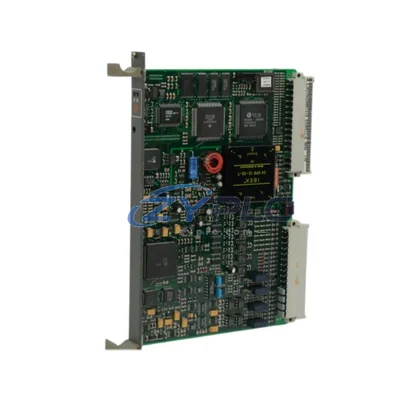
The ABB TAS01 is a precision turbine synchronization module engineered for the Unitrol excitation and generator control platform. Designed to meet the demanding requirements of industrial power generation and maintenance planning, the TAS01 delivers measurable improvements in equipment utilization, motor control accuracy, and overall plant energy efficiency. Whether integrated into a new installation or used as a verified replacement in an existing Unitrol system, the TAS01 enables operators to reduce idle operating load, tighten synchronization windows, and extend the operational lifespan of rotating machinery.
In modern industrial facilities where energy costs represent a significant share of operating expenditure, the ability to synchronize generators with precision directly translates into reduced fuel consumption, lower reactive power losses, and fewer grid disturbances. The TAS01 addresses these challenges by providing fast, accurate phase-angle and voltage matching before breaker closure, eliminating the energy spikes and mechanical stress associated with out-of-phase synchronization events.
Product Specification Table
| Parameter |
Specification / Value |
| Product SKU |
TAS01 |
| Brand |
ABB |
| Series |
Unitrol |
| Product Category |
Turbine Synchronization Module |
| Origin |
Switzerland (CH) |
| Application Environment |
Industrial Power Generation, Turbine Control, Generator Excitation Systems |
| Compatible Systems |
Unitrol 1020, Unitrol 1010, Unitrol 5000, ABB AC500 PLC platforms |
| Power Consumption |
Low-standby design; active only during synchronization sequences |
| Operating Efficiency |
High-accuracy phase matching; minimizes breaker re-close attempts |
| Energy Saving Value |
Reduces synchronization-related energy spikes; lowers reactive power losses |
| Communication Protocol |
Compatible with PROFIBUS, MODBUS RTU, and IEC 61850 gateway configurations |
| Warranty |
|
| Condition |
New / Tested & Verified before shipment |
System Compatibility and Application
The TAS01 does not operate in isolation — its full operational-efficiency potential is realized when it functions as part of a coordinated automation architecture. Within a typical Unitrol-based excitation system, the TAS01 works alongside the Unitrol 1020 automatic voltage regulator (AVR) to maintain terminal voltage stability during and after synchronization. The Unitrol 1020 continuously adjusts field excitation based on real-time feedback, ensuring that reactive power flow remains within optimal bounds once the generator is connected to the busbar.
On the drive side, ABB ACS880 variable frequency drives are commonly deployed on auxiliary systems — cooling fans, feedwater pumps, and compressors — that support the turbine’s operating environment. By coordinating the TAS01’s synchronization timing with ACS880 drive ramp profiles, plant engineers can sequence generator connection events to coincide with periods of reduced auxiliary load, further minimizing inrush current and energy demand peaks.
For broader plant-level condition monitoring, the TAS01 integrates naturally with ABB REF615 feeder protection relays and ABB REM615 motor protection relays, which provide real-time current, voltage, and power factor data to the control system. This data feeds into the ABB AC500 PLC — specifically modules such as the PM583-ETH CPU — which executes the supervisory logic governing when and how synchronization is initiated. The AC500’s high-speed I/O modules, including the AI843 analog input card and AO845A analog output card, handle the signal conditioning required for precise voltage and frequency measurement during the synchronization window.
Communication between the TAS01, the AC500 PLC, and upstream SCADA or DCS platforms is typically handled via the CI873A PROFIBUS DP communication interface module, enabling seamless data exchange with maintenance planning systems. For facilities using IEC 61850-based substation automation, gateway configurations allow the TAS01’s status and event data to be published to the station bus, supporting predictive maintenance workflows and energy audit trails.
HMI visualization is commonly provided through ABB CP635 or CP651 operator panels, giving control room personnel real-time visibility into synchronization status, excitation levels, and energy flow metrics. This closed-loop visibility is essential for identifying inefficiencies in the synchronization sequence and for benchmarking operating load across multiple generation units.
Maintenance and Replacement Notes
In thermal power plants, combined heat and power (CHP) facilities, and large industrial co-generation installations, the cost of a failed or delayed synchronization event extends well beyond the immediate energy spike. Mechanical stress on the generator shaft, premature wear on circuit breaker contacts, and the downstream disruption to production processes all contribute to elevated maintenance costs and reduced equipment availability.
The TAS01 addresses these issues by shortening the synchronization window — the period during which the generator is running but not yet connected to the grid — thereby reducing fuel consumption during idle paralleling. In facilities with multiple generation units, faster synchronization also improves production line rhythm (节拍) by ensuring that standby generators can be brought online quickly during peak demand periods without causing voltage disturbances that might trip sensitive process equipment.
From a predictive maintenance perspective, the TAS01’s integration with the AC500 PLC and REF615 protection relay enables the collection of synchronization event logs, including phase angle at closure, voltage differential, and frequency deviation. Over time, this data reveals trends that indicate degradation in the excitation system or mechanical issues with the prime mover — allowing maintenance teams to schedule interventions before unplanned outages occur. This shift from reactive to predictive maintenance directly reduces downtime and the associated unplanned downtime of emergency restarts.
All TAS01 units supplied by ZYPLC are tested prior to shipment using load simulation and functional verification procedures. Stock availability is maintained to support urgent replacement requirements, and the covers both component defects and functional performance, giving procurement and maintenance teams confidence in the reliability of the replacement.
Product Sourcing FAQ
Q1: How does the TAS01 contribute to measurable operational stability in a turbine control system?
The TAS01 reduces the duration of the pre-synchronization idle period by achieving accurate phase, voltage, and frequency matching more quickly than manual or less precise automatic methods. Shorter idle periods mean less fuel consumed per synchronization event. In facilities performing multiple synchronization cycles per day, the cumulative energy saving is significant.
Q2: Is the TAS01 compatible with existing Unitrol installations, and does replacement require system reconfiguration?
The TAS01 is designed for the Unitrol platform and is compatible with Unitrol 1010, Unitrol 1020, and Unitrol 5000 series configurations. In most cases, replacement is a direct swap with parameter verification rather than a full reconfiguration. ZYPLC recommends reviewing the existing parameter set against the TAS01 datasheet before installation to confirm compatibility with site-specific excitation settings.
Q3: What testing is performed on TAS01 units before shipment, and what does the cover?
Each TAS01 unit undergoes functional testing including signal input/output verification, communication interface checks, and synchronization logic validation before dispatch. The covers manufacturing defects and functional failures under normal operating conditions. It does not cover damage resulting from incorrect installation, overvoltage events beyond rated limits, or unauthorized modification.
Q4: Can the TAS01 be integrated with third-party SCADA or DCS platforms, or is it limited to ABB ecosystems?
While the TAS01 is for ABB Unitrol and AC500 environments, its support for standard industrial communication protocols — including PROFIBUS DP via the CI873A interface and MODBUS RTU — allows integration with third-party SCADA and DCS platforms. IEC 61850 compatibility via gateway modules further extends interoperability with modern substation Automation systems from multiple vendors.