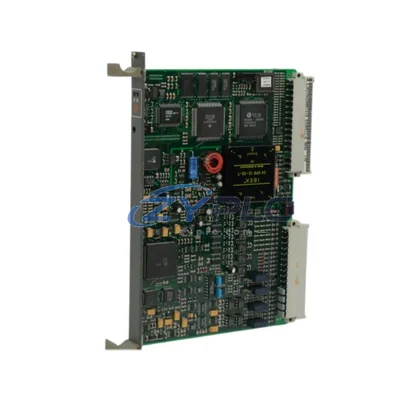
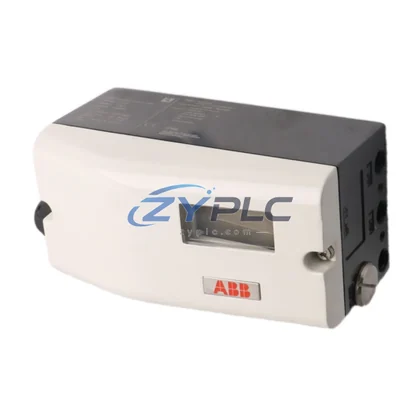
ABB TB840A 3BSE013228R1 Modulebus Cluster Modem for AC 800M
The ABB TB840A (3BSE013228R1) is a Modulebus Cluster Modem engineered specifically for the AC 800M controller platform — ABB’s flagship process automation controller deployed across power generation, oil & gas, chemical processing, water treatment, mining, metallurgy, and advanced manufacturing environments. Rather than functioning as a standalone peripheral, the TB840A occupies a critical position within the layered control architecture, serving as the communication backbone that binds the controller layer to distributed I/O clusters across extended physical installations. Understanding its role demands a system-level perspective: from the CPU module down through the I/O layer, across the network layer, and into the field device layer, the TB840A ensures that signal integrity, timing synchronization, and data throughput remain consistent under demanding industrial conditions.
In a fully realized AC 800M control system, the PM864A or PM866A CPU module resides at the top of the control hierarchy, executing control logic and managing real-time process data. The TB840A connects directly to this controller environment via the Modulebus — ABB’s proprietary high-speed internal communication bus — and extends that bus to remote I/O clusters located in satellite cabinets or field junction boxes. This cluster modem architecture allows engineers to distribute I/O modules such as the AI810, AO810V2, DI810, and DO810 across distances that would otherwise require costly fiber optic infrastructure or additional controller nodes. The result is a leaner, more cost-effective system topology without sacrificing deterministic communication performance.
From a redundancy design standpoint, the TB840A supports dual-modem configurations where a secondary TB840A unit operates in hot standby, ready to assume communication duties within milliseconds of a primary unit fault. This redundancy model aligns with the broader AC 800M philosophy of continuous availability — particularly important in processes where an unplanned shutdown carries significant safety or financial consequences. When paired with the TP830 Modulebus Cluster Port on the controller side, the TB840A forms a complete, fault-tolerant communication link that satisfies the uptime requirements of SIL-rated and high-availability process loops.
The power layer supporting the TB840A typically involves the SD821 or SD822 power supply modules, which deliver regulated 24 VDC to the controller backplane and connected communication modules. Proper power architecture — including redundant power feeds and appropriate fusing — is essential to maintaining the TB840A’s communication stability across temperature extremes and electrical noise environments common in heavy industrial settings. Engineers specifying the TB840A should account for the total power budget of the remote I/O cluster, ensuring that the combined load of all connected S800 I/O modules remains within the rated capacity of the local power supply.
At the human-machine interface layer, operators interact with the AC 800M system through ABB’s System 800xA distributed control system, which provides system integration of process graphics, alarm management, historian data, and asset monitoring. The TB840A’s role in this architecture is transparent to the operator but foundational to system performance: every process value displayed on an 800xA operator station, every alarm triggered by a field transmitter, and every setpoint adjustment sent to a control valve passes through the communication chain that the TB840A sustains. This system integration capability is what transforms a collection of discrete I/O modules into a coherent, manageable control system.
For engineering teams managing multi-cabinet installations, the TB840A simplifies cabinet layout by eliminating the need to route individual I/O wiring back to a central marshalling panel. Instead, field signals terminate locally at S800 I/O modules within the satellite cabinet, and the TB840A aggregates and transmits that data over the Modulebus cluster link to the main controller. This approach reduces wiring complexity, shortens commissioning time, and makes future I/O expansion straightforward — additional S800 modules can be added to the cluster without modifying the main controller cabinet or its wiring infrastructure.
Long-term maintenance efficiency is another key advantage of the TB840A within the AC 800M ecosystem. Because the module communicates its own diagnostic status to the 800xA system, maintenance teams receive early warning of communication degradation before it escalates to a process fault. Predictive maintenance workflows can be built around these diagnostics, scheduling module inspection or replacement during planned outages rather than responding reactively to unplanned failures. Combined with a covering manufacturing defects and functional performance, the TB840A represents a reliable, maintainable investment for facilities committed to long operational lifecycles.
RFQ-based availability for the TB840A 3BSE013228R1 is maintained to support both replacement sourcing after RFQ confirmation needs and planned project builds. Whether sourcing for a greenfield installation, a brownfield upgrade, or an emergency spare, units are tested, inspected, and documented prior to shipment to ensure compatibility with existing AC 800M system configurations.
Product Specification Table
| System Role |
Modulebus Cluster Modem — extends AC 800M Modulebus to remote S800 I/O clusters |
| Part Number |
TB840A / 3BSE013228R1 |
| Brand |
ABB |
| Series |
AC 800M / S800 I/O |
| Communication Bus |
Modulebus (ABB proprietary high-speed process bus) |
| Compatible Controllers |
PM864A, PM866A, PM891 (AC 800M series) |
| Compatible I/O Modules |
AI810, AO810V2, DI810, DO810, DI811, AI820 (S800 series) |
| Supply Voltage |
24 VDC (via backplane / SD821 / SD822 power supply) |
| Redundancy Support |
Dual-modem hot standby configuration supported |
| Cluster Port Counterpart |
TP830 Modulebus Cluster Port |
| Operating Temperature |
0°C to +55°C (standard industrial range) |
| Mounting |
DIN rail / S800 I/O cluster backplane |
| Origin |
Sweden |
| Product Category |
Industrial Communication Module — DCS / PLC Architecture |
| Warranty |
— covers manufacturing defects and functional performance |
System Compatibility Notes
A complete AC 800M control system built around the TB840A typically integrates the following coordinated components across its architecture layers:
At the controller layer, the PM864A or PM866A CPU module executes the control program and manages all Modulebus communication. The TP830 Modulebus Cluster Port on the controller side forms the upstream termination point for the TB840A’s cluster link, establishing the physical and logical boundary between the controller backplane and the remote I/O cluster. For high-availability applications, a redundant PM864A pair operates in lock-step, with the TB840A’s dual-modem capability mirroring this redundancy at the communication layer.
At the power layer, the SD821 and SD822 power supply modules provide regulated 24 VDC to the controller and I/O backplanes. Redundant power feeds — often sourced from separate UPS circuits — protect against single-point power failures that could otherwise interrupt the TB840A’s communication link and cascade into process upsets.
At the I/O layer, S800 modules including the AI810 (analog input), AO810V2 (analog output), DI810 (digital input), and DO810 (digital output) populate the remote cluster backplane. These modules interface directly with field instruments — transmitters, actuators, solenoid valves, and motor starters — and rely on the TB840A to relay their process data to the controller with deterministic timing.
At the network layer, the AC 800M system connects to the 800xA DCS environment via Industrial Ethernet, enabling plant-wide data integration, remote monitoring, and centralized alarm management. The TB840A’s role at the Modulebus layer is complementary to this Ethernet infrastructure, handling the lower-level controller-to-I/O communication that Ethernet is not optimized to perform in real-time process control contexts.
At the HMI layer, ABB System 800xA operator stations provide system integration of all process data flowing through the TB840A’s communication chain, presenting operators with unified process graphics, trend displays, and alarm lists that reflect the real-time state of the controlled process.
Industrial Application Notes
The TB840A finds application across a broad range of process industries where distributed I/O architecture is essential to managing geographically dispersed field devices from a centralized control room.
In power generation facilities — including thermal, hydro, and combined-cycle plants — the TB840A enables AC 800M controllers to manage boiler controls, turbine auxiliaries, and balance-of-plant systems distributed across large turbine halls and auxiliary buildings, without requiring a separate controller node at each location.
In oil & gas and petrochemical installations, the TB840A supports hazardous area I/O cluster designs where field signals from pressure transmitters, flow meters, and safety shutdown valves must be aggregated reliably and transmitted to the main control room. Its compatibility with SIL-rated system architectures makes it suitable for safety instrumented system (SIS) adjacent applications.
In water and wastewater treatment plants, the TB840A allows a single AC 800M controller to manage multiple pump stations, chemical dosing skids, and filtration units distributed across a treatment facility, reducing the total number of controllers required and simplifying the overall system architecture.
In mining and metallurgical operations, where control cabinets are exposed to vibration, dust, and wide temperature swings, the TB840A’s robust industrial design and diagnostic transparency support the high-availability requirements of continuous process operations such as ore crushing, flotation, and smelting.
In packaging and discrete manufacturing lines, the TB840A enables flexible I/O distribution that accommodates frequent line reconfigurations, allowing engineers to add or relocate I/O clusters without redesigning the main controller cabinet.
Product Compatibility FAQ
Q1: Is the TB840A 3BSE013228R1 compatible with all AC 800M controller variants, and can it be used in a redundant communication configuration?
The TB840A is compatible with the AC 800M controller family, including the PM864A, PM866A, and PM891 CPU modules, when used in conjunction with the TP830 Modulebus Cluster Port. Redundant communication is supported by installing a second TB840A in the remote I/O cluster, configured as a hot standby modem. In the event of a primary modem failure, the standby unit assumes communication duties automatically, maintaining process continuity without controller intervention. This configuration is recommended for all critical process loops where communication interruption would trigger a process upset or safety response.
Q2: What are the installation and commissioning requirements for integrating the TB840A into an existing AC 800M system?
The TB840A mounts on the S800 I/O cluster backplane and requires a stable 24 VDC supply from the local power module (SD821 or SD822). During commissioning, the module is recognized automatically by the AC 800M controller upon power-up, provided the cluster address is correctly set via the module’s address switches. No additional software licensing is required for standard Modulebus cluster communication. Engineers should verify cable length and signal integrity specifications for the Modulebus cluster link, particularly in installations where the remote cluster is located at the maximum supported distance from the controller cabinet. Diagnostic LEDs on the TB840A provide immediate visual feedback on communication status during commissioning and ongoing operation.
Q3: What does the cover, and what support is available for long-term spare parts management?
The covers manufacturing defects and verified functional failures under normal operating conditions, including Modulebus communication faults attributable to the module itself rather than external wiring or system configuration issues. Warranty claims are processed following functional testing and fault verification. For long-term spare parts management, maintaining at least one TB840A unit per AC 800M system as a cold spare is recommended practice, particularly for facilities with extended planned maintenance intervals. Inventory is maintained to support both immediate emergency replacement and planned project procurement, with units tested and documented prior to shipment to ensure drop-in compatibility with existing system configurations.