Allen-Bradley 1426-M5E-DNT Industrial Network Interface for PowerMonitor 5000 Systems: Bridging Energy Data Across the Smart Factory
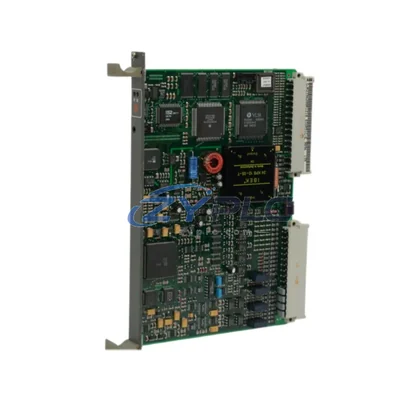
The Allen-Bradley 1426-M5E-DNT is a high-performance industrial power monitor from Rockwell Automation’s PowerMonitor 5000 series, engineered to deliver real-time energy metering and seamless multi-protocol connectivity across modern industrial networks. Combining EtherNet/IP and DeviceNet communication capabilities in a single compact unit, the 1426-M5E-DNT serves as a critical data node between field-level power distribution equipment and upper-level control, monitoring, and analytics systems — making it an indispensable component in smart factory, maintenance planning, and industrial IoT deployments.
Compatibility & Integration Notes
| Parameter |
Specification |
| SKU / Part Number |
1426-M5E-DNT |
| Brand / Manufacturer |
Allen-Bradley (Rockwell Automation) |
| Series |
PowerMonitor 5000 |
| Primary Protocol |
EtherNet/IP |
| Secondary Protocol |
DeviceNet |
| Interface Type |
Dual-port EtherNet/IP + DeviceNet |
| Network Compatibility |
Rockwell ControlLogix, CompactLogix, Studio 5000, FactoryTalk View, RSLinx Classic |
| Communication Speed |
10/100 Mbps (EtherNet/IP); 125/250/500 kbps (DeviceNet) |
| Metering Capability |
Voltage, Current, Power (kW/kVA/kVAR), Power Factor, Frequency, Energy (kWh) |
| System Application |
SCADA, HMI, MES, Energy Management, Smart Factory, Industrial IoT |
| Product Type |
Power Monitor / Energy Meter |
| Origin |
United States |
| Warranty |
warranty terms confirmed during quotation |
| Availability |
RFQ Available — Global Shipping |
Connected Automation Data Flow
In a typical smart factory deployment, the 1426-M5E-DNT sits at the intersection of power distribution and digital control infrastructure. At the field level, it continuously samples voltage and current signals from incoming power feeds — capturing real-time measurements of active power (kW), reactive power (kVAR), apparent power (kVA), power factor, and operating load (kWh) at scan rates fast enough to support demand management and fault detection.
These measurements are transmitted upstream via EtherNet/IP to a ControlLogix L7x or CompactLogix L3x PLC, where the Studio 5000 Logix Designer application processes the energy data alongside machine control logic. The PLC can trigger load-shedding routines, alarm outputs, or demand-response sequences based on configurable thresholds — all without requiring a separate maintenance planning controller. Simultaneously, the DeviceNet port on the 1426-M5E-DNT allows legacy field devices, such as DeviceNet-compatible motor starters, contactors, and distributed I/O modules like the 1734 POINT I/O or 1756 ControlLogix I/O, to participate in the same condition monitoring network without protocol conversion hardware.
At the supervisory level, FactoryTalk View SE or FactoryTalk View ME HMI panels pull live energy data from the 1426-M5E-DNT via the EtherNet/IP backbone, displaying real-time power dashboards, trend charts, and alarm banners to operators on the plant floor. For enterprise-level visibility, FactoryTalk Historian or third-party SCADA platforms — including Wonderware, Ignition by Inductive Automation, or Siemens WinCC — can subscribe to the device’s EtherNet/IP data tags via OPC-UA gateways or direct EtherNet/IP drivers, enabling plant-wide energy KPI reporting and ISO 50001 compliance tracking.
In multi-drive applications, the 1426-M5E-DNT monitors power quality at the input of PowerFlex 755 or PowerFlex 525 variable frequency drives, detecting harmonic distortion, voltage sags, and power factor degradation that could indicate drive stress or upstream supply issues. When integrated with a 1783-ETAP EtherNet/IP tap or a Stratix 5700 managed industrial switch, the device participates in a Device Level Ring (DLR) topology, ensuring network redundancy and sub-millisecond failover — critical for continuous process environments where a network interruption cannot be tolerated. Edge computing nodes, such as the Allen-Bradley 1756-EN4TR ControlLogix EtherNet/IP bridge or a third-party edge gateway running Kepware KEPServerEX, can aggregate data from multiple 1426-M5E-DNT units across a facility and forward normalized datasets to cloud analytics platforms for predictive maintenance and maintenance planning.
Solving Data Isolation in Industrial Sites
One of the most persistent challenges in industrial maintenance planning is data isolation — power meters that log locally but cannot share data with the control system, SCADA platform, or enterprise ERP in real time. The 1426-M5E-DNT directly addresses this by acting as a native EtherNet/IP device, fully discoverable by RSLinx Classic or RSLinx Enterprise, and mappable into the ControlLogix tag database without custom drivers or middleware. This eliminates the protocol translation layer that traditionally separates energy metering from machine control.
For sites with mixed legacy and modern infrastructure, the dual-protocol design — EtherNet/IP plus DeviceNet — means the 1426-M5E-DNT can bridge older DeviceNet field networks to modern EtherNet/IP backbones, reducing the need for costly network upgrades while still delivering real-time data to upper systems. Plant engineers can configure alarm thresholds, demand intervals, and data logging parameters directly through the device’s web interface or via Studio 5000 Add-On Instructions (AOIs), making commissioning fast and repeatable across multiple installations.
Remote diagnostics are supported through the EtherNet/IP port, allowing maintenance teams to interrogate device health, communication status, and measurement accuracy from a central control room or even remotely via a secure VPN connection — without dispatching technicians to the switchgear room. This capability is especially valuable in large facilities with distributed power distribution panels, substations, or remote pump stations where physical access is time-consuming and costly.
For production transparency and OEE improvement initiatives, the 1426-M5E-DNT enables per-machine or per-line energy sub-metering, giving operations teams the granular data needed to identify unplanned downtime, benchmark equipment efficiency, and validate the ROI of operational-efficiency projects. When combined with FactoryTalk EnergyMetrix or a custom MES integration, the device supports automated energy reporting aligned with production schedules — closing the loop between operating load and manufacturing output.
Industrial Connectivity FAQ
Q1: Does the 1426-M5E-DNT support simultaneous EtherNet/IP and DeviceNet communication?
Yes. The 1426-M5E-DNT is designed for concurrent dual-protocol operation. The EtherNet/IP port handles high-speed data exchange with PLCs, SCADA systems, and HMI panels, while the DeviceNet port maintains connections to legacy field devices — both networks operate independently and simultaneously without performance degradation.
Q2: What is the typical communication latency for real-time energy data over EtherNet/IP?
In a properly configured EtherNet/IP network using a Stratix 5700 or equivalent managed switch with QoS enabled, the 1426-M5E-DNT delivers cyclic data updates with latencies typically under 10 ms at standard RPI (Requested Packet Interval) settings of 10–20 ms. For demand management applications requiring faster response, RPI can be reduced to as low as 2 ms depending on network load and PLC scan time.
Q3: Is the 1426-M5E-DNT compatible with third-party SCADA systems outside the Rockwell ecosystem?
Yes. Because EtherNet/IP is an open industrial Ethernet standard based on CIP (Common Industrial Protocol), the 1426-M5E-DNT can be integrated with any SCADA or HMI platform that supports EtherNet/IP or OPC-DA/UA — including Ignition by Inductive Automation, Wonderware System Platform, Siemens WinCC, and GE iFIX. An OPC server such as Kepware KEPServerEX with the EtherNet/IP driver provides a straightforward integration path.
Q4: What does the warranty terms confirmed during quotation cover, and how is the unit tested before shipment?
Every 1426-M5E-DNT unit supplied by ZYPLC undergoes pre-shipment functional testing covering communication port integrity, measurement accuracy verification, and firmware version confirmation. The warranty terms confirmed during quotation covers manufacturing defects, communication failures, and measurement inaccuracies under normal operating conditions. Our technical team provides post-sale support for commissioning, network configuration, and integration troubleshooting throughout the warranty period.