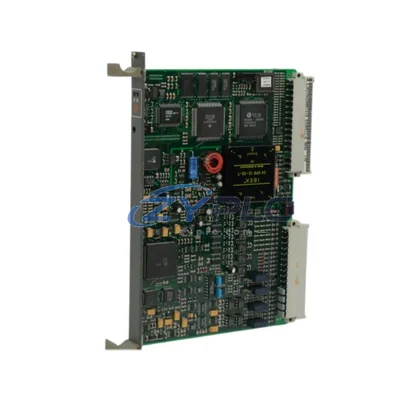
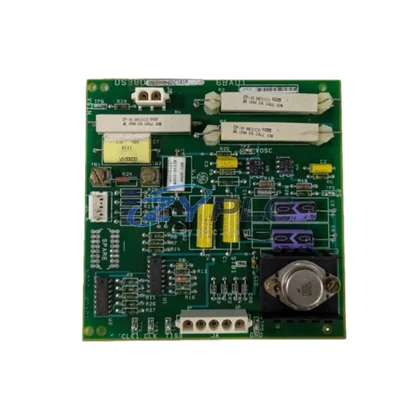
Allen-Bradley 81001-451-82-R PCB Board for 8100
In a fully integrated industrial control architecture, every layer — from the supervisory control and data acquisition (SCADA) level down to the field device and actuator level — depends on the reliability and compatibility of its core hardware components. The Allen-Bradley 81001-451-82-R PCB Circuit Board is engineered to serve as a foundational control-layer component within the Allen-Bradley 8100 Series platform, delivering consistent signal processing, stable electrical performance, and long-term maintainability across complex automation environments.
The 8100 Series architecture is designed around modular, rack-based control systems where individual PCB boards handle dedicated functions — analog signal conditioning, digital I/O interfacing, communication bridging, or power regulation — within a unified backplane structure. The 81001-451-82-R occupies a critical position in this hierarchy, ensuring that upstream control commands from the CPU module are accurately translated into downstream field-level actions, while simultaneously feeding process feedback signals back up through the I/O layer for real-time monitoring and closed-loop control.
System architects integrating the 81001-451-82-R into a new or retrofit control panel will find that its form factor and connector pinout align with the standard 8100 Series rack and backplane specifications, simplifying installation and reducing commissioning time. When paired with compatible Allen-Bradley power supply modules — such as those in the 1771 or 1746 family — the board operates within a stable DC bus environment that minimizes electrical noise and protects sensitive signal circuits from voltage transients common in heavy industrial settings.
From a network and communication perspective, the 8100 Series platform supports integration with Allen-Bradley’s broader ControlLogix and SLC 500 ecosystems. Control engineers frequently deploy the 81001-451-82-R alongside communication gateway modules that bridge legacy serial protocols (RS-232, RS-485) with modern Ethernet/IP or DeviceNet networks, enabling seamless data exchange between older 8100 Series panels and contemporary SCADA or MES systems. This system integration capability ensures that the board does not become an isolated legacy component but instead participates fully in the plant-wide data architecture.
At the human-machine interface layer, operators interacting with PanelView terminals or third-party HMI displays rely on the accurate and timely signal processing performed by boards like the 81001-451-82-R. Any degradation in PCB performance — whether from component aging, thermal stress, or electrical surge — directly impacts the quality of process visualization and operator decision-making. Maintaining a verified, tested replacement board in inventory is therefore a standard practice in facilities operating continuous or semi-continuous processes where downtime carries significant operational cost.
For maintenance engineers, the modular nature of the 8100 Series means that the 81001-451-82-R can be swapped out during a scheduled maintenance window without requiring full system shutdown, provided that proper lockout/tagout procedures are followed and the replacement board has been pre-tested and verified against the original specification. This hot-swap-friendly architecture, combined with the board’s compatibility with standard Allen-Bradley terminal blocks and wiring harnesses, reduces mean time to repair (MTTR) and supports lean maintenance strategies.
Long-term supply chain reliability is a key consideration for facilities that have standardized on the 8100 Series platform. As original equipment manufacturers phase out legacy components, sourcing verified replacement PCBs from specialist industrial suppliers becomes essential for sustaining system uptime. Each 81001-451-82-R unit supplied by ZYPLC undergoes functional testing and is backed by a, providing procurement teams and maintenance managers with the confidence needed to plan multi-year maintenance schedules without the risk of receiving untested or counterfeit components.
Product Specification Table
| Parameter |
Specification |
| System Role |
Control-Layer PCB Circuit Board — 8100 Series Rack Architecture |
| SKU / Part Number |
81001-451-82-R |
| Brand / Manufacturer |
Allen-Bradley (Rockwell Automation) |
| Compatible Series |
Allen-Bradley 8100 Series |
| Product Type |
PCB Circuit Board |
| Electrical Supply |
DC Bus (compatible with 8100 Series rack power supply) |
| Signal Interface |
Backplane connector — standard 8100 Series pinout |
| Communication Capability |
system integration via serial and network gateway modules |
| Installation Environment |
Industrial control cabinet, DIN rail or rack-mount enclosure |
| Operating Temperature |
0°C to 60°C (typical industrial PCB range) |
| Country of Origin |
United States |
| Warranty |
— functional test verified |
System Compatibility Notes
The 81001-451-82-R is rarely deployed in isolation. In a typical 8100 Series control panel, it operates alongside a suite of coordinated components that together form a complete automation solution. At the processing core, an Allen-Bradley SLC 5/05 or SLC 5/04 CPU module manages program execution and coordinates I/O scanning across the backplane. Power is supplied by a dedicated 1746-P4 or equivalent power supply module, which conditions incoming AC mains into the regulated DC voltages required by the PCB and its neighboring modules.
On the I/O side, 1746-IB16 digital input modules and 1746-OB16 digital output modules handle discrete field signals — limit switches, solenoid valves, motor contactors — while 1746-NI4 analog input modules process 4–20 mA signals from pressure transmitters, flow meters, and temperature sensors. These I/O modules communicate with the 81001-451-82-R through the shared backplane bus, ensuring synchronized data exchange without the latency introduced by external wiring.
For facilities requiring network connectivity, a 1747-SCNR ScanPort communication module or a 1761-NET-ENI Ethernet interface adapter bridges the 8100 Series rack to plant-level Ethernet/IP networks, enabling integration with FactoryTalk View SCADA platforms and historian databases. Terminal block assemblies — such as Allen-Bradley 1492-series wiring systems — provide the field-side termination points that connect the PCB’s I/O circuits to field cables, maintaining signal integrity across long cable runs in electrically noisy environments.
Industrial Application Notes
The Allen-Bradley 81001-451-82-R PCB board finds application across a broad range of process and discrete manufacturing industries. In power generation and electrical distribution facilities, it supports the control of switchgear, transformer protection relays, and load management systems where signal accuracy and board reliability are non-negotiable. In petrochemical and refinery environments, the board is integrated into emergency shutdown (ESD) panels and distributed control system (DCS) interfaces, where its stable electrical performance under high-temperature and high-vibration conditions is essential.
Water and wastewater treatment plants rely on 8100 Series architecture for pump station control, chemical dosing systems, and SCADA-linked remote terminal units (RTUs). The 81001-451-82-R’s compatibility with standard Allen-Bradley I/O modules makes it straightforward to integrate into existing multi-rack control rooms without requiring full system replacement. In mining and metallurgical operations, the board supports conveyor control systems, crusher automation, and ore processing lines where continuous operation and rapid fault recovery are critical to production targets.
Packaging and material handling lines in food and beverage or consumer goods manufacturing also benefit from the 8100 Series platform’s modular architecture. The 81001-451-82-R enables precise coordination between servo drives, vision systems, and reject mechanisms, supporting high-speed production with minimal downtime. Across all these applications, the board’s role as a stable, tested, and warrantied replacement component ensures that maintenance teams can restore system functionality quickly and confidently.
Product Compatibility FAQ
Q1: Is the Allen-Bradley 81001-451-82-R compatible with all 8100 Series rack configurations?
The 81001-451-82-R is designed for the Allen-Bradley 8100 Series rack and backplane architecture. Compatibility depends on the specific rack slot assignment and system configuration. Engineers should verify the original system documentation and compare connector pinout and board revision against the installed base before installation. ZYPLC’s technical team can assist with compatibility verification prior to purchase.
Q2: How does the apply to this PCB board, and what does it cover?
Every 81001-451-82-R unit supplied by ZYPLC is functionally tested prior to shipment and covered by a against defects in materials and workmanship. If the board fails under normal operating conditions within the warranty period, ZYPLC will provide a replacement or repair at no additional cost. The warranty does not cover damage resulting from incorrect installation, overvoltage events, or physical mishandling.
Q3: Can this board be installed without taking the entire 8100 Series system offline?
In many 8100 Series configurations, individual PCB boards can be replaced during a scheduled maintenance window with minimal system disruption, provided that proper electrical isolation procedures are followed. However, whether a hot-swap or cold-swap approach is appropriate depends on the specific system architecture, the criticality of the signals handled by the board, and the safety requirements of the facility. ZYPLC recommends consulting the original Allen-Bradley system documentation and engaging a qualified control systems engineer for installation planning.