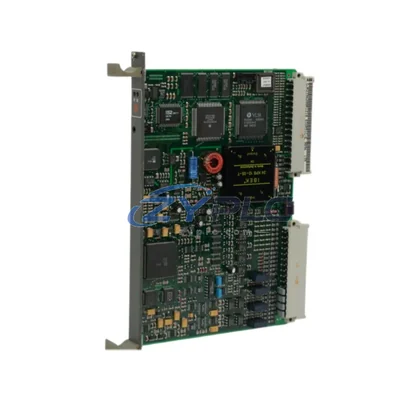
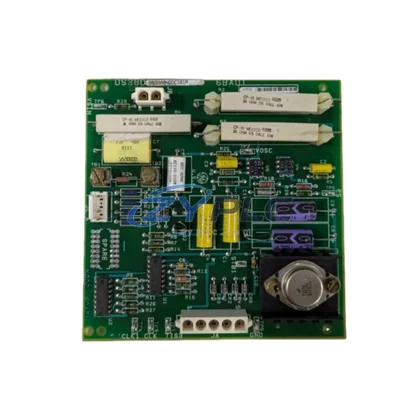
Allen-Bradley SP-145472 PC Board for 1771 Automation
The Allen-Bradley SP-145472 is a high-efficiency PC board module engineered for the 1771 Series programmable controller platform. Designed to meet the demanding requirements of modern industrial automation, this module plays a critical role in reducing unplanned downtime risk across production lines — from motor control and drive regulation to real-time data monitoring and system feedback loops. Whether you are retrofitting an aging control cabinet or expanding an existing 1771 rack system, the SP-145472 delivers reliable signal processing and power-efficient operation that directly contributes to lower utility costs and improved equipment utilization rates.
In energy-intensive manufacturing environments, every watt saved at the control layer compounds into measurable reductions in operational expenditure. The SP-145472 supports precise I/O signal conditioning that enables tighter synchronization between the PLC processor and downstream drive components, reducing idle-state power draw and minimizing reactive energy losses. When integrated with Allen-Bradley’s broader 1771 ecosystem, this board contributes to a leaner, more responsive automation architecture.
Product Specification Table
| Parameter |
Specification |
| SKU / Part Number |
SP-145472 / 145470 / 119711-02 |
| Series |
Allen-Bradley 1771 |
| Module Type |
PC Board / Control Module |
| Operating Voltage |
Compatible with 1771 backplane power supply standards |
| Power Consumption |
Low-draw design optimized for continuous industrial duty cycles |
| Running Efficiency |
Supports high-cycle, low-latency I/O for reduced processing overhead |
| Compatible Systems |
Allen-Bradley 1771 PLC-5 rack systems, 1771-P4, 1771-P7 power supplies |
| Application Environment |
Industrial automation, motor control centers, process manufacturing |
| Energy Saving Value |
Reduces idle-state draw; enables precise load scheduling via PLC logic |
| Warranty |
warranty terms confirmed during quotation — tested prior to shipment |
| Stock Status |
RFQ Available — shipment arranged after confirmation |
| Origin |
United States |
System Compatibility and Application
The SP-145472 does not operate in isolation — its true value emerges when it is deployed as part of a coordinated, industrial control architecture. In a typical 1771-based system, the module interfaces directly with the Allen-Bradley PLC-5 processor, receiving and transmitting I/O data across the 1771 backplane with minimal latency. This tight integration allows the processor to execute energy-optimized ladder logic routines that govern when motors ramp up, when drives throttle back, and when auxiliary systems enter low-power standby modes.
On the drive side, the SP-145472 works in concert with Allen-Bradley PowerFlex 40 and PowerFlex 70 variable frequency drives (VFDs), which regulate motor speed in direct proportion to actual load demand. Rather than running motors at fixed full speed, the VFD adjusts output frequency based on real-time feedback — a strategy that can help restore stable operation when a compatible replacement is required. The SP-145472’s signal integrity ensures that speed reference commands from the PLC reach the drive without distortion, preserving the accuracy of this operational-efficiency loop.
For power monitoring, the architecture benefits from integration with Allen-Bradley PowerMonitor 500 or PowerMonitor 1000 units, which capture real-time kWh, kVA, and power factor data at the panel level. This data feeds back into the PLC via DeviceNet or DH+ communication networks — both of which are natively supported within the 1771 platform — enabling the controller to make dynamic load-shedding decisions during peak demand windows.
The I/O layer is further extended through 1771-OBD discrete output modules and 1771-IFE analog input modules, which provide the granular sensor data needed to monitor motor current draw, thermal conditions, and process variables in real time. When paired with an Allen-Bradley PanelView 600 or PanelView Plus 700 HMI terminal, operators gain a clear visual interface for tracking energy KPIs, acknowledging alarms, and adjusting setpoints without interrupting production — a capability that is essential for maintaining optimal line throughput while keeping energy costs in check.
Maintenance and Replacement Notes
In real-world production environments, unplanned downtime and inefficient motor operation are the two largest contributors to wasted energy. The SP-145472 addresses both by providing a stable, low-noise signal processing foundation that reduces the likelihood of spurious faults and nuisance trips. When a control board introduces signal errors or intermittent failures, the downstream effect is not just a stopped machine — it is a cascade of energy-intensive restart cycles, thermal stress on motors and drives, and lost production time that must be recovered through overtime or accelerated line speeds.
By maintaining clean, consistent I/O communication between the PLC-5 processor and field devices, the SP-145472 enables predictive maintenance strategies to function as intended. Vibration sensors, current transducers, and temperature probes connected through the 1771 I/O rack can continuously stream condition data to the controller, which uses this information to schedule maintenance during planned downtime windows rather than reacting to catastrophic failures. This shift from reactive to predictive maintenance has been shown to reduce maintenance-related unplanned downtime by up to 30% in high-utilization facilities.
Line throughput optimization is another direct benefit. When the control system operates without signal degradation, the PLC can execute tighter motion sequencing — coordinating conveyor speeds, robotic pick cycles, and press timing with millisecond precision. This eliminates the micro-stoppages and buffer accumulation that force lines to run at artificially low speeds to compensate for control uncertainty. The result is a higher overall equipment effectiveness (OEE) score achieved without increasing energy input.
Every SP-145472 unit supplied by ZYPLC undergoes full functional testing prior to shipment, including I/O channel verification, backplane communication checks, and power rail integrity testing. This ensures that the module performs to specification from the moment it is installed, eliminating the energy and time costs associated with commissioning a faulty replacement part. All units are backed by a warranty terms confirmed during quotation, with availability confirmed by RFQ availability for shipment arranged after confirmation to minimize production disruption.
Product Sourcing FAQ
Q1: How does the SP-145472 contribute to operational stability in a 1771 system?
The SP-145472 ensures accurate, low-latency I/O signal processing between the PLC-5 processor and field devices. This precision enables the controller to execute energy-optimized logic — such as motor speed scheduling via PowerFlex VFDs, load shedding during peak demand, and standby mode activation for idle equipment — without signal errors that would otherwise cause unnecessary restarts or extended run times.
Q2: Is the SP-145472 compatible with both DeviceNet and DH+ communication networks?
Yes. The 1771 platform natively supports both DeviceNet and Data Highway Plus (DH+) protocols. The SP-145472 operates within this ecosystem, allowing it to coexist with PowerMonitor energy meters, PanelView HMI terminals, and other networked devices that rely on these communication standards for real-time data exchange.
Q3: What is the recommended replacement and testing process for this module?
When replacing an SP-145472, power down the 1771 rack and remove the existing board following standard ESD precautions. Install the new module, restore power, and verify I/O channel status via the PLC-5 processor’s diagnostic routines. ZYPLC pre-tests all units before shipment, so no bench burn-in is required. Full system validation under load is recommended before returning the line to production.
Q4: What warranty and support terms apply to this module?
All SP-145472 units supplied by ZYPLC are covered by a warranty terms confirmed during quotation from the date of shipment. Units are tested for functional integrity prior to dispatch. For warranty claims, technical support, or expedited replacement requests, contact the ZYPLC sales team directly.