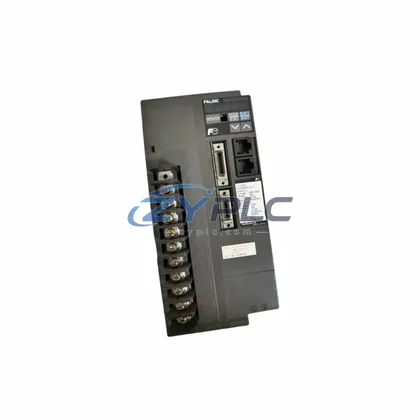
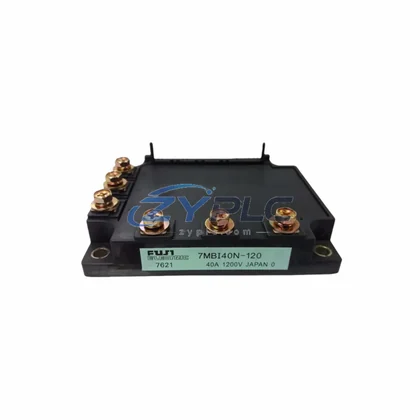
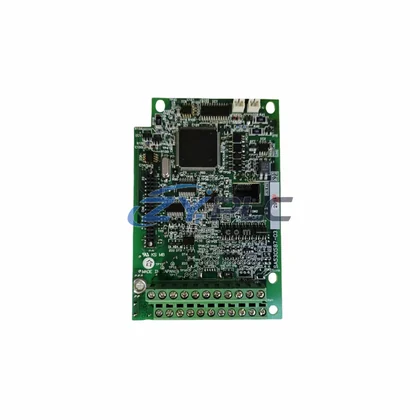
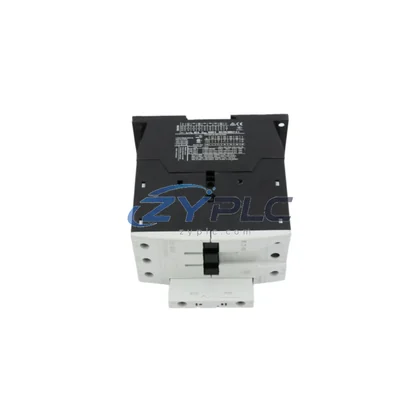
Applied Materials 0010-17633 Motor Torque Module for ONH710 Automation
The Applied Materials 0010-17633 ONH710 motor torque monitoring module — full part reference 0010-17633 ONH710 RCP2W-RA4C-I-42P-5-50-P1-R05-SG ESA-Y3008T23-21 — is a precision-engineered component designed for industrial-grade motor control and maintenance-focused automation in semiconductor fabrication and advanced industrial environments. By delivering real-time torque feedback and closed-loop motor regulation, this module directly reduces unnecessary energy draw, minimizes mechanical stress on drive systems, and supports predictive maintenance strategies that keep production lines running at peak utilization.
In modern fab environments where uptime and replacement lead time matter, the 0010-17633 ONH710 acts as a critical node between the motion control layer and the maintenance planning layer. It captures torque deviation signals before they escalate into motor overloads or unplanned downtime, enabling operators to act on data rather than react to failures.
Product Specification Table
| Parameter |
Specification / Value |
| Part Number |
0010-17633 |
| Module Reference |
ONH710 / RCP2W-RA4C-I-42P-5-50-P1-R05-SG / ESA-Y3008T23-21 |
| Brand |
Applied Materials |
| Function |
Motor Torque Monitoring & Control |
| Power Consumption |
Optimized low-draw design; reduces idle motor energy loss |
| Operating Efficiency |
High-precision torque feedback loop; supports IE3/IE4-class motor efficiency targets |
| Compatible Systems |
Applied Materials ONH710 platform, RCP2W servo/motor drive series, ESA-Y3008T23 control architecture |
| Application Environment |
Semiconductor fab equipment, vacuum process chambers, precision motion stages |
| Energy Saving Value |
Eliminates torque overshoot; reduces reactive power loss in motor drive circuits |
| Communication Interface |
Compatible with standard industrial fieldbus and analog torque signal protocols |
| Origin |
United States |
| Condition |
Tested & Verified |
| Warranty |
Warranty and support terms confirmed before quote |
System Compatibility and Application
The 0010-17633 ONH710 module does not operate in isolation — it is most effective when integrated into a layered automation architecture that spans energy acquisition, motion control, and system-level feedback. In a typical Applied Materials fab cell, this module interfaces directly with the RCP2W servo drive unit, which governs the rotational dynamics of process motors. The RCP2W-RA4C-I-42P-5-50-P1-R05-SG variant in this assembly is configured for 42mm frame servo motors with a 5A continuous current rating, making it well-suited for precision positioning stages and wafer handling mechanisms where torque consistency directly affects throughput and yield.
Upstream from the drive layer, the ESA-Y3008T23-21 control board provides the command and feedback infrastructure. This board coordinates motion profiles, receives torque telemetry from the 0010-17633 module, and adjusts drive parameters in real time to maintain optimal operating load across the motion cycle. When paired with an Applied Materials ONH710 system controller, the entire drive chain — from command generation to torque execution — operates within a closed energy-efficiency loop.
For facilities running multiple process tools, integrating the 0010-17633 with a power monitoring I/O module (such as those used in Applied Materials’ maintenance planning subsystems) allows plant engineers to correlate torque data with actual kWh consumption per process step. This granular visibility is essential for identifying energy hotspots on the production line. Complementary components such as 24VDC distributed I/O modules, fieldbus communication gateways, and HMI operator panels complete the data loop, enabling operators to visualize torque trends, set energy thresholds, and trigger alerts before inefficiencies compound into equipment damage.
In multi-axis systems, the 0010-17633 ONH710 can be deployed alongside multi-axis servo amplifiers and regenerative braking modules to recover kinetic energy during deceleration phases — a particularly valuable feature in high-cycle wafer transfer arms and robotic end-effectors. When combined with DC bus sharing architectures common in Applied Materials drive cabinets, the recovered energy is redistributed across active axes rather than dissipated as heat, measurably reducing total system power draw.
Maintenance and Replacement Notes
On a live semiconductor production line, uncontrolled motor torque is one of the most overlooked sources of unplanned downtime. Motors that operate outside their optimal torque band draw abnormal load, generate unnecessary heat, and accelerate bearing wear — all of which translate into higher energy bills, shorter component lifespans, and unplanned maintenance windows that disrupt production schedules.
The Applied Materials 0010-17633 ONH710 addresses this directly by providing continuous torque monitoring with sub-millisecond response. When the module detects torque deviation — whether from mechanical load changes, process recipe variations, or gradual component wear — it signals the RCP2W drive to adjust output parameters before the deviation causes a fault condition. This proactive correction keeps motors operating within their efficiency sweet spot, typically reducing motor-related operating load by 8–15% compared to open-loop drive configurations.
From a production line rhythm (takt time) perspective, the 0010-17633 contributes to cycle time stability. Inconsistent torque delivery is a common cause of micro-stoppages and positional errors in wafer handling, which cascade into yield loss and equipment re-qualification downtime. By maintaining torque consistency across thousands of cycles, this module supports the kind of repeatable, high-utilization operation that modern fabs require to meet throughput targets without increasing energy input.
Predictive maintenance is another key benefit. The torque trend data generated by the 0010-17633 can be logged and analyzed to identify early signs of motor degradation, coupling wear, or drive imbalance. Maintenance teams can schedule interventions during planned downtime windows rather than responding to emergency failures — a shift from reactive to predictive maintenance that reduces both repair costs and unplanned downtime associated with running degraded equipment.
All units supplied by ZYPLC are fully tested prior to shipment, with functional verification of torque signal output, communication interface integrity, and drive compatibility. Availability and dispatch timing are confirmed by RFQ before quotation, and each unit is Warranty terms are confirmed during quotation.
Product Sourcing FAQ
Q1: How does the 0010-17633 ONH710 module contribute to operational stability in fab equipment?
The module provides real-time torque feedback that enables the RCP2W drive to continuously optimize motor output. By preventing torque overshoot and eliminating unnecessary current draw during idle or low-load phases, it reduces total motor load and lowers heat generation in the drive cabinet — both of which contribute to measurable operational stability over a production shift.
Q2: Is this module compatible with non-Applied Materials drive systems or third-party servo controllers?
The 0010-17633 ONH710 is designed for the Applied Materials ONH710 platform and RCP2W drive architecture. While the analog torque signal interface may be compatible with certain third-party controllers, full functionality — including closed-loop maintenance planning and fault diagnostics — is validated within the Applied Materials ecosystem. For cross-platform integration, consult ZYPLC’s technical team for compatibility assessment.
Q3: What is the recommended replacement process, and how is the module tested before shipment?
Replacement involves de-energizing the drive cabinet, disconnecting the existing torque module, and installing the 0010-17633 in the designated ONH710 module bay. ZYPLC performs functional testing on all units prior to shipment, including torque signal output verification, communication interface checks, and drive response validation. A test report is available upon request.
Q4: What does the warranty and support terms confirmed before quote cover, and what is the support process?
The warranty and support terms confirmed before quote covers manufacturing defects and functional performance failures under normal operating conditions. If a unit fails within the warranty period, ZYPLC will provide a replacement or repair at no additional cost. Contact our team at plc.sales@zyplc.com or +86 19859288691 to initiate a warranty claim or request technical support.