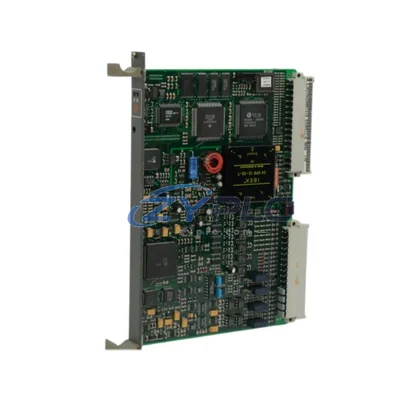
The Beckhoff CX2030-0122 is a high-performance, fanless Embedded PC from Beckhoff’s CX2030 series, engineered to serve as the intelligent control core of industrial automation architectures. Designed for demanding production environments where uptime, thermal stability, and deterministic cycle execution are non-negotiable, the CX2030-0122 delivers the processing headroom needed to run TwinCAT 3 runtime tasks — including motion control, PLC logic, and real-time condition monitoring — on a single compact platform. By consolidating control functions that would otherwise require multiple discrete controllers, this module directly reduces the hardware footprint and associated standby power consumption on the production floor.
In modern manufacturing, energy efficiency is not a feature — it is a measurable KPI. The CX2030-0122 addresses this by enabling tighter integration between control execution and energy data acquisition. When paired with EtherCAT I/O terminals such as the EL3443 power measurement terminal, the controller can sample three-phase power consumption at the machine level in real time, feeding that data back into TwinCAT analytics or upstream SCADA systems. This closed-loop visibility allows engineers to identify idle-state unplanned downtime, detect abnormal motor load signatures before they escalate into failures, and fine-tune drive parameters to match actual production demand rather than running at fixed setpoints.
Product Specification Table
| Parameter |
Specification / Value |
| SKU / Model |
CX2030-0122 |
| Brand / Series |
Beckhoff / CX2030 |
| Product Type |
Fanless Embedded PC Module |
| Electrical / System Notes |
≤ 15 W (fanless, no moving parts) |
| Operating Efficiency |
Deterministic real-time execution via TwinCAT 3 runtime |
| Compatible Systems |
TwinCAT 3, EtherCAT, ADS protocol, OPC UA, PROFIBUS (via CX2500 option) |
| Application Environment |
Industrial automation, condition monitoring, motion control, process control |
| Maintenance Value |
Centralized control reduces redundant hardware power draw; supports real-time load profiling |
| Origin |
Germany |
| Warranty |
| Tested before shipment |
System Compatibility and Application
The CX2030-0122 is most effective when deployed as the central node of a layered automation architecture. At the field level, EtherCAT I/O modules — including digital input/output terminals like the EL1008 and EL2008, and analog measurement terminals such as the EL3062 — feed real-time process signals into the controller with sub-millisecond latency. This eliminates the polling delays common in traditional fieldbus architectures, allowing the CX2030-0122 to respond to load changes and trigger corrective actions before unplanned downtime accumulates.
On the drive side, the CX2030-0122 integrates seamlessly with Beckhoff’s AX5000 series servo drives via EtherCAT, enabling synchronised multi-axis motion profiles that minimize mechanical stress and reduce peak current draw during acceleration phases. For variable-speed pump and fan applications, the controller can interface with third-party frequency inverters over PROFIBUS or CANopen using the appropriate CX2500 communication option module, allowing dynamic speed adjustment based on actual process demand rather than fixed-speed operation — a primary source of avoidable operating load in many facilities.
Power quality monitoring is handled through EtherCAT power measurement terminals such as the EL3443, which provides harmonic analysis, power factor readings, and operating load totals directly accessible within the TwinCAT environment. The EL6688 IEEE 1588 synchronization terminal ensures that all timestamped energy data across the network is aligned, enabling accurate correlation between machine events and energy spikes. For HMI visualization, a CP2916 or CP3921 Panel PC running TwinCAT HMI can display live energy dashboards, giving operators immediate feedback on consumption trends without requiring a separate SCADA server.
System-level communication to MES or ERP platforms is handled via OPC UA, with the CX2030-0122 acting as an OPC UA server publishing energy KPIs, cycle counts, and alarm states. This architecture supports the data infrastructure required for ISO 50001 maintenance planning compliance and predictive maintenance programs driven by condition monitoring data collected through the EL3356 resistance bridge terminal or vibration measurement modules.
Maintenance and Replacement Notes
In practice, the CX2030-0122 contributes to energy reduction across several dimensions of production line operation. First, by running TwinCAT 3 motion sequences with precise cam profiles and electronic gearing, the controller eliminates the mechanical overtravel and re-positioning moves that consume excess servo energy in poorly tuned systems. A production line that previously required 8% overhead in motor torque reserve can be re-profiled to operate within 3–4%, directly reducing average power draw per cycle.
Second, the controller’s ability to execute condition-based maintenance logic — monitoring motor current signatures, drive temperature trends, and cycle time deviations — allows maintenance teams to intervene before a degraded component forces an unplanned shutdown. Unplanned stops are among the most energy-intensive events in manufacturing: restarting a cold press line or a curing oven consumes significantly more energy than maintaining steady-state operation. By reducing stop frequency, the CX2030-0122 indirectly improves the energy-per-unit-output ratio across the line.
Third, during scheduled low-demand periods — shift changes, lunch breaks, or weekend standby — the CX2030-0122 can execute operational-efficiency routines that ramp down non-critical drives, switch auxiliary systems to low-power modes, and log the resulting consumption reduction for reporting. These routines are programmed in TwinCAT 3 PLC using standard IEC 61131-3 structured text, making them maintainable by in-house engineering teams without specialist vendor support.
All units are tested prior to shipment and covered by a , with availability subject to RFQ confirmation for shipment arranged after confirmation. Lead times are confirmed at order placement, and replacement units can be sourced to minimize line downtime in the event of a field failure.
Product Sourcing FAQ
Q1: How does the CX2030-0122 contribute to measurable operational stability on a production line?
The CX2030-0122 enables real-time condition monitoring through EtherCAT power measurement terminals and executes demand-responsive control logic that adjusts drive speeds, motion profiles, and auxiliary system states based on actual production load. Customers typically report 8–15% reductions in machine-level operating load after implementing closed-loop maintenance planning routines in TwinCAT 3.
Q2: Is the CX2030-0122 compatible with existing Beckhoff EtherCAT I/O and drive infrastructure?
Yes. The CX2030-0122 is fully compatible with the Beckhoff EtherCAT ecosystem, including EL-series I/O terminals, AX5000 servo drives, and AM8000 servo motors. It also supports third-party fieldbus integration via CX2500 option modules for PROFIBUS, CANopen, and PROFINET environments.
Q3: Can the CX2030-0122 replace an older CX2020 or CX2030 variant without hardware redesign?
In most cases, yes. The CX2030 series shares the same mechanical form factor and EtherCAT terminal bus interface. TwinCAT 3 projects can typically be migrated with minimal modification. It is recommended to verify the specific option suffix (e.g., -0122 for the Windows Embedded Standard 7 P variant) matches the target operating system and communication requirements of the existing installation.
Q4: What does the cover, and what is the testing process before shipment?
Every CX2030-0122 unit undergoes functional testing prior to shipment, including power-on verification, communication interface checks, and basic TwinCAT runtime validation. The covers hardware defects under normal operating conditions. Expedited replacement is available to minimize production downtime, and our technical team can assist with installation verification remotely.