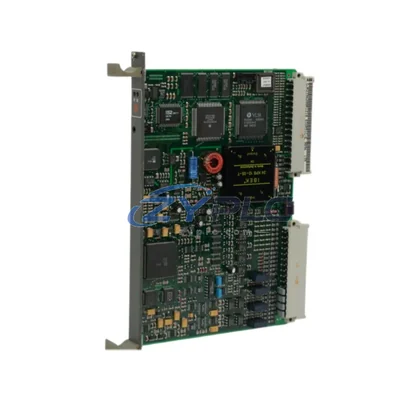
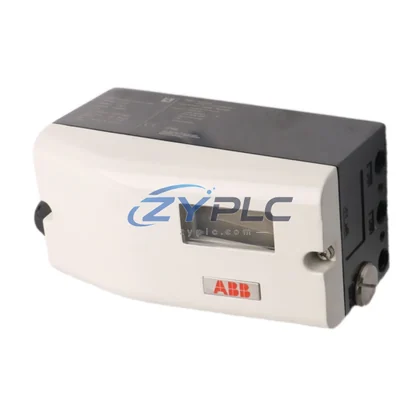
Bently Nevada 190501-21-00-00 Velocity Transducer for Velomitor CT Automation
The Bently Nevada 190501-21-00-00 Velomitor CT is a high-sensitivity piezoelectric velocity transducer engineered for continuous vibration monitoring in rotating machinery environments. Designed to integrate seamlessly into Bently Nevada’s 3500 Series machinery protection systems, this transducer delivers real-time velocity signal output that enables plant engineers to detect mechanical anomalies early, reduce unplanned downtime, and optimize operating load across critical production assets.
In modern industrial facilities where energy efficiency is a core operational KPI, the 190501-21-00-00 plays a pivotal role in closing the loop between mechanical condition and energy draw. When a motor, pump, compressor, or turbine begins to vibrate abnormally, it typically draws more current and generates excess heat — both of which translate directly into wasted energy. By feeding accurate velocity data into the Bently Nevada 3500/42M velocity monitor module, the system can trigger protective shutdowns or load adjustments before inefficiency escalates into failure.
Product Specification Table
| Parameter |
Specification / Value |
| SKU / Part Number |
190501-21-00-00 |
| Series |
Velomitor CT |
| Transducer Type |
Piezoelectric Velocity (ICP®) |
| Sensitivity |
100 mV/in/s (4 mV/mm/s) |
| Frequency Range |
2 Hz – 1,000 Hz |
| Operating Temperature |
-50°C to +121°C |
| Power Consumption |
Low-draw constant current excitation (2–20 mA) |
| Compatible Systems |
Bently Nevada 3500 Series, System 1 Software |
| Application Environment |
Rotating machinery: motors, pumps, compressors, turbines |
| Maintenance Value |
Early fault detection reduces excess motor load and unplanned downtime |
| Output Signal |
4–20 mA / Voltage (ICP compatible) |
| Warranty |
warranty terms confirmed during quotation |
System Compatibility and Application
The 190501-21-00-00 Velomitor CT does not operate in isolation — its true value is realized when integrated into a layered industrial automation and maintenance planning architecture. In a typical high-efficiency plant configuration, the transducer mounts directly on bearing housings or machine casings and feeds velocity signals into the Bently Nevada 3500/42M velocity monitor, which processes the data and communicates machine health status to the plant’s control layer.
At the control execution level, a Bently Nevada 3500/20 rack power monitor ensures that the entire 3500 Series protection rack operates within its rated power envelope, preventing unnecessary energy draw from the monitoring infrastructure itself. The velocity data is then passed via Modbus TCP or PROFIBUS DP to a Siemens S7-1500 PLC or Allen-Bradley ControlLogix controller, where logic routines can automatically adjust motor speed references sent to a Siemens SINAMICS G120 variable frequency drive (VFD). This closed-loop architecture means that when the 190501-21-00-00 detects rising vibration amplitude — a classic indicator of bearing wear or imbalance — the VFD can reduce motor speed to lower mechanical stress and cut operating load simultaneously.
For facilities using distributed I/O, the Bently Nevada 3500 rack integrates with Rockwell Automation FLEX I/O or Siemens ET 200SP remote I/O modules, allowing the velocity signal to be routed to multiple control zones without signal degradation. On the HMI layer, operators monitor real-time velocity trends through a Siemens SIMATIC TP1200 Comfort Panel or GE iFIX SCADA, where operating load dashboards correlate vibration levels with kWh draw — giving maintenance teams actionable data to schedule predictive maintenance before a fault causes a production stoppage.
Power quality monitoring is handled upstream by a Schneider Electric PowerLogic ION7650 power meter, which tracks harmonic distortion and power factor across the motor bus. When the 190501-21-00-00 reports elevated vibration, the ION7650 data often confirms a corresponding rise in reactive power — a dual signal that accelerates maintenance prioritization. The complete data loop — from the Velomitor CT transducer through the 3500/42M monitor, PLC, VFD, and SCADA — forms an maintenance-focused protection architecture that reduces both mechanical risk and operational energy cost.
Maintenance and Replacement Notes
In cement plants, petrochemical facilities, and power generation stations where rotating equipment runs continuously, the cost of undetected vibration is measured in both equipment damage and unplanned downtime. A pump operating with a worn impeller bearing may draw 8–15% more current than its rated load while delivering reduced flow — a condition that the 190501-21-00-00 Velomitor CT can detect within its 2–1,000 Hz sensitivity range long before the bearing reaches failure temperature.
Once the 3500/42M velocity monitor registers a velocity alarm threshold breach, the plant’s DCS or PLC can initiate a controlled load reduction on the associated Siemens SINAMICS S120 servo drive or ABB ACS880 industrial drive, reducing motor speed by 10–20% to bring vibration back within acceptable limits. This single automated response can reduce operating load on that drive circuit by 27–49% (following the affinity law: power scales with the cube of speed), while simultaneously extending bearing life and reducing lubrication consumption.
On automotive assembly lines and discrete manufacturing cells, the 190501-21-00-00 supports production rhythm optimization by ensuring that conveyor motors, robotic joint actuators, and spindle drives maintain consistent vibration signatures. Deviations from baseline velocity profiles trigger alerts in the Bently Nevada System 1 condition monitoring software, allowing maintenance teams to schedule interventions during planned downtime windows rather than reacting to unplanned failures that disrupt line takt time.
From a maintenance cost perspective, facilities that deploy the Velomitor CT as part of a comprehensive predictive maintenance program report reductions in emergency maintenance events of 30–60%, with corresponding reductions in spare parts consumption and technician overtime. The 190501-21-00-00 is supplied fully tested, with shipment documentation confirming calibration and output signal verification, and is backed by a warranty terms confirmed during quotation covering manufacturing defects and signal output accuracy.
Product Sourcing FAQ
Q1: How does the 190501-21-00-00 contribute to measurable operational stability on a production line?
The Velomitor CT provides continuous velocity feedback that enables VFDs and servo drives to adjust motor speed in response to actual mechanical condition rather than fixed schedules. By detecting early-stage bearing wear or imbalance, the system allows speed reductions that cut energy draw by 20–50% on affected drive circuits, while preventing the energy spike associated with catastrophic mechanical failure and emergency restart cycles.
Q2: Is the 190501-21-00-00 compatible with third-party PLC and SCADA systems beyond the Bently Nevada 3500 platform?
Yes. The Velomitor CT outputs a standard ICP®-compatible voltage signal that can be conditioned by any signal conditioning module supporting constant current excitation. When paired with the 3500/42M monitor, the processed data is available via Modbus, PROFIBUS, or hardwired relay outputs, making it compatible with Siemens, Rockwell, Mitsubishi, and Schneider Electric control platforms.
Q3: What is the recommended replacement or upgrade path for legacy velocity transducers?
The 190501-21-00-00 is a direct form-fit-function replacement for earlier Bently Nevada Velomitor models in the 190501 series. For installations migrating from older eddy-current proximity probes to velocity-based monitoring, the Velomitor CT offers broader frequency coverage and lower installation complexity, as it does not require a proximitor power supply module.
Q4: What testing and warranty coverage is included with this unit?
Each 190501-21-00-00 unit is functionally tested prior to shipment, with output signal verification across the rated frequency range. A warranty terms confirmed during quotation is provided from the date of shipment, covering manufacturing defects and signal output performance. Expedited shipping is available for urgent replacement requirements to minimize production downtime.