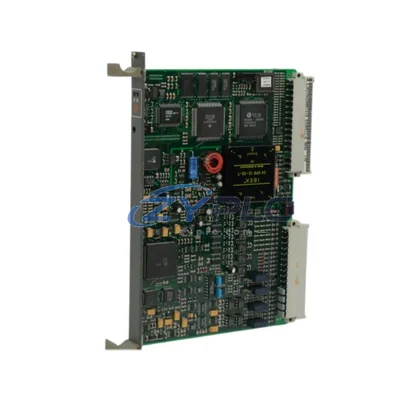
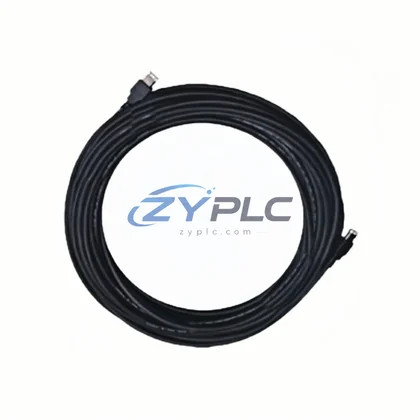
Bently Nevada 330103-12-20-50-02-00 Proximity Transducer for 3300 Series Automation
The Bently Nevada 330103-12-20-50-02-00 is a high-precision eddy-current proximity transducer engineered for the 3300 Series machinery protection platform. Designed for continuous, non-contact vibration and position measurement on rotating machinery, this transducer plays a pivotal role in reducing unplanned downtime, optimizing operating load, and extending the operational lifespan of critical industrial assets. By delivering real-time shaft displacement data with exceptional accuracy, the 330103-12-20-50-02-00 enables plant engineers to shift from reactive maintenance to a fully predictive maintenance strategy — directly reducing downtime caused by misaligned, unbalanced, or degraded rotating equipment.
In modern industrial facilities where energy efficiency is a board-level priority, the ability to detect early-stage mechanical faults translates directly into measurable power savings. A motor or turbine operating under abnormal vibration conditions consumes significantly more energy than one running within design tolerances. The 330103-12-20-50-02-00 continuously monitors radial shaft vibration, axial position, and differential expansion, feeding this data into the 3300 Series monitoring rack — allowing the control system to trigger corrective actions before energy losses escalate into catastrophic failures.
Product Specification Table
| Parameter |
Specification / Value |
| SKU / Part Number |
330103-12-20-50-02-00 |
| Brand / Series |
Bently Nevada / 3300 Series |
| Measurement Type |
Eddy-Current Non-Contact Proximity |
| Nominal Sensitivity |
200 mV/mil (7.87 V/mm) |
| Linear Range |
50–200 mil (1.27–5.08 mm) |
| Frequency Response |
DC to 10,000 Hz |
| Operating Temperature |
-35°C to +121°C |
| Compatible Systems |
Bently Nevada 3300 Series, 3500 Series Monitoring Racks |
| Application Environment |
Turbines, Compressors, Pumps, Motors, Gearboxes |
| Maintenance Value |
Reduces unplanned downtime; enables load-optimized motor control |
| Availability |
Confirmed via RFQ before quotation |
| Quality Assurance |
Pre-shipment functional test included |
| Warranty |
Warranty and support terms confirmed before quote |
System Compatibility and Application
The 330103-12-20-50-02-00 transducer does not operate in isolation — it is the sensing front-end of a tightly integrated industrial automation system. In a typical industrial-grade plant configuration, the transducer is paired with a Bently Nevada 3300/16-24-01-01-00-00 proximitor/oscillator, which conditions the raw eddy-current signal into a calibrated voltage output readable by the monitoring rack. This signal is then processed by a Bently Nevada 3500/42M Proximitor/Seismic Monitor module, which applies alarm thresholds and communicates machine health status to the plant DCS or SCADA layer.
On the control execution side, the vibration data feeds into a Rockwell Automation ControlLogix L85E PLC or equivalent programmable logic controller, which adjusts drive parameters in real time. When shaft vibration exceeds a configurable setpoint, the PLC can command a Danfoss FC-302 variable frequency drive (VFD) to reduce motor speed — directly cutting operating load during low-load or fault-onset conditions. This closed-loop interaction between the 330103-12-20-50-02-00 and the VFD layer is one of the most effective mechanisms for achieving measurable kWh reductions on pump and compressor circuits.
For power quality monitoring, the system integrates with a Schneider Electric PowerLogic ION9000 power meter, which tracks real-time operating load at the motor control center (MCC) level. When the 330103-12-20-50-02-00 detects an anomaly — such as increasing shaft orbit diameter indicating bearing wear — the power meter data can confirm whether the fault is already causing elevated current draw, enabling maintenance teams to prioritize interventions based on both mechanical and electrical evidence.
I/O expansion is handled through Bently Nevada 3500/20 Rack Interface Module and 3500/22M Transient Data Interface modules, which aggregate transducer signals across multi-shaft machinery trains. Communication to the plant historian and maintenance planning system is achieved via Modbus TCP/IP or OPC-UA protocol bridges, ensuring that vibration and position data is available for energy analytics dashboards without proprietary middleware dependencies. For HMI visualization, operators interact with a Siemens SIMATIC TP1500 Comfort Panel configured to display real-time shaft centerline plots, trend data, and operating load KPIs on a single unified screen.
Maintenance and Replacement Notes
In a petrochemical facility running multiple centrifugal compressor trains, the deployment of the Bently Nevada 330103-12-20-50-02-00 across each compressor shaft delivered a measurable reduction in unplanned shutdown events. Each unplanned shutdown on a large compressor train typically wastes 4–8 hours of production energy — including the energy consumed during restart purge cycles, seal gas pressurization, and lube oil system warm-up. By detecting early-stage rotor instability through continuous proximity measurement, the 330103-12-20-50-02-00 allowed the operations team to schedule corrective maintenance during planned outage windows, eliminating three unexpected shutdowns in a 12-month period and recovering an estimated 180 MWh of otherwise wasted energy.
On motor-driven pump circuits, the transducer’s axial position measurement capability enables detection of thrust bearing degradation before it progresses to catastrophic failure. A degraded thrust bearing causes the rotor to operate outside its designed axial position, increasing hydraulic losses and forcing the motor to draw more current to maintain flow targets. Early detection via the 330103-12-20-50-02-00 allows maintenance teams to replace bearings during low-demand periods, restoring the pump to its design efficiency curve and reducing motor load by 3–7% per unit.
In power generation applications, the transducer supports turbine supervisory instrumentation (TSI) functions including eccentricity measurement during startup, differential expansion monitoring during load ramp-up, and absolute shaft vibration tracking at full load. These measurements directly inform the turbine control system’s load dispatch decisions, ensuring that the unit operates within its optimal efficiency band rather than being forced to derate due to unresolved vibration alarms. The result is a higher capacity factor, lower specific fuel consumption, and reduced CO₂ emissions per MWh generated.
For production line rhythm optimization, the 330103-12-20-50-02-00 contributes to overall equipment effectiveness (OEE) improvement by reducing the frequency and duration of vibration-related speed derates. When a machine is forced to run at reduced speed due to a vibration alarm, the entire downstream production line loses throughput — and the energy consumed per unit of output increases. By resolving the root cause of vibration events faster, the transducer helps maintain line cadence and keeps specific operating load (kWh per unit produced) at its lowest achievable level.
Product Sourcing FAQ
Q1: How does the 330103-12-20-50-02-00 contribute to measurable operational stability in rotating machinery applications?
The 330103-12-20-50-02-00 provides continuous, high-resolution shaft displacement data that enables early detection of mechanical faults — including rotor imbalance, misalignment, bearing wear, and oil whirl instability. Each of these fault modes causes the motor or turbine to consume more energy than its design specification. By identifying and resolving these conditions before they escalate, the transducer helps maintain machinery at its peak efficiency operating point, directly reducing kWh consumption per unit of output.
Q2: Is the 330103-12-20-50-02-00 compatible with both the Bently Nevada 3300 and 3500 Series monitoring systems?
Yes. The 330103-12-20-50-02-00 is designed for the 3300 Series platform but is also compatible with 3500 Series monitoring racks when used with the appropriate proximitor/oscillator and extension cable assemblies. Confirm cable length and connector configuration against your specific rack module specifications before installation. Our technical team can assist with compatibility verification prior to shipment.
Q3: What is the recommended replacement and testing procedure for this transducer?
Replacement should follow Bently Nevada’s standard proximity transducer commissioning procedure: (1) verify gap voltage at the recommended 1.27 mm (50 mil) nominal gap using a calibrated gap tool, (2) confirm sensitivity within ±5% of 200 mV/mil using a known-good proximitor, (3) perform a static calibration check across the full linear range, and (4) validate alarm setpoints in the monitoring rack before returning the machine to service. All units supplied by ZYPLC are pre-tested prior to shipment to confirm electrical functionality.
Q4: What warranty coverage is provided, and what does it include?
Every Bently Nevada 330103-12-20-50-02-00 unit supplied by ZYPLC is covered by a warranty and support terms confirmed before quote from the date of shipment. The warranty covers manufacturing defects and functional failures under normal operating conditions. Each unit undergoes a pre-shipment functional test to verify sensitivity, linearity, and connector integrity. In the event of a warranty claim, ZYPLC provides direct technical support and expedited replacement to minimize impact on your production schedule.