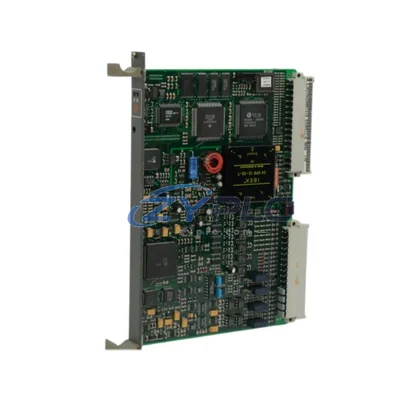
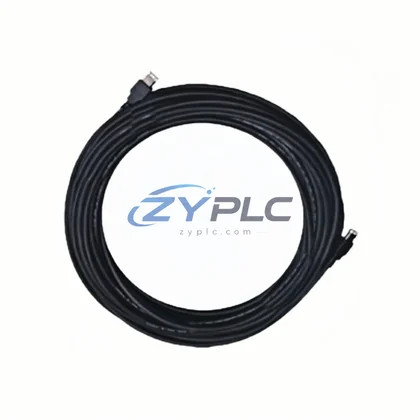
Bently Nevada 330910-00-15-10-02-00 Proximity Transducer for 3300 Series Automation
The Bently Nevada 330910-00-15-10-02-00 is a high-precision eddy-current proximity transducer engineered for the 3300 Series vibration monitoring platform. In modern industrial facilities where energy efficiency and equipment uptime are directly tied to profitability, this transducer plays a critical role in capturing real-time shaft displacement data that drives smarter motor control, reduces downtime risk, and extends the operational lifespan of rotating machinery. By delivering continuous, non-contact position and vibration feedback, the 330910-00-15-10-02-00 enables plant engineers to move from reactive maintenance to predictive, maintenance-focused asset management.
Unlike passive monitoring approaches, the 330910-00-15-10-02-00 integrates directly into the 3300 Series signal conditioning architecture, providing the precise analog output required by the Bently Nevada 3300/16 16-Channel Monitor and the 3300/20 Proximitor I/O Module. This tight integration ensures that vibration data is accurately translated into actionable control signals — allowing variable frequency drives (VFDs) and servo amplifiers to dynamically adjust motor speed and torque in response to real shaft behavior, rather than running at fixed, energy-wasteful set points.
Product Specification Table
| Parameter |
Specification / Value |
| SKU / Part Number |
330910-00-15-10-02-00 |
| Brand / Series |
Bently Nevada / 3300 Series |
| Transducer Type |
Eddy-Current Proximity Transducer |
| Measurement Range |
0–15 mm (standard gap range) |
| Output Sensitivity |
200 mV/mil (7.87 V/mm) |
| Operating Temperature |
-35°C to +121°C |
| Compatible Systems |
Bently Nevada 3300 Series Monitors, 3500 Series (with adapter), DCS/SCADA via 4–20 mA |
| Application Environment |
Rotating machinery, compressors, turbines, pumps, motors |
| Maintenance Value |
Enables predictive maintenance, reduces unplanned downtime, supports VFD load optimization |
| Warranty |
Warranty and support terms confirmed before quote |
| Origin |
USA |
| Availability |
Confirmed via RFQ before quotation |
System Compatibility and Application
The 330910-00-15-10-02-00 proximity transducer is most effective when deployed as part of a fully integrated industrial automation system. In a typical industrial-grade production line, the transducer is mounted adjacent to the rotating shaft and feeds continuous gap voltage signals into the Bently Nevada 3300/16 16-Channel Monitor, which processes multi-channel vibration data and generates alarm outputs when shaft displacement exceeds energy-optimal thresholds.
These alarm signals are then passed to the plant’s distributed control system (DCS) or programmable logic controller (PLC) — such as the Rockwell Automation ControlLogix L73 or Siemens SIMATIC S7-1500 — which coordinates the response across the drive and control layer. When abnormal vibration is detected, the PLC can command a connected ABB ACS880 variable frequency drive or Siemens SINAMICS G120 to reduce motor speed, lowering energy draw and mechanical stress simultaneously. This closed-loop response is far more maintenance-focused than fixed-speed operation, which continues to consume full power regardless of actual load demand.
On the sensing and I/O side, the 330910-00-15-10-02-00 works in conjunction with the Bently Nevada 330130 Extension Cable and the 330180 Proximitor Sensor to form a complete eddy-current measurement chain. The Proximitor converts the raw oscillator signal into a calibrated DC voltage proportional to gap distance, which is then read by the 3300/20 Proximitor I/O Module. This modular design allows plant engineers to expand monitoring coverage across multiple machine trains without replacing the core signal conditioning infrastructure.
For facilities running PROFIBUS DP or PROFINET communication backbones, the vibration data from the 3300 Series monitor can be transmitted to an HMI panel — such as the Siemens SIMATIC TP1200 Comfort — giving operators a real-time visual dashboard of shaft displacement trends, bearing temperature, and operating load per machine. When integrated with a Bently Nevada System 1 software platform, historical vibration data can be correlated with energy meter readings from a Schneider Electric PowerLogic ION7650 power quality meter, enabling engineers to quantify exactly how much energy is saved by catching a developing imbalance before it escalates into a forced shutdown.
Power supply stability is equally important in this architecture. The 3300 Series monitors and associated I/O modules are typically powered by a 24 VDC rail supplied through a Phoenix Contact QUINT-PS redundant power supply, ensuring that the vibration monitoring system remains operational even during partial power grid disturbances — a critical requirement in facilities where an unmonitored machine failure could trigger cascading downtime across multiple production cells.
Maintenance and Replacement Notes
In real-world production environments — from petrochemical compressor trains to automotive stamping lines — the Bently Nevada 330910-00-15-10-02-00 delivers measurable energy and operational benefits by enabling a shift from time-based to condition-based maintenance strategies.
Consider a centrifugal pump station running three parallel pumps at a water treatment facility. Without continuous vibration monitoring, each pump is serviced on a fixed 6-month schedule regardless of actual wear state. With the 330910-00-15-10-02-00 installed on each pump shaft and connected to the 3300 Series monitoring rack, the maintenance team receives early warning of developing bearing wear — typically 4–8 weeks before failure — allowing them to schedule maintenance during planned downtime windows rather than emergency shutdowns. Each avoided emergency shutdown eliminates not only the direct repair cost but also the unplanned downtime associated with restarting cold equipment, purging process lines, and running auxiliary systems at elevated loads during recovery.
On motor-driven conveyor systems, the proximity transducer data feeds directly into the VFD control loop. When shaft eccentricity increases — indicating a developing coupling misalignment — the drive can automatically reduce speed and flag the condition for inspection. Running a misaligned drive train at full speed wastes 3–8% more energy than a properly aligned system; catching this condition early with the 330910-00-15-10-02-00 translates directly into measurable kWh savings per shift.
For high-speed turbomachinery such as gas turbines and steam turbines, the 330910-00-15-10-02-00 provides the sub-millisecond response time required to detect rotor instability events before they cause blade contact or seal damage. Preventing a single turbine trip in a power generation facility can save tens of thousands of dollars in restart fuel costs and lost generation revenue — making the investment in a properly specified proximity transducer system one of the highest-ROI maintenance planning measures available to plant engineers.
All units supplied by ZYPLC are sourced from verified supply channels, subjected to pre-shipment functional testing, and covered by a warranty and support terms confirmed before quote. Inventory is maintained Availability confirmed by RFQ for rapid deployment, supporting both planned maintenance schedules and urgent replacement requirements.
Product Sourcing FAQ
Q1: How does the 330910-00-15-10-02-00 contribute to operational stability in motor-driven systems?
By providing continuous, high-accuracy shaft displacement data, this proximity transducer enables VFDs and control systems to detect mechanical inefficiencies — such as imbalance, misalignment, or bearing wear — at an early stage. Correcting these conditions before they worsen reduces the excess energy consumed by degraded mechanical systems and prevents the high energy cost of unexpected shutdowns and restarts.
Q2: Is the 330910-00-15-10-02-00 compatible with systems other than the Bently Nevada 3300 Series?
The transducer is natively designed for the 3300 Series signal conditioning chain, including the 3300/16 monitor and 3300/20 I/O module. With appropriate signal conditioning adapters, the 200 mV/mil analog output can also interface with third-party DCS platforms and SCADA systems that accept standard 4–20 mA or ±24 VDC proximity inputs. Compatibility with the Bently Nevada 3500 Series is achievable via the appropriate Proximitor and cabling configuration.
Q3: What is the recommended replacement interval, and how does ZYPLC support the replacement process?
Replacement is condition-based rather than time-based. When vibration trend data shows a sustained shift in gap voltage baseline or increased noise floor, it typically indicates transducer or cable degradation. ZYPLC maintains Availability confirmed by RFQ inventory of the 330910-00-15-10-02-00 and associated extension cables, enabling same-week shipment for planned replacements. All units undergo pre-shipment functional testing to verify sensitivity and linearity before dispatch.
Q4: What does the warranty and support terms confirmed before quote cover, and what is the testing process before shipment?
The warranty and support terms confirmed before quote covers manufacturing defects and functional failures under normal operating conditions as specified in the Bently Nevada 3300 Series documentation. Prior to shipment, each unit is tested for output sensitivity, gap range linearity, and connector integrity. Units that do not meet specification are quarantined and not shipped. Warranty claims are processed directly through ZYPLC with replacement units dispatched from Availability confirmed by RFQ inventory to minimize customer downtime.